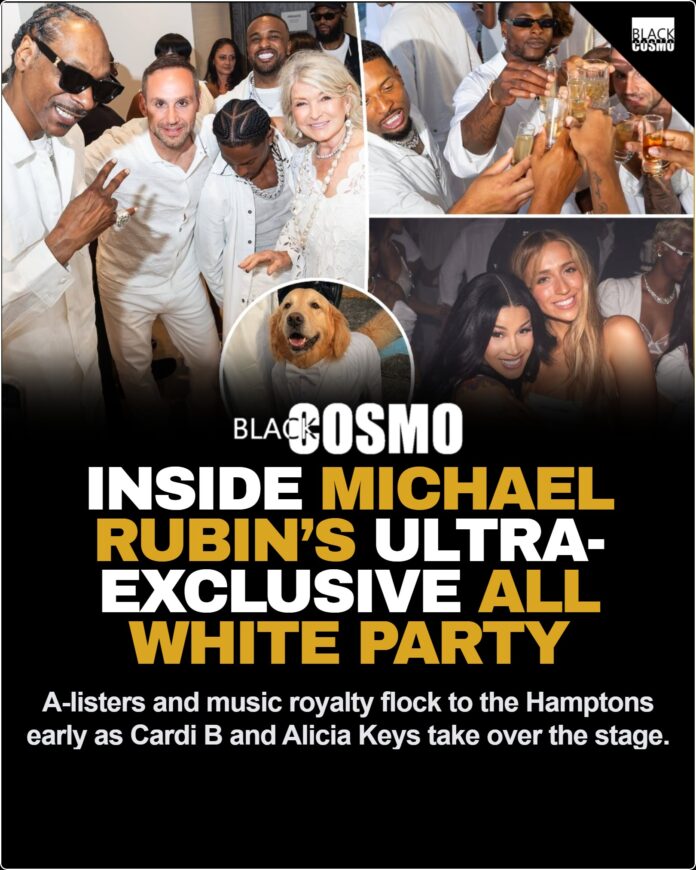

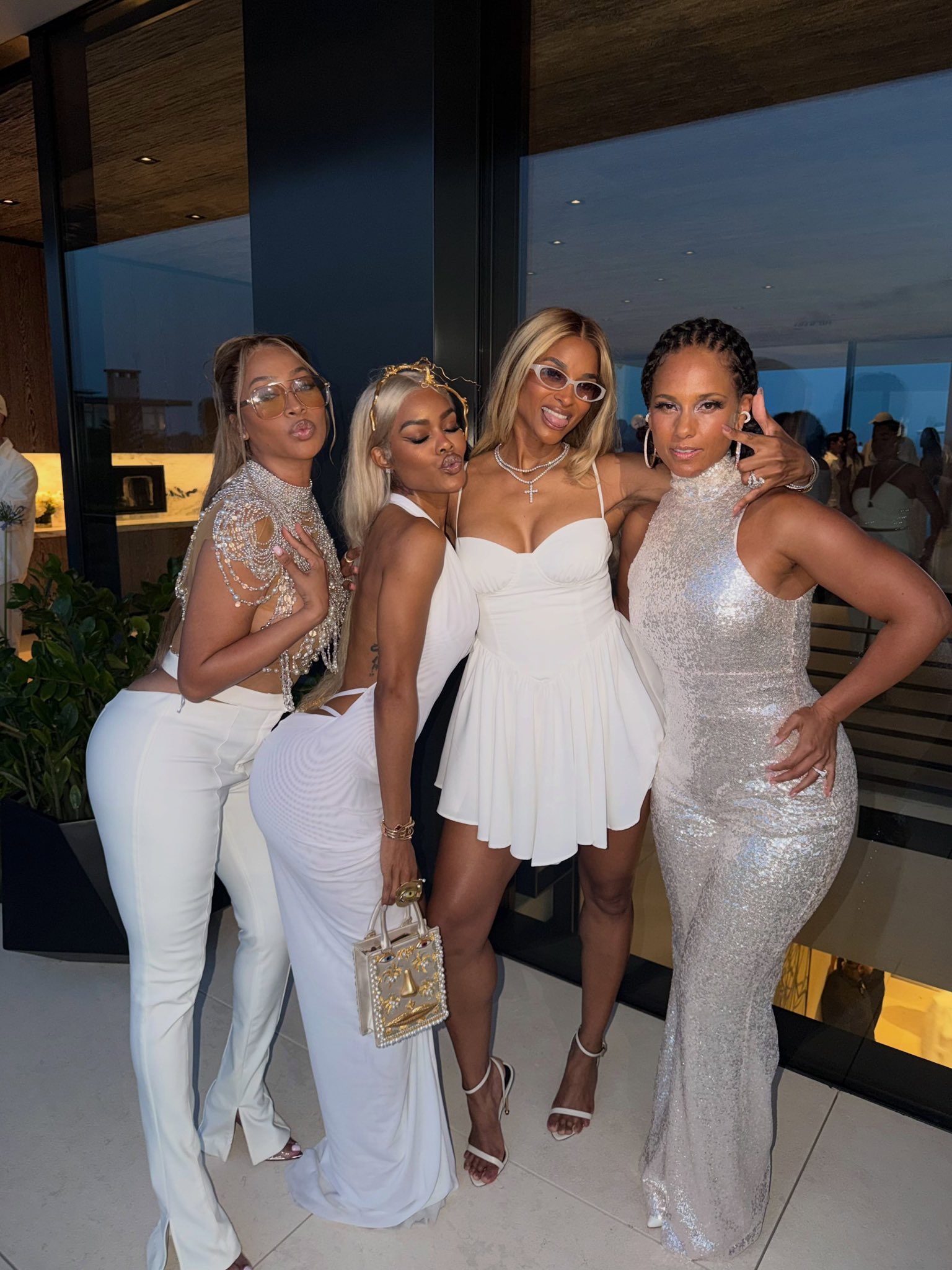
As clips from the exclusive event made their way online, fans quickly noticed Teyana Taylor dancing alongside Ciara, bringing their signature high energy to the dance floor. The star-studded guest list featured heavyweights like Jay-Z, Cardi B, Lil Wayne, and Alicia Keys, alongside sports icons like Russell Wilson, Tom Brady, Karl-Anthony Towns, and Mike Tyson. Attendees arrived at the oceanfront estate dressed in impeccable luxury fashion, maintaining the event’s high-end aesthetic. But the lighthearted mood of the night took a different turn when a specific recording began to circulate, leading some onlookers to allege that the footage captured a compromising angle.
See Video here
In the wake of the upload, unconfirmed reports and internet chatter suggested that legal action might be on the table. Rumors claimed the artist was deeply displeased with the unauthorized recording and was exploring options to address the breach. As of now, these assertions remain entirely speculative, with no official statement or confirmation from her camp. The lack of direct commentary has not stopped the public from debating the hypothetical legalities of filming inside a private gathering.
Comment sections across different platforms quickly filled with varying perspectives on the matter. One user offered a defense for the uploader, suggesting that the person who recorded was also drunk and they didn’t know they were recording. Others focused on the practical aspects of the law, asking, do you think she can actually sue? Meanwhile, some downplayed the severity of the video entirely, noting that she wasn’t half naked though, and arguing that the dancing was simply a display of someone having a good time at a party.
This scenario points to a much larger tension within modern celebrity culture. For decades, exclusive industry parties were treated as safe havens where high-profile figures could let their guard down without the fear of public scrutiny. Today, the ubiquity of smartphones has turned every guest into a potential camera crew. Even at an invite-only gathering of billionaires and celebrities, the expectation of complete privacy seems increasingly unrealistic. The line between sharing a fun moment and exploiting a private interaction has become remarkably thin, leaving many to wonder if public figures must remain on guard even behind closed doors. The discussion around the Teyana Taylor All-White Party incident highlights the ongoing battle between personal boundaries and public exposure.
When an individual attends an exclusive celebration, there is an implicit understanding of trust among peers. When that trust is breached for the sake of online engagement, it changes the way people interact in these spaces. Some observers argue that if someone records and uploads an embarrassing private moment from a party without your knowledge, they should be held legally responsible. Others counter that attending a highly publicized media event means accepting a certain level of exposure. This clash of expectations forces a deeper examination of digital ethics in an era where attention is the ultimate currency. While the truth behind the legal rumors remains to be seen, the Teyana Taylor All-White Party conversation serves as a cautionary tale for the digital age.
From a legal standpoint, the question of whether an individual can sue over a video recorded at a private residence is complex. Laws regarding the expectation of privacy vary significantly by jurisdiction. In New York, where the Hamptons are located, the law generally requires the consent of at least one party to record conversations, but visual recordings in semi-public or shared social spaces within a private home occupy a legal gray area. If a gathering is held at a private residence, guests generally expect a higher level of privacy than they would on a public street. Yet, when hundreds of people are in attendance and media coverage is actively encouraged, establishing a reasonable expectation of privacy in a courtroom becomes a steep uphill battle. This legal ambiguity is precisely why these situations rarely result in formal lawsuits, often remaining confined to the court of public opinion.
The nature of these elite gatherings has shifted dramatically over the past two decades. In the pre-smartphone era, legendary parties hosted by industry giants were shrouded in mystery, with only a few polished photographs ever reaching the public. Today, events like Michael Rubin’s white party are designed with high visibility in mind, serving as significant branding opportunities for both the host and the high-profile guests. When the entire premise of an event relies on generating digital buzz, it becomes difficult to police where the camera stops. This environment creates a challenging paradox for attendees who want to support their peers and celebrate their successes but feel pressured to maintain a polished, camera-ready persona at all times.
Editor’s Picks:
For deep reflections on culture, identity, and the nuances of public life, explore our curated selection of Black literature. If you want to block out the noise of the digital world and focus on your favorite tunes, check out our recommended active noise cancelling headphones. And for those planning their own exclusive gatherings at home, elevate your space with these premium home essentials.