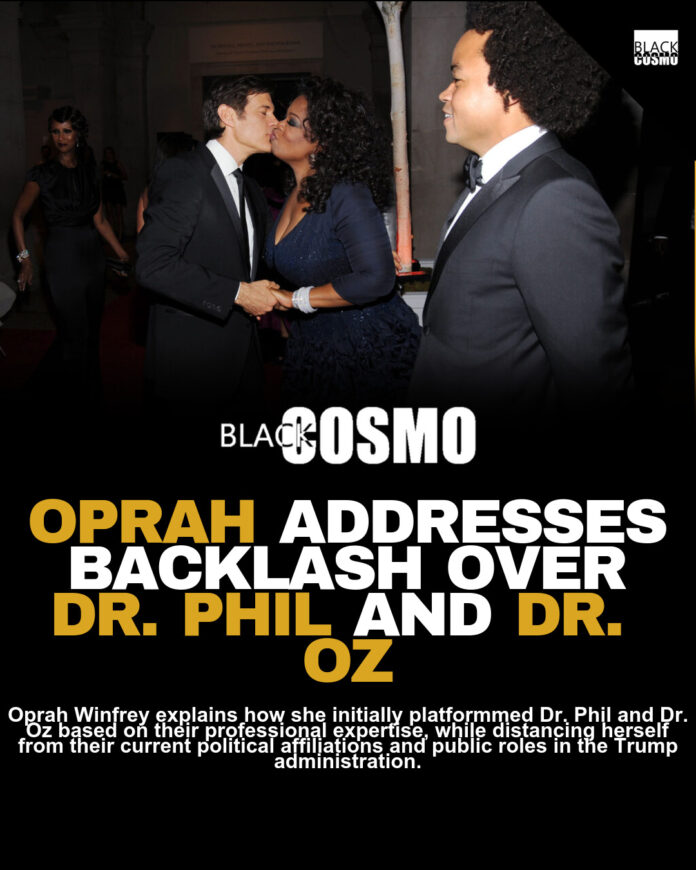
Oprah Winfrey is finally addressing the backlash over her decision to platform Dr. Phil and Dr. Oz, two figures who’ve since become vocal MAGA supporters. Her response? It may not sit well with everyone.
Both men built their careers on her show before venturing into politics. Dr. Phil, a clinical psychologist, first appeared in 1998 after helping Winfrey through a Texas cattlemen lawsuit. Dr. Oz, a cardiothoracic surgeon and former Columbia University professor, joined in 2004 as her health expert. Their rise was meteoric—personal empires, household recognition, the full package. Then came the pivot. Dr. Oz now leads the Centers for Medicare & Medicaid Services under Trump, while Oprah Winfrey critics have questioned her role in launching them into prominence.
In a recent conversation with the Television Academy, Winfrey broke her silence on the criticism. She framed her early support for both men through the lens of practical value—not politics. With Dr. Phil, she credits his steady presence during her 1998 trial. He rode with her to court each morning for six weeks, offering grounded advice that felt instrumental at the time.
“People criticize me for Dr. Phil and Dr. Oz because of their politics or their views,” she said. “But Dr. Phil was so practical, so down to earth, so real. I thought, ‘Oh, you could help a lot of people. You should come on my show.'”
Dr. Oz’s introduction came through her best friend Gayle King. The appeal was his ability to translate complex medical concepts into accessible language—the kind of clarity that felt missing from mainstream health discourse at the time.
“He explained practical things like colon cancer and bowel movements in a way that was helpful,” Winfrey explained. “I thought it would be helpful to many other people. And that is how they ended up on the show.”
On their current political trajectories, Winfrey kept her response measured. “Everybody has their own path in life, and it has not one thing to do with me, and I don’t have one thing to do with them,” she said. “At the time, the reason and intention behind me giving them their breaks was that I thought they had valuable information to share.”
The distinction she’s drawing is clear enough: she’s separating her editorial judgment from their subsequent choices. Whether that distinction holds weight depends largely on where you stand. For supporters, it’s a reminder that people evolve in unexpected directions. For critics, the question lingers: what responsibility do platforms carry for who they help launch?
★TR★