
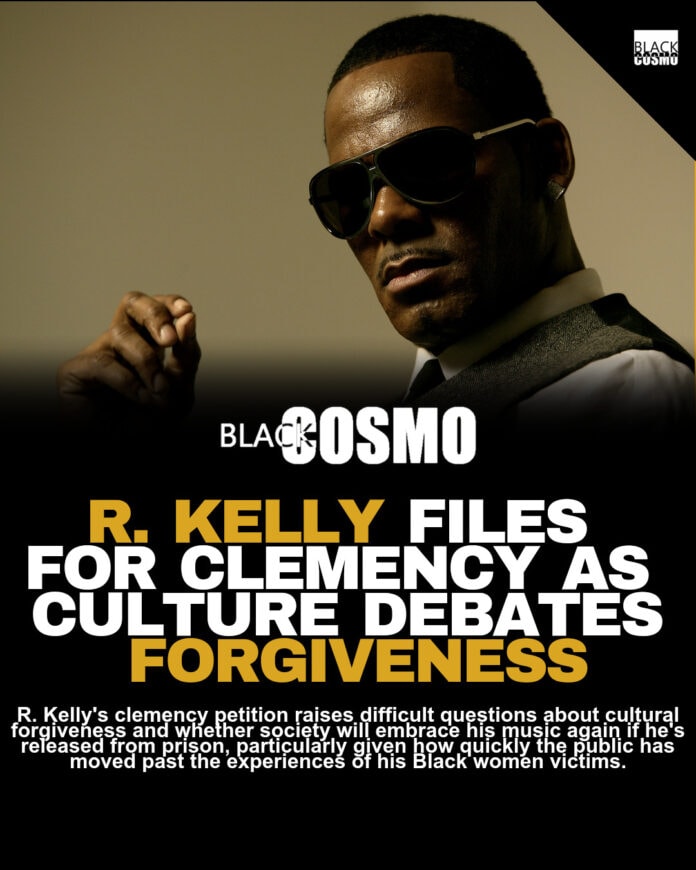
American singer, songwriter, record producer, and convicted sex offender R. Kelly, sings during his video “Skin”, directed by American film director, music video director, television commercial director and photographer, Anthony Mandler, on August 2, 2008 in Los Angeles, California. (Photo by Bob Berg/Getty Images)
Disgraced R&B singer R. Kelly is back in the news with an official filing for presidential clemency, hoping to secure his release from prison. The move raises a question that extends far beyond the courtroom: what does cultural forgiveness look like for someone like Kelly, and should it even be possible?
The “Ignition” singer has been serving concurrent prison sentences since 2022 after his conviction on racketeering and multiple sex crimes from federal trials in New York and Chicago. His Supreme Court appeal was denied. Now he’s petitioned President Donald Trump directly for clemency, arguing prosecutorial overreach and targeting. Whether R. Kelly gets that relief remains unclear, but the filing forces an uncomfortable reckoning about how society processes harm, accountability, and second chances.
The groundwork for Kelly’s rehabilitation has quietly been laid for years. People still play his music at parties, weddings, cookouts, and clubs. Online debates about separating art from artist inevitably invoke his catalog. His supporters argue his music deserves space in our rotation despite his convictions. If that’s already happening in private spaces, scaling it to public acceptance isn’t a leap.
Consider the financial incentive. While his royalties face seizure for restitution and victim compensation, a memoir or comeback tour announcement would likely attract both longtime fans and curiosity seekers willing to spend. And when you factor in the appetite for controversial documentaries on major streaming platforms, Kelly could potentially monetize his story in ways that erase years of financial consequence.
That possibility forces a darker question: what does our willingness to let that happen say about us?
The discomfort isn’t really about whether Kelly could rebuild wealth and return to entertainment. It’s about what that scenario reveals regarding how quickly society forgets Black women survivors. Every stream, every sold-out show, every casual argument that “the music still hits” communicates a hierarchy of whose trauma matters. The public’s appetite to move past Kelly’s crimes measures how quickly Black women’s pain gets archived and forgotten.
Clemency or no clemency, this conversation demands we think seriously about what accountability actually means and what cultural redemption costs. Because if current patterns are any guide, forgiveness in the court of public opinion arrives far faster than most of us would admit. That gap between justice and acceptance is where the real reckoning lives.
★TR★