
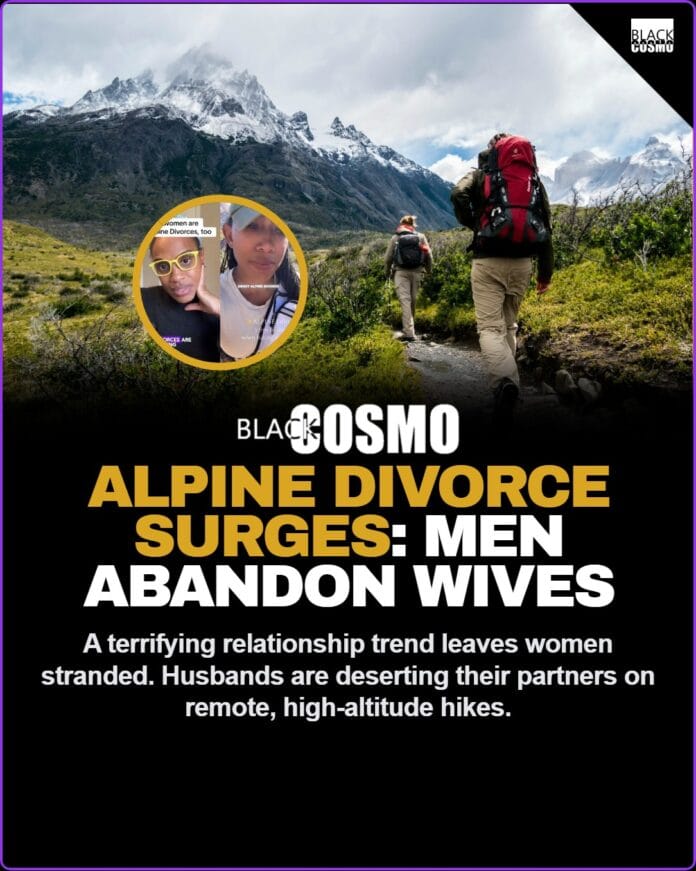
Imagine lacing up your hiking boots for what promises to be a romantic and adventurous weekend getaway, only to find yourself deserted in the wilderness by the person you trust most. This terrifying scenario is not the plot of a psychological thriller; it is a disturbing reality known as the Alpine Divorce. In a horrifying twist on ending a relationship, men are intentionally taking their wives or girlfriends on grueling, high-altitude hikes, quickly outpacing them, and purposefully leaving them stranded miles away from civilization. It is a calculated and cowardly exit strategy that weaponizes nature, leaving women isolated, disoriented, and deeply vulnerable in unforgiving terrain.
The chilling virality of an Alpine Divorce first seized the nation’s attention in early 2026, thanks to the immense reach of social media. On February 18, 2026, a TikTok user known as @Everafteriya uploaded a heart-wrenching video detailing the terrifying aftermath of being abandoned by her male partner during a strenuous mountain trek. With her voice cracking in undeniable distress, she documented the overwhelming fear of navigating the treacherous wilderness entirely on her own. The video exploded online, rapidly amassing over 25 million views and prompting an outpouring of solidarity, shock, and shared experiences from women who had faced similarly harrowing betrayals.
For Black women, this trend introduces a particularly sinister layer to outdoor recreation. Historically, the push for representation and inclusion in outdoor spaces has been a powerful movement. Black women have actively worked to reclaim the wilderness as a sanctuary for safety, joy, and physical empowerment. Nature treks are meant to be a source of stunning views and adventure-seeking, a way to disconnect from urban stressors. However, the emergence of the Alpine Divorce trend effectively shatters this hard-won sanctuary. It transforms a space of healing into a potential crime scene, forcing women of color to constantly remain on high alert and question the true motives of the men accompanying them on these remote excursions.
The consequences of this malicious trend extend far beyond a shattered heart or a bruised ego; it is a matter of life and death. The calculated abandonment of a partner in a remote location is a form of extreme emotional abuse and severe neglect that can easily escalate into a criminal offense. A tragic precedent was set recently in Austria, where an experienced climber named Thomas Plamberger abandoned his girlfriend, Kerstin Gurtner, on the country’s tallest mountain amid freezing conditions. Tragically, Gurtner succumbed to hypothermia and passed away. Plamberger was subsequently found guilty of gross negligent manslaughter. The court established that, as the more experienced hiker, he possessed a legal duty of care to his partner. When he failed to stay by her side or immediately seek rescue, he crossed the line from a bad breakup into lethal negligence. In the United States, prosecutors have the authority to pursue charges for Recklessly Endangering Another Person (REAP) under similar circumstances.
As the frequency of this perilous tactic increases, victims are finding solace and critical survival information in newly formed online support groups. These digital communities serve as vital safe havens for women to heal from the profound trauma of being deserted in life-threatening outdoor situations. Influencers and survivalists are now pivoting their content to address this specific danger. For instance, TikTok creator @MatriarchalMindset has become a prominent voice, offering indispensable advice for women who hike alongside male partners. She strongly cautions women to “never blindly trust a man” when heading into isolated environments. To counter the physical disparities that perpetrators exploit, she advises women to rigorously build their core strength, consistently engage in cardiovascular training, and develop the muscular endurance necessary to sustain themselves outdoors for extended periods if they are left behind.
What drives a man to execute an Alpine Divorce? Psychologists and relationship experts suggest it stems from a toxic cocktail of cowardice, a severely bruised ego, and a profound inability to communicate. Rather than facing the uncomfortable reality of a traditional breakup, these men utilize the physical demands of nature as a smokescreen. They use their physical stamina to outpace their partners, framing the abandonment as a consequence of the woman’s inability to “keep up.” This gaslighting tactic attempts to shift the blame onto the victim while allowing the perpetrator to evade the immediate emotional fallout of ending the relationship. It is an extreme manifestation of conflict avoidance, where a man would literally rather risk his partner’s life than sit down for a mature conversation.
The normalization of such a cruel phenomenon is a stark reminder of the unique vulnerabilities women face. It underscores the urgent need for heightened situational awareness and rigorous personal preparedness before embarking on remote adventures. Before agreeing to a challenging hike, women are urged to share their exact locations with trusted friends, carry their own navigation tools, pack emergency survival gear, and never rely entirely on a partner for safety. The rise of the Alpine Divorce is not just a fleeting internet sensation; it is a chilling wake-up call. We must continue to expose these dangerous tactics, hold perpetrators legally and socially accountable, and empower women to conquer the wilderness entirely on their own terms, safely and securely.