FLO brought the heat to the TODAY show with a flawless performance of “Leak It,” their lead single from the new album Therapy at the Club. The UK R&B girl group showed up with their harmonies tight and choreography sharp, performing completely live without any backing track safety net. It’s the kind of moment that reminds you why live vocals matter, especially in a genre where precision and soul have to work together seamlessly.
FLO has been everywhere throughout their US promo cycle, and this TODAY show appearance stands out as a real testament to their talent and preparation. There’s something powerful about watching a girl group own a morning show stage like that, no studio tricks, just pure skill and chemistry. For Black and Brown music fans who’ve been watching FLO climb, this is the kind of moment that proves they’re not just another group—they’re the real deal, carrying that UK R&B legacy into spaces that matter.
Doechii, the self-proclaimed “Swamp Princess,” is turning 28 today, and we’re marking the occasion with her most stunning shots yet. From fitted denim that hugs every curve to reflective swimwear that commands attention, the global superstar knows exactly how to own a frame.
Beyond the music that earned her a loyal fanbase, Doechii has become known for her unfiltered approach to style and self-expression. Whether it’s a casual selfie or a calculated thirst trap, she brings that same confident energy that defines her artistry.
Scroll through the gallery to see her pulling off everything from sultry mirror shots to beach moments that prove she’s comfortable in her skin. It’s the kind of content that keeps her presence felt between album drops and tour announcements.
Powerlifter Sonita Muluh shattered world records in April 2025 with a 311 kg squat. Months later at the IPF World Classic Powerlifting Championships in June, she attempted an even more ambitious lift—334.5 kg—when a spotter deliberately sabotaged her attempt. Now, Sonita Muluh is speaking out about the racially motivated interference that cost her a world title.
During powerlifting competition, spotters serve a critical safety function. They support the lifter, prevent injury, and help ensure lift validity. Ernestas Kusinas, a volunteer spotter at the competition in Druskininkai, Lithuania, had a different agenda. On Muluh’s third attempt to lift 334 kg, Kusinas deliberately touched the weights with his knee, causing the judges to disqualify her from attempting the lift again.
“I feel unsafe and uneasy that this person is standing beside me with massive weight, with what can go wrong, with the amount of weight on your back,” Muluh told the BBC. “I was lucky when I realized it hit his knee and I could stabilize it. Not everyone could. It was the heaviest ever squat for a female.”
What might have seemed like a spotter’s error was no accident. Kusinas later admitted his interference was deliberate on social media. “I am racist, and I did it intentionally because I hate you pieces of sh*t,” he wrote in a now-deleted Instagram post from a now-deleted account, according to the Athletic. When confronted by Reuters, Kusinas claimed he wrote the comment sarcastically, mocking someone who had accused him of racism online.
“I threw him the bone he wanted,” Kusinas told Reuters.
Sonita Kyen Muluh of Belgium competes during the Women’s Super Heavyweight Final of Powerlifting event at The World Games 2025 in Chengdu, southwest China’s Sichuan Province, Aug. 15, 2025. (Photo by Xu Suhui/Xinhua via Getty Images)
His defense crumbles under scrutiny. Kusinas has been accused of reposting Nazi logos on social media, and comments referencing “Heil Hitler” have resurfaced, according to the Athletic. This wasn’t a sarcastic moment. This was a pattern.
Lithuanian police confirmed a criminal investigation is underway focusing on his Instagram comment and his conduct at the championship. On August 3, a pre-trial investigation was initiated for alleged public expression of contempt or incitement to hatred and discrimination. The maximum penalty is two years in prison.
Muluh’s response shows remarkable restraint. She didn’t lash out at Kusinas in the moment and actively discouraged others from harassing him when video of the incident circulated. “I thought it was a human mistake, that cost me a lot on the day,” she said. “But there was no hatred from me. I didn’t curse at him. And then I find out five weeks later that he said this.”
Sonita Muluh pictured during a press conference for the presentation of the Belgian delegation for the World Games in Chengdu, China (07-17/08) on Wednesday 18 June 2025 in Brussels. (Photo by DIRK WAEM/BELGA MAG/AFP via Getty Images)
The 29-year-old, who began competing in powerlifting in 2020, has directed her frustration toward the governing bodies that failed her. She believes the International Powerlifting Federation should implement background checks on all personnel with direct access to athletes. “If you are going to put my life in someone else’s hands, at least make sure that person is well equipped to be able to protect me or keep me from harm,” she said. “But they failed me through negligence and putting my life in danger.”
The Lithuanian Powerlifting Federation issued Kusinas a lifetime ban in July and issued a statement condemning racism and hateful conduct. But Muluh’s broader concern extends beyond one individual. “I hope the IPF does things differently—that they consider the safety of athletes more and especially minority people,” she said. “I feel that’s what has been missing. We have been made to compete in places we didn’t feel welcome. Some Black athletes are booed in competition. We have to worry about our skin color while competing.”
King of Bingo is gracing the pages of Flaunt Magazine, and this moment deserves your attention. The talented individual behind the handle is bringing fresh energy and style to the publication, with creative direction from stylist Von Ford who helped bring this vision to life. It’s the kind of feature that reminds us why independent magazines still matter in championing bold voices and unconventional talent.
What makes this feature special is how King of Bingo represents a shift in how we celebrate creativity outside traditional celebrity lanes. This is someone making waves on their own terms, and Flaunt—known for platforming boundary-pushers—recognized that. Von Ford’s styling choices only amplified the authenticity, creating imagery that feels both aspirational and genuinely reflective of where culture is actually moving.
For those of us navigating creative spaces, these features matter. They’re proof that there’s room for everyone’s vision, that you don’t need a major label or traditional pedigree to command a magazine spread. King of Bingo’s Flaunt moment is an invitation to pay attention to the independent creators reshaping our visual culture.
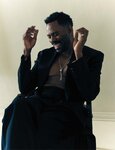
After7Music graced Black Cosmopolitan with their presence, and the energy was undeniable. After7Music brought the R&B generational classics that remind us why this genre continues to shape culture. Their mics were live, their presence commanding, and there was no question they came ready to deliver something real. The conversation that followed felt like catching up with friends who understand the deeper currents of soul music and what it means to keep that tradition alive.
What made this linkup special was the authenticity throughout. After7Music didn’t just perform—they engaged, they shared, and they reminded everyone in the room why live music experiences matter. There’s something irreplaceable about being in a space where artists and audience exist in mutual respect, where the music breathes and conversations flow naturally. This was one of those rare moments where you felt the full circle of artistic expression and community support.
For those of us who grew up with R&B as the soundtrack to our lives, moments like these feel crucial. They’re about honoring where we’ve come from while celebrating the artists who continue pushing the genre forward. Black Cosmopolitan is grateful for the opportunity to witness and share this experience with our community.
HBCU entrepreneurs have always understood something that took the broader business world longer to catch on: the most powerful ideas often come from identifying real gaps and building something to fill them. During Black Business Month, it’s worth looking at the graduates who took their HBCU foundation and turned it into thriving companies across biotech, entertainment, finance, beauty and beyond. These aren’t just success stories. They’re blueprints for what happens when institutional excellence meets entrepreneurial hunger.
The pattern is consistent. HBCU entrepreneurs saw problems their communities faced. They had ideas. They built. Some became household names. Others are still scaling. But collectively, they demonstrate why Black business ownership continues to matter—not as inspiration, but as infrastructure.
Oprah Winfrey, Tennessee State University
PHILADELPHIA, PENNSYLVANIA – JUNE 17: Oprah Winfrey speaks during the Forbes Self-Made 250 Celebration at the Museum of the American Revolution on June 17, 2026 in Philadelphia, Pennsylvania. (Photo by Astrida Valigorsky/Getty Images)
Oprah Winfrey’s rise from Tennessee State University to global media powerhouse remains one of the most recognizable HBCU success stories. She built far more than a television career—there’s OWN, the Oprah Winfrey Network, plus production, publishing, philanthropy and entertainment ventures. What makes her story especially instructive is the detour. Winfrey left TSU before graduating, then returned in 1986 to finish her degree. Sometimes the path loops back on itself. Sometimes unfinished business becomes the foundation for legacy.
Jewel Burks Solomon, Howard University
WASHINGTON, DC – NOVEMBER 14: Jewel Burks Solomon attends the 2nd Annual HBCU Honors at Crampton Auditorium at Howard University on November 14, 2024 in Washington, DC. (Photo by Sebastian Leon Wolfgang Taylor/Getty Images)
While working at an industrial-parts company, Howard University graduate Jewel Burks Solomon noticed something obvious once you see it: customers often knew what a part looked like but had no idea what it was called. Why not just photograph it? That observation became Partpic, a computer-vision company that solved a real supply-chain friction point. Amazon saw the potential and acquired the company in 2016. Today, Solomon is channeling her success back into the startup ecosystem through Collab Capital, helping other Black founders navigate the path she took.
Navarr Grevious and Mikáel Pyles, Clark Atlanta University
Navarr Grevious and Mikáel Pyles met at Clark Atlanta University as fraternity brothers and eventually became business partners. In 2011, they decided to tackle a question that felt obvious but hadn’t been fully solved: why wasn’t ordering alcohol as frictionless as ordering food? They spent years developing that idea before launching QuickLiq, a delivery service partnering with local liquor stores to bring wine, beer and spirits directly to customers. The concept was simple. The execution took patience.
Will Packer, FAMU
NEW YORK, NEW YORK – JULY 20: Will Packer attends the screening of Netflix’s “72 Hours” at The Plaza Hotel on July 20, 2026 in New York City. (Photo by Dia Dipasupil/WireImage)
Will Packer didn’t wait for Hollywood to create opportunities for Black audiences. At Florida A&M University, he started developing his filmmaking ambitions and eventually partnered with Rob Hardy to build Rainforest Films. Their early independent projects became the foundation for a production company that eventually created major hits including “Think Like a Man,” “Ride Along” and “Girls Trip.” Packer’s films have generated over $1 billion worldwide. His real innovation wasn’t just making movies—it was understanding that the audience he wanted to reach deserved to see themselves on screen, and building infrastructure to make that happen.
Jen Nwankwo, Claflin University
Screenshot from YouTube
Dr. Jen Nwankwo is bringing HBCU rigor into biotechnology, one of the world’s most technically demanding fields. As a Claflin University graduate, she founded 1910 Genetics to use artificial intelligence, computation and biological automation to accelerate drug discovery. The mission is straightforward: develop medicines more efficiently by removing friction from the research process. It’s the kind of work that requires both technical depth and the kind of problem-solving instinct that HBCU education cultivates.
Melissa Butler, FAMU
LOS ANGELES, CALIFORNIA – JUNE 08: Melissa Butler speaks onstage at Industry Talks “The Culture Made This” panel during the BET Experience Fan Fest at Los Angeles Convention Center on June 08, 2025 in Los Angeles, California. (Photo by Bennett Raglin/Getty Images for BET)
Melissa Butler wasn’t planning to leave Wall Street for beauty. But working in finance, she kept noticing the same gap: limited product options for people of color. So she started mixing vegan lipstick in her kitchen while keeping her finance job. That side project became The Lip Bar. When “Shark Tank” rejected her, she didn’t fold. Today the brand sells nationwide, a reminder that sometimes rejection just clarifies your resolve.
Janice Bryant Howroyd, NCAT
WASHINGTON – JANUARY 12: Janice Bryant Howroyd arrives at the first annual BET Honors awards gala at the Warner Theater on January 12, 2008 in Washington, DC. (Photo by Paul Morigi/WireImage)
In 1978, Janice Bryant Howroyd started ActOne with a few hundred dollars and a loan from her mother. The North Carolina A&T graduate turned that staffing operation into a global workforce-solutions company now valued in the billions. She became the first African American woman to build and own a billion-dollar company. That achievement transcends business metrics. It represents structural change—proof that the ceiling was never as fixed as it seemed.
Chris Latimer, Howard University
HOUSTON, TEXAS – JANUARY 19: (L-R) Mikos Adams, Steve Rogers, Shawn Stovall, Chris Latimer and D-Nice attend the Skip Day Houston MLK Day Bunch Edition at Leeland House on January 19, 2026 in Houston, Texas. (Photo by Marcus Ingram/Getty Images)
Before HBCU-inspired apparel became a cultural mainstream, Howard University graduate Chris Latimer was already building it. In 1991, he founded African American College Alliance, creating clothing that placed HBCU names and logos into popular culture. Will Smith, Snoop Dogg, Queen Latifah and Mary J. Blige helped amplify the brand. Latimer understood something essential: representation doesn’t live only in classrooms or textbooks. Sometimes you wear it. Sometimes you build a business around it.
Kamilah Mitchell, Tennessee State University
Tennessee State University graduate Kamilah Mitchell founded With Meaning and expanded through Teas With Meaning. What started as personal wellness exploration became a product company offering organic loose-leaf teas and tea-infused goods. Mitchell also built collaborations with other women and Black-owned businesses, turning her company into part of a larger entrepreneurial network rather than just an isolated venture.
Ryan Glover, Howard University
ATLANTA, GEORGIA – SEPTEMBER 29: Ryan Glover Attends 2023 A3C Conference day 1 on September 29, 2023 in Atlanta, Georgia. (Photo by Prince Williams/WireImage)
Howard University graduate Ryan Glover has built businesses across media, entertainment and finance. He founded Bounce TV, the first African American nationwide broadcast television network, which Scripps acquired for over $300 million. He later co-founded SoLo Funds, a community-finance platform designed to expand capital access for Black and Latino consumers and businesses. His career demonstrates a pattern: identify the communities mainstream companies overlook, build something that serves them well, then convert that cultural insight into economic power.
Jacquelyn Rodgers, Clark Atlanta University
Jacquelyn Rodgers, a Clark Atlanta University graduate, founded Greentop Gifts after struggling to find holiday wrapping paper featuring a Black Santa for her son. Rather than accept the gap, she created her own solution. The company grew into a family-run brand offering multicultural holiday décor, gifts and apparel, including its signature Clarence Claus character. Google’s Black Founders Fund recognized Greentop Gifts, and the brand expanded into major retail channels. Sometimes the best businesses solve the exact problem you faced first.
Lonnie Johnson, Tuskegee University
Lonnie Johnson, inventor of Super Soaker a large plastic pump-action water gun, holding his invention & its US patent while sitting on grass outside his home. (Photo by Thomas S. England/Getty Images)
Tuskegee University graduate Dr. Lonnie Johnson turned curiosity into one of the world’s most recognizable inventions. The engineer and former NASA and Air Force researcher invented the Super Soaker, which generated over $1 billion in lifetime sales. But Johnson’s story didn’t stop there. Through Johnson Research & Development, he continued working on batteries, energy technology and sustainable power. One invention led to the next, each built on the same foundation of technical rigor and entrepreneurial vision.
Farah Allen, FAMU
Farah Allen has always approached problems creatively. After graduating from Florida A&M University and building a career in technology, she decided to create her own platform. That became The Labz, which helps businesses and creatives build interactive digital experiences without needing deep technical expertise. What began as an effort to protect music creators eventually expanded into a much broader vision. Allen’s approach reflects a larger truth: sometimes the most useful businesses solve problems that affect multiple industries at once.
Rodney Williams, Howard University
NEW ORLEANS, LOUISIANA – JULY 05: Rodney Williams speaks onstage at the Global Black Economic Forum during the 2026 ESSENCE Festival of Culture presented by Coca-Cola at Ernest N. Morial Convention Center on July 05, 2026 in New Orleans, Louisiana. (Photo by Arturo Holmes/Getty Images for ESSENCE)
Rodney Williams has built his career on identifying problems and developing better solutions. With degrees from West Virginia University and an MBA from Howard University, he co-founded LISNR, a technology company using sound to transmit data. He later co-founded SoLo Funds, a community-finance platform expanding capital access. His trajectory shows how one entrepreneurial insight can lead to the next, and how an HBCU education can equip you to turn those insights into real business.
Blueface and Chrisean Rock had quite the Saturday night in San Diego. The rapper and his crew got pulled over by police right after his performance at Blu Temple/Blu Cabana—and yes, it all went down on livestream.
The encounter was captured in real time as officers ordered Blueface and Chrisean Rock out of their vehicle. In the footage, the rapper and several members of his crew were temporarily handcuffed during the roadside stop. Chrisean was nearby holding her son, Chrisean Jr., while everything unfolded.
The exact reason for the stop wasn’t immediately clear from the video, and it’s still unknown whether officers issued any citations. The livestream didn’t show Blueface or Chrisean being arrested, and TMZ reached out to the San Diego Police Department for more details about what prompted the stop.
This incident is just the latest chapter in Blueface and Chrisean’s very public, very complicated relationship. Their drama has consistently played out across social media and livestreams. This past weekend alone, the pair appeared to soft launch a reconciliation—and Blueface was caught on camera breaking up with his pregnant girlfriend Naveah Akira over the phone after livestream viewers alerted her that he was getting cozy with Chrisean again.
Rihanna is gracing the cover of Elle magazine in a stunning new editorial that captures the essence of style and cultural relevance. The shoot, featuring creative direction and styling by some of the industry’s most talented professionals, showcases why Rihanna remains one of the most influential figures in entertainment and fashion today.
With storytelling by acclaimed writer Roxane Gay, this feature goes beyond the surface to explore what makes Rihanna an enduring icon. The styling, hair, and overall aesthetic of the shoot reflect a meticulous attention to detail that celebrates her evolution as both an artist and tastemaker. From her groundbreaking music career to her successful Fenty empire, Rihanna has continuously redefined what it means to build a legacy across multiple industries.
This Elle editorial marks another moment in Rihanna’s consistent presence in high-fashion spaces, a space that continues to welcome more Black creatives and subjects than ever before. Her cover is a reminder of the importance of representation in major publications and the power of seeing ourselves reflected in the media we consume.
Paris Jackson is opening up about her unconventional childhood with Michael Jackson in ways that challenge the public narrative. The King of Pop’s daughter recently sat down for an extended conversation on the “Call Her Daddy” podcast, sharing intimate details about growing up behind the scenes, her relationship with her mother, and what life looked like after her father’s death.
The interview touched on everything from Neverland Ranch to the reasoning behind those iconic masks. If you missed it, here are the most compelling moments from the conversation, including revelations about Paris Jackson that offer fresh perspective on her life.
Neverland Wasn’t Her Playground
Aerial view of Neverland Valley Ranch in Santa Ynez, California, June 2001.
The most striking revelation came when Jackson explained that despite what many assume, she and her brothers didn’t actually spend their childhoods running around Neverland’s attractions. The legendary estate served a different purpose entirely. Michael Jackson kept the amusement park exclusively for underprivileged children who couldn’t access places like Disney World or Disneyland.
“I didn’t grow up there. It was only the first few years of my life that I was there and I’d wake up and I’d go to school,” Jackson said. She later clarified that she was homeschooled, with classroom instruction taking place on the property itself.
Michael set up a reward system for his children. Good behavior, completed chores, finished homework—these earned privileges. Weekends brought the possibility of visiting animals, riding rides, or watching movies. He also let them explore Circus Circus and Chuck E. Cheese, though television and film were generally off-limits except for weekends after responsibilities were handled, or when content related to their studies.
Meeting Her Mother at 15
Michael Jackson and Debbie Rowe in Paris, 1997.
Paris didn’t begin asking questions about her biological mother, Debbie Rowe, until around age 10 or 11. Initially satisfied with basic facts—her name and little else—she eventually wanted deeper answers. By the time she turned 15, a connection finally happened in the most understated way possible.
“I remember coming downstairs, and she was in the living room with my grandma,” Paris recalled. “I came in. I was just like, ‘Hey, mom,’ and she was like, ‘Hi.’ I sat down. We talked for a second. Then we went out for the day and just hung out.”
She noted that she and Rowe share similar personality traits, which she attributes partly to astrology. “She’s a Sag, so she’s got the fire. I’m an Aries, I got the fire. We’re very similar,” Paris explained.
The Masks Made Sense to Her
Michael Jackson walks with his children Prince and Paris in London, October 2005.
The masks and face coverings that defined Michael Jackson’s later years and his children’s public outings have been a subject of fascination and speculation. Paris offered a straightforward explanation for why she accepted wearing them without complaint.
“It just made sense because it was like if you do this now then you can go to Chuck E. Cheese and be normal this weekend because no one will know who you are,” she said.
When asked if crowds and paparazzi ever frightened her as a child, Paris said no. She felt secure. “I always felt protected; we had security. Sometimes crowds would get a little crazy, but there’s an adult you can grab onto,” she explained. The strategy seemed to work—anonymity bought them normalcy.
Life After Michael’s Death
After Michael Jackson died in June 2009, Paris moved in with her grandmother. The transition proved difficult. She struggled to connect with her peers because her formative years had been spent around family members and adults, not children her own age.
“I didn’t have social skills. I had been hanging out with cousins, my brothers, and adults. I didn’t interact with my peers very well, so I had a crash course in social skills,” she reflected. The adjustment wasn’t smooth, but it eventually taught her what she needed to know about navigating the world beyond her previous bubble.
The Scale of His Fame Hit Later
Growing up with Michael Jackson meant normalizing something the rest of the world found extraordinary. Paris knew her father was famous. She’d heard his music her entire life. But the actual magnitude of his celebrity didn’t register until she witnessed it firsthand.
“I knew he was famous; I just didn’t know how famous he was. There was definitely part of me—one time when I looked out my hotel window, and it was one of those times where the alias didn’t work, and there’s just a sea of people with signs and stuff. I’m not so naive to think, ‘Yeah, everyone experiences this,’ she explained. “I just didn’t understand the lengths.”
The full interview is available on “Call Her Daddy” for those interested in hearing more of Paris Jackson’s candid reflections on her extraordinary upbringing.
The Verzuz battle between Joe and Donell Jones is set to shake things up on August 20th, and Black Cosmopolitan is breaking down their debut albums to see who really came out swinging. Joe made his entrance first with “Everything” in 1993, introducing the world to his smooth vocals with “I’m in Luv,” but Donell Jones came through three years later with “My Heart,” flipping a Stevie Wonder classic into his own breakout moment that had us all in our feelings.
These two took very different paths into the game, and that’s what makes this comparison so interesting for real heads who’ve been paying attention. Joe’s debut was polished and confident, setting the tone for what would become a legendary career in R&B. Donell’s arrival came with that sample flip that showed he understood the legacy he was stepping into, paying homage to the greats while carving his own lane. Both albums showcase the depth and musicianship that defined 90s R&B, a era where debuts actually meant something.
As we count down to August 20th, it’s worth remembering that this generation of R&B artists gave us timeless records that still hit different. These weren’t one-hit wonders—they were building legacies, album by album. For those of us who grew up with these sounds in heavy rotation, this battle is personal. It’s about celebrating two talented brothers who understood how to blend soul, storytelling, and impeccable production in a way that spoke directly to our hearts.











![After 7 Music on [Magazine] Interview](https://sp-ao.shortpixel.ai/client/to_webp,q_glossy,ret_img/https://blkcosmo.com/wp-content/uploads/2026/08/1786695277_After-7-Music-on-Magazine-Interview.jpg "After 7 Music on [Magazine] Interview")