Drakeo the Ruler‘s case just took another turn. Snoop Dogg’s company is asking a judge to sanction eight members of the rapper’s crew, seeking nearly $5,300 for failing to respond to discovery requests in the lawsuit over Drakeo the Ruler‘s 2021 killing.
Court papers filed Friday claim Felton Binns, Devante Caldwell, Alrick Cooper III, Kevin Gomez, Terrence Hackett, Jorky Peralta, Jerome Watkins and Calvin Webb ignored requests to admit or deny specific facts in the case. Attorneys for Snoop Dogg LLC are seeking to have those matters automatically treated as admitted and are requesting $5,285 from the plaintiffs.
A hearing has been scheduled for September.
Drakeo, born Darrell Caldwell, was fatally stabbed backstage at the Once Upon a Time in LA festival on December 18, 2021. The 28-year-old Los Angeles rapper died later at a hospital. His story echoes through hip hop biography and the ongoing freedom struggle conversations within the culture.
Drakeo’s mother, Darrylene Corniel, and his young son are also plaintiffs. The lawsuit, first filed in February 2022, accuses the festival’s organizers and other defendants of failing to provide adequate security at this major event.
Snoop Dogg LLC is separately seeking dismissal from the case. In a sworn declaration, Snoop said, “Nobody from SDLLC was present at the backstage area at the time of the subject incident.” He also said his company had no control over the backstage space.
Court records state the rapper received $500,000 for a one-hour performance.
Tupac Shakur (Photo: Getty Images) | Duane “Keffe D” Davis (Photo: Getty Images)
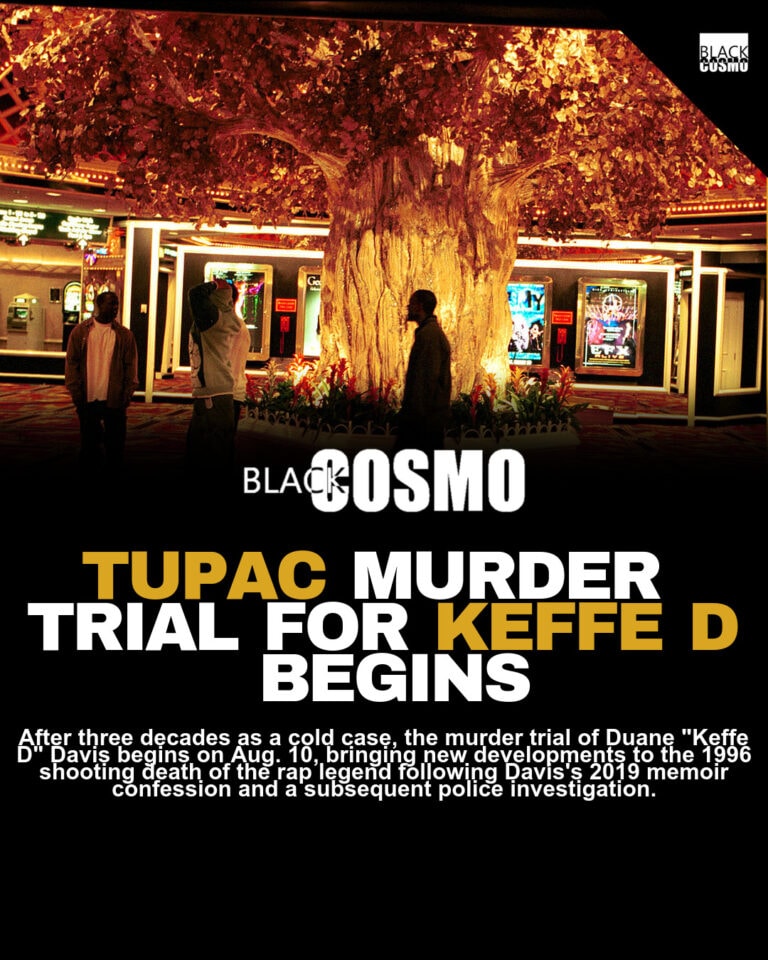
Next month marks the 30th anniversary of rapper Tupac Shakur‘s death. After three decades of conspiracy theories, cold leads, and rumors, the murder trial for Duane “Keffe D” Davis—the suspect accused of organizing the Las Vegas strip shooting—officially kicks off on Aug. 10. Davis detailed his involvement in a 2019 tell-all memoir, which led investigators to reopen the cold case and bring the late rap legend’s unsolved murder back into the spotlight.
Ahead of the trial, here’s what led to this moment.
Sept. 7, 1996: Inside the MGM Grand Lobby
While Mike Tyson and Bruce Seldon fought for the WBA Heavyweight title in Las Vegas, Tupac Shakur and his entourage had their own confrontation in the MGM Grand lobby. Minutes after Tyson knocked Seldon out in the first round, Shakur, Marion “Suge” Knight, and others fought with a group that included Duane “Keffe D” Davis and his nephew Orlando “Baby Lane” Anderson—a man with whom Shakur had previously clashed.
Surveillance video showed Shakur and Knight kicking and punching Anderson near a bank of elevators, police said.
Flamingo Road and Las Vegas Boulevard
The MGM Grand lobby fight between Tupac Shakur, Suge Knight, and Compton gang members served as a catalyst for the events that ended with Shakur’s death. (Photo by Clarence Williams/Los Angeles Times via Getty Images)
Around 11:15 p.m., the black BMW carrying Shakur as a passenger stopped at a red light at Flamingo Road and Koval Lane, just a block from the Strip. Malcolm Greenidge, a lifelong friend of Shakur who was trailing in a separate car, told the grand jury they were headed to Club 662 when a white Cadillac quietly pulled up alongside them.
According to witnesses, Davis, Orlando, Deandre “Freaky” Smith, and Terry “Bubble Up” Brown were inside the Cadillac. Of the four men, only Davis remains alive today.
The Fatal Shooting
An image from surveillance footage shows Tupac Shakur and Marion “Suge” Knight Jr. in the BMW the night Shakur was killed. (Photo by Ethan Miller/Getty Images)
According to Davis’s account, his crew spotted Shakur leaning out of the passenger window, waving at fans. Recognizing the rapper, Davis ordered driver Terrence to make a U-turn because, as Davis put it, they “found who we were seeking.”
Greenidge told the grand jury that “an arm came out of the back window and began shooting,” firing more than a dozen rounds. Shakur was hit four times—twice in the chest. Knight, who was driving, was grazed in the head by a bullet fragment.
Immediate Aftermath
Portrait of rapper Tupac Shakur and music executive Marion “Suge” Knight, of Death Row Records, outside Club 662, Las Vegas, Nevada, circa 1996. (Photo by Nitro/Getty Images)
Knight had a flat tire and couldn’t drive away. Paramedics pulled them over at Las Vegas Boulevard and Harmon Avenue. Shakur was rushed to University Medical Center and placed on life support, listed in critical condition. He underwent emergency surgery to remove his right lung and remained on a respirator in intensive care.
Six Days Later
Rapper Tupac Shakur performs at the Regal Theater in Chicago, Illinois in March 1994. (Photo By Raymond Boyd/Getty Images)
On Sept. 13, Shakur succumbed to internal bleeding and respiratory failure in the ICU. He was pronounced dead at 4:03 p.m. He was 25.
Decades of Cold Leads and Rumors
Clark County District Attorney Steve Wolfson holds an indictment for Duane “Keffe D” Davis during a news conference at the Las Vegas Metropolitan Police Department headquarters. (Photo by Ethan Miller/Getty Images)
In the years following September 1996, the search stalled due to uncooperative witnesses, police missteps, and dead-end leads. Neither the Cadillac nor the firearm used in the shooting was ever recovered. The case remained open for three decades, and as key figures passed away, law enforcement faced persistent scrutiny for failing to secure a conviction in one of the most notorious unsolved murders in the United States.
Keffe D’s Tell-All and The Reopened Case
Clark County District Attorney Steve Wolfson, Clark County Sheriff Kevin McMahill, and Las Vegas Metropolitan Police Department Lt. Jason Johansson hold a news conference regarding the arrest and indictment of Duane “Keffe D” Davis. (Photo by Ethan Miller/Getty Images)
The case gained traction after self-incriminating accounts reignited the investigation. In 2019, Davis co-wrote “Compton Street Legend” with Yusuf Jah, a memoir in which he admitted he was in the Cadillac and provided the weapon used to shoot Shakur.
“Them jumping on my nephew gave us the ultimate green light to do something,” Davis wrote in his book.
Marc DiGiacomo, chief deputy district attorney in Clark County, noted that Davis likely would never have been prosecuted had he not written the memoir. Davis’s defense attorney, Michael Sanft, argued the book was fictionalized to make money, and it remained unclear which parts Davis actually authored.
The Missing Piece
Tupac Shakur and Marion Suge Knight (Photo by Jeff Kravitz/FilmMagic)
The book’s marketing promised “the missing piece of the puzzle that hip-hop fans have been waiting for,” detailing street codes and what happens when the worlds of streets, entertainment, and corrupt law enforcement collide. The Amazon description emphasized Davis and Knight as the “only living eyewitnesses to the deadly confrontation on the Las Vegas Strip between the occupants of our two vehicles.”
The War Behind the Music
Portrait of American rappers at a premiere party for “Murder Was the Case” in New York, circa 1995. (Photo by Nitro/Getty Images)
Authorities branded Davis as a 1990s “shot caller” for the South Side Compton Crips, positioning him as a key player in the bitter East Coast versus West Coast feud between Suge Knight’s Death Row Records and Sean “Diddy” Combs’s Bad Boy Records. The South Side Compton Crips allegedly protected Bad Boy, while Mob Piru was affiliated with Death Row.
One of My Guys Grabbed the Glock
Booking photo of Duane Davis. (Photo by Ethan Miller/Getty Images)
Though Davis told ABC in a 2025 interview that he is “innocent,” passages in his book suggest revenge was the motive. “We couldn’t let no record company studio gangsters do us like that,” Davis writes. According to the memoir, Davis saw Shakur reach for a weapon, prompting his crew to act. “One of my guys from the back seat grabbed the Glock and started bustin’ back.”
The Raid and Indictment
More than 25 years after Shakur’s death, SWAT officers executed a late-night search warrant on Davis’s Henderson, Nevada home. Police seized hard drives, cellphones, computers, a Vibe magazine featuring Shakur, two tubs of photographs, and several .40-caliber bullets on July 13, 2023.
A Clark County grand jury indicted Davis with one count of open murder with the use of a deadly weapon, with a gang enhancement charge—marking the first formal criminal prosecution in nearly three decades.
The Trial
Duane Davis, 60, speaks with attorney Ross Goodman during his October 19, 2023 arraignment on murder charges in the death of rapper Tupac Shakur. (Photo by John Locher / POOL / AFP)
Davis’s jury trial begins Aug. 10, nearly three years after his 2023 arrest. Now 63, Davis has pleaded not guilty and remains imprisoned. If convicted, he faces life in prison.
What’s Next
Duane Davis appears at a pretrial hearing in district court on July 28, 2026, in Las Vegas, Nevada. (Photo by Sam Morris-Pool/Getty Images)
Due to anticipated public interest and limited courtroom space, the Las Vegas court will implement a daily lottery system to distribute available seats after jury selection—expected to take several days. This high-profile case, which has captured decades of speculation and grief from hip-hop culture, finally moves toward closure.
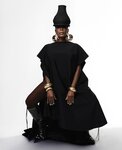
Sommore graces the pages of L’Officiel India in this stunning editorial that captures the comedic icon at the height of her influence. The shoot, helmed by creative director Olvrbrwn, brings together a powerhouse team to showcase Sommore in all her glory—proving that Black excellence transcends entertainment and extends into high fashion spaces traditionally gatekept from women who look like us.
The styling choices feel intentional and celebratory, honoring Sommore’s bold personality while elevating her into the fashion conversation. With makeup by Tcooperbeauty and wardrobe assistance from Momckenziestylez, every detail was considered to present a multidimensional portrait of a woman who’s commanded rooms through wit, confidence, and unapologetic Blackness for decades. The creative team, including photography assistants Jordanblake10 and Sandramabelle, worked seamlessly to capture moments that feel both polished and genuine.
This editorial matters because it reminds us that Black women comedians, moguls, and cultural architects deserve their flowers in spaces that have historically overlooked them. When a publication like L’Officiel India features Sommore in this way, it’s not just a photoshoot—it’s a statement that our stories, our style, and our contributions are worthy of the world’s attention. This is the kind of representation that shifts narratives and opens doors for the next generation.
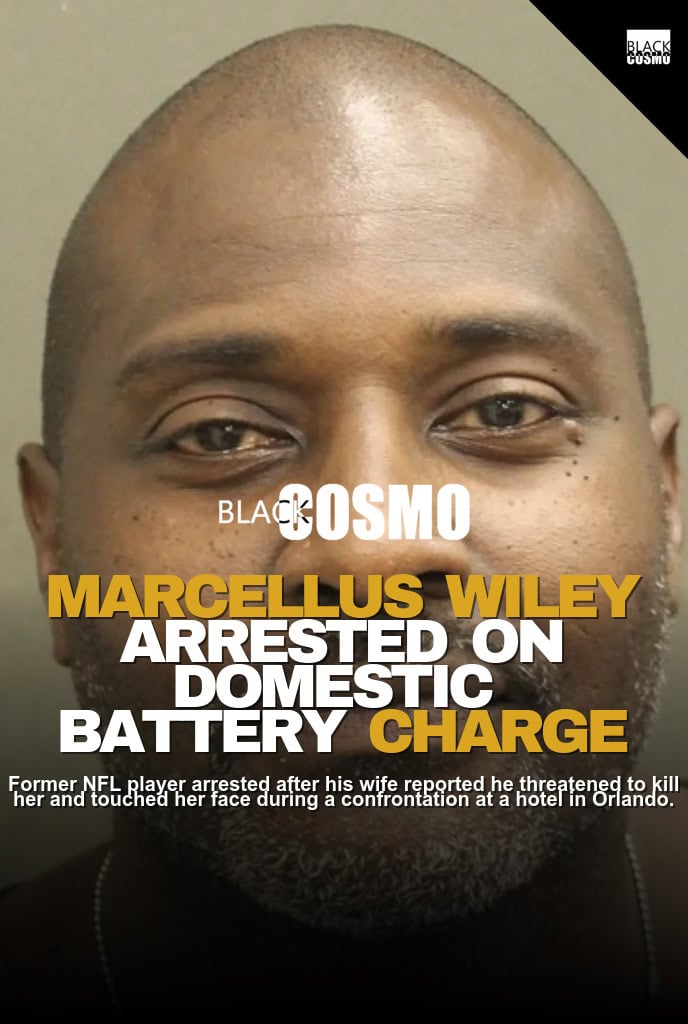
More details have emerged online about former NFL star Marcellus Wiley, who was arrested on a domestic battery charge. His case highlights ongoing conversations around Marcellus Wiley and accountability in professional sports.
His wife, Annemarie Wiley, reportedly told police he threatened to kill her and touched her face during a confrontation in front of their 7-year-old daughter. The incident raises important questions about safety and protecting vulnerable family members during tense moments.
The July 4 altercation allegedly occurred at the World Marriott in Orlando, where the family was staying for a basketball tournament. According to an arrest affidavit, Annemarie called police and asked that her husband be removed from their hotel room because she feared for her life.
The former Real Housewives of Beverly Hills cast member also told officers she planned to divorce Wiley.
Annemarie alleged that Wiley, 51, stood over her and “used one finger to sternly and intentionally poke her in the cheek.” Their other children and additional people were reportedly present when officers arrived. Wiley denied that any physical encounter occurred and disputed his wife’s claims of previous violence and police noted that he showed them text messages between the couple that appeared cordial.
“I completely and unequivocally deny these allegations, and I’m certain the truth will prevail,” Wiley later wrote on social media.
The former Pro Bowl defensive end said he was limiting his public comments to protect his children, who had “already been impacted.” This reflects the broader conversation about how athletes navigate public scrutiny while maintaining privacy for their families during difficult times.
The arrest follows separate sexual assault accusations from four women reported in April. Wiley has also denied those claims, including allegations raised in lawsuits involving his time at Columbia University. These serious allegations underscore ongoing discussions about accountability within sports and higher education.
Wiley was taken into custody by the Orange County Sheriff’s Office and was initially held without bond before eventually being released.
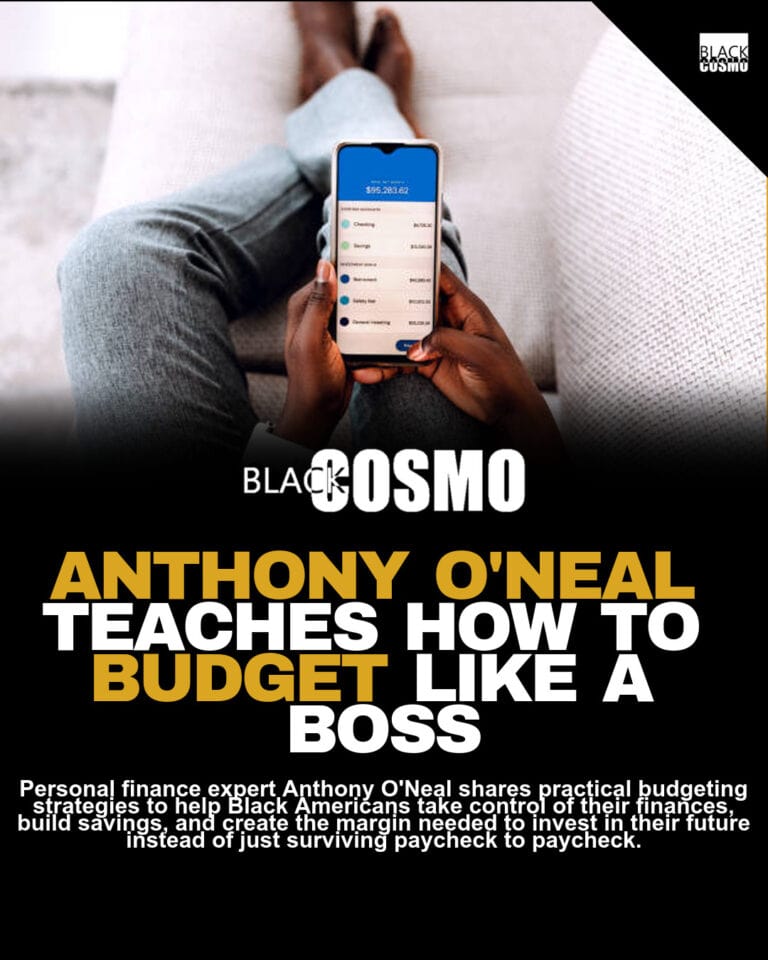
Black Americans know what it means to make a dollar stretch. But with rising rent, grocery prices, and everyday expenses eating away at paychecks, simply cutting back isn’t always enough. Living within your means doesn’t have to mean living without joy. A few smart budgeting habits can help you take control of your money instead of letting it control you.
The Root spoke with Anthony O’Neal, a personal finance expert, HBCU educator, and author whose upcoming book “Stop Living Paycheck to Paycheck” releases August 25. He shared practical tips on how to budget like a boss, create margin in your finances, and start saving and investing with intention. We asked Anthony O’Neal about one simple money move you can start today to take control of your finances.
The Biggest Mistake Folks Make When Saving
Overhead view of young Black woman managing online banking with smartphone sitting on the sofa at home. She is transferring money, checking balances and paying bills.
O’Neal identifies one common pitfall: people don’t fully understand what a budget is designed to do. A good budget should accomplish three core things: know exactly where every dollar is going, create a financial margin between your income and expenses, and build enough surplus to save and invest consistently.
“I call it the Zero-Based Margin Budget,” O’Neal explained. “List your income at the very top. If you have alimony, child support, your job, your side business—even if your partner is giving you an allowance every month, that’s income. List that.”
After calculating your income, you need to account for everything leaving your account. “List all your expenses. Mortgage, cell phone bill, gas, groceries, eating out, apps, hair and nail appointments, anything that goes out. Even investments like your 401K count as an expense,” he said.
Once you’ve mapped everything coming in and going out, you’ll have clarity on your finances. The goal is creating “margin”—the money left over after expenses are covered.
Create Margin Before You Create Wealth
Young black woman withdrawing money using a credit card and a phone at the ATM machine on the street.
After years of financial evaluations, O’Neal has noticed a pattern: many Americans have more money going out than coming in, or nothing being deliberately preserved. Creating this “freedom in margin” is essential to breaking the cycle.
Rather than watch every dollar disappear, that surplus needs purpose. Whether it’s a high-yield savings account, an index fund, a mutual fund, or a low-cost ETF, using margin to save and invest is where long-term financial success begins. O’Neal believes changing your relationship with money matters just as much as changing your spending habits.
“What I want people to understand is getting to a point where we’re no longer exchanging our time for money. Our money should buy back our time. We can’t do that if we’re not saving and investing and creating a margin to do it,” he said.
For O’Neal, it’s time Black folks moved away from endlessly trading hours for a paycheck and instead let their money work for them.
The Simple Money Leak You Can Fix Today
Black man puts coin into piggy bank.
Saving more doesn’t always require earning more. Sometimes it just means looking harder at where money’s already going. O’Neal recommends tackling recurring charges and subscriptions as a quick win for your budget.
Pull your last three months of bank and credit card statements. Look for charges that repeat month after month. Then start trimming.
“When I did this for myself the first time, I found about $200 a month just in subscriptions and apps. I had HULU, Netflix, Amazon, ESPN, Peacock—to watch ‘The Fresh Prince of Bel-Air,'” he laughed. “When I cut out the extra stuff, I found about $175 in my monthly budget. That’s groceries. That’s two tanks of gas, depending on your car.”
Small charges add up faster than most people realize. That streaming service you forgot about, the premium tier you’re no longer using, the app subscription from last year—they quietly erode your budget. Keep only what you genuinely use. Everything else goes.
What Financial Success Really Looks Like
Studio portrait with white background of a happy african american woman caressing a piggy bank.
O’Neal’s path to financial literacy wasn’t conventional. He experienced homelessness at 19 years old before becoming debt-free, building a seven-figure business, and helping millions regain control of their money. That early struggle reshaped how he defines success.
“When I looked back on why I was homeless, it wasn’t because I didn’t have income,” he told The Root. “It was because I didn’t have the correct information on what success looked like when it came to finance.”
For O’Neal, financial freedom isn’t about appearing wealthy. It’s about the peace of mind that comes from paying bills on time, weathering unexpected setbacks, and investing in your future instead of your image.
“I realized I wasn’t funding my future. I was funding my present image. I wish Black culture understood that true financial success isn’t looking good. It’s positioning yourself to decide what you want to do—where you no longer have to work two jobs, where you can go to your son or daughter’s game or after-school programs and actually be present,” he said. “True financial success is asking, ‘What do you have invested?’ and ‘How are you building for your future self?'”
TOPSHOT – US President Donald Trump pumps his fist as he boards Air Force One at Morristown Municipal Airport in Morristown, New Jersey, on June 21, 2025 as he returns to the White House from his golf club in Bedminster, New Jersey. (Photo by Mandel NGAN / AFP via Getty Images)
Washington, D.C. was long ago dubbed “Chocolate City,” a recognition of its significance as a place where Black residents built communities, elected leaders and created a cultural legacy that has shaped America for decades. Under Donald Trump‘s second term, a new wave of battles over who controls the capital continues to rock residents and visitors alike.
D.C. has long struggled with its lack of statehood, which many fear has opened the floodgates for the federal government to meddle in local affairs. As Trump expands its reach into policing, public spaces and local decision-making, many D.C. residents see a familiar fight resurfacing: the struggle for power, representation and the right to shape their own home. We’re looking closely at just how far Donald Trump‘s attempt to exert control in the District directly impacts Black residents.
Home Rule vs. Federal Mandates
WASHINGTON, DC: An activist holds a sign that read “Free DC” during a rally at Dupont Circle. (Photo by Alex Wong/Getty Images)
D.C.’s Home Rule Act gives residents elected local government, but Congress and the president retain extraordinary power over the city. Trump’s second term has exposed those limits through policing decisions, federal directives and intervention in local government, reinforcing critics’ argument that democracy in the District remains incomplete.
Two Different Visions for D.C.: Statehood vs. Federal Control
For decades, many Washingtonians have fought for full statehood, arguing that more than 700,000 D.C. residents pay federal taxes without voting representation in Congress. Trump has taken the opposite approach, repeatedly arguing the federal government should exercise greater control over the city and promising to “clean up” Washington through federal intervention instead of expanding local power.
A Damaging View of D.C.
Aerial view of Washington DC monuments (from L) the Lincoln Memorial, Washington Monument, and the United States Capitol. (Photo by Brooks Kraft LLC/Corbis via Getty Images)
Trump repeatedly described Washington as “dirty,” “dangerous” and poorly managed, often portraying the city as an example of Democratic failure. Critics say those comments flatten a city of vibrant neighborhoods, culture and Black political leadership into a crime narrative. Supporters argue he’s highlighting public safety concerns that city leaders have failed to address.
National Guard on D.C. Streets
WASHINGTON, DC: Members of the U.S. National Guard stand near the fenced off Lincoln Memorial Reflecting Pool with the Washington Monument in the background. (Photo by Kevin Carter/Getty Images)
Trump’s deployment of the D.C. National Guard marked another flashpoint in the city’s long-running debate over local control. Unlike states, D.C. lacks a governor, giving the president unique authority over the Guard. The president said the Guard will remain in place until 2029 at a cost of $1.4 billion, according to PBS. Supporters viewed the deployment as necessary for crime reduction, but for Black residents, the policy invoked fears of a return to the “stop and frisk” era.
White House Renovations
WASHINGTON, DC – JULY 30: Construction continues on a new helipad on the South Lawn of the White House and the East Wing ballroom on July 30, 2026 in Washington, DC. (Photo by Kevin Carter/Getty Images)
The White House has long been intertwined with the history of Chocolate City, serving as both the seat of presidential power and a backdrop to generations of Black Washingtonians’ activism, labor and civic life. Now, with a new East Wing ballroom, redesigned gardens and marble interiors, Trump is remaking the White House to reflect his own aesthetic.
Critics argue the renovations symbolize an administration prioritizing grand projects while federal workers, housing advocates and residents face growing uncertainty. As with much of downtown D.C., ongoing construction means White House visitors should expect detours, fencing and a different experience than in years past.
The Smithsonian Under Pressure
WASHINGTON, DC: A Smithsonian sign is displayed at the Smithsonian National Museum of African American History and Culture. (Photo by Kevin Carter/Getty Images)
Trump’s administration has pushed for changes at Smithsonian museums and exhibits, arguing they should promote a more “patriotic” interpretation of American history. Historians and museum professionals warn that any political interference threatens scholarly independence, especially at institutions documenting slavery, civil rights and Black history.
The National Mall in Transition
WASHINGTON, DC: Members of the U.S. National Guard stand near the fenced off Lincoln Memorial Reflecting Pool with the Washington Monument in the background. (Photo by Kevin Carter/Getty Images)
The National Mall, home to dozens of monuments, museums and D.C.’s prized cherry blossom trees, is experiencing significant changes under Trump’s administration. Visitors now encounter a landscape filled with construction fencing, renovation projects and new federal proposals. With the Reflecting Pool work, monument upgrades and Trump’s proposed Triumphal Arch, parts of America’s front yard increasingly resemble an active construction zone rather than the familiar postcard image millions expect.
The Triumphal Arch Proposal
White House Press Secretary Karoline Leavitt shows an artist’s rendering of US President Donald Trump’s planned Triumphal Arch during a press briefing. (Photo by Brendan SMIALOWSKI / AFP via Getty Images)
Trump’s proposed 250-foot Triumphal Arch near Arlington National Cemetery has drawn fierce opposition from preservationists and veterans. A federal historic review found it could adversely affect 37 nearby historic landmarks and alter iconic sightlines across the National Mall and Memorial Bridge corridor, according to The Daily Beast.
The Reflecting Pool Misstep
WASHINGTON, DC – AUGUST 1: Visitors walk between the Lincoln Memorial and the recently drained Lincoln Memorial Reflecting Pool on August 1, 2026 in Washington, DC. (Photo by Kevin Carter/Getty Images)
The Lincoln Memorial Reflecting Pool holds significant meaning in Black history. It’s on the steps of the Lincoln Memorial where Dr. Martin Luther King Jr. and thousands of onlookers gathered for the March on Washington and his famous “I Have a Dream Speech.” In 2026, the pool’s proposed makeover hit major problems.
The project, which included a newly painted blue basin intended to improve reflections, instead became the subject of public criticism. Algae and discoloration quickly became talking points, according to the New York Times. The administration defended the project as necessary modernization ahead of America’s 250th anniversary.
Kennedy Center Renaming Fight
WASHINGTON, DC – The sign on the Donald J. Trump and John F. Kennedy Memorial Center for the Performing Arts is seen on June 12, 2026 in Washington, DC. (Photo by Anna Moneymaker/Getty Images)
After Trump reshaped the Kennedy Center board, trustees voted to add his name to the institution. The move sparked lawsuits, artist boycotts and questions about whether the board possessed the legal authority to rename a congressionally chartered memorial honoring President John F. Kennedy. The controversy led to concerns that Black History Month celebrations would not happen at the center, as many organizations dropped out in protest, according to the Washington Post. Trump’s name was removed in June following a court order.
The Trump Effect on D.C.’s Economy
Eastern Market is a public market in the Capitol Hill neighborhood of Washington, D.C. (Photo by Carol M. Highsmith/Buyenlarge/Getty Images)
According to the Economic Policy Institute, mass federal workforce firings, uncertainty around government contracts and tourism disruptions have rippled through Washington’s economy. Federal workers represent a significant portion of D.C.’s workforce, and restaurants, office landlords and small businesses that depend on them have reported new pressures. Large federal construction projects create a different economic activity centered on infrastructure rather than local business.
Renovating Dulles Airport
DULLES, VIRGINIA – Travelers make their way to through the parking garage tunnel to the security checkpoint at Washington Dulles International Airport. The Department of Transportation plans to unveil a $22 billion plan to rebuild the federally owned airport that will include an underground U-shaped train to move travelers between terminals along with a major terminal expansion and more convenient car parking. (Photo by Finn Gomez/Getty Images)
Although Washington Dulles International Airport is technically located in Virginia, many D.C. residents and outside visitors rely on it for transportation. When the administration proposed a sweeping overhaul of Dulles, critics raised questions about priorities given competing transportation, housing and public service needs throughout the region, according to the Associated Press. Supporters argue the investment modernizes aging infrastructure.
Federal Control of Local Policing
Washington, DC Mayor Muriel Bowser (C), joined by Chief of Police at the Metropolitan Police Department Pamela Smith (L) and Fire and Emergency Medical Services Chief Chief John Donnelly, speaks at a press conference after President Donald Trump announced a federal takeover of the Metropolitan Police Department at the Wilson Building on August 11, 2025 in Washington, DC. (Photo by Kevin Dietsch/Getty Images)
Trump’s decision to seize operational control of D.C.’s Metropolitan Police Department reignited one of Washington’s oldest constitutional battles: who governs the nation’s capital? The city is currently run by Black Democrat Mayor Muriel Bowser. Many saw the move as a direct assault on Home Rule and local democracy, warning it weakened accountability to D.C. residents.
Trump’s Attacks on D.C.’s Black Leadership
WASHINGTON,DC: Janeese Lewis George speaks with the media outside of the Benning Stoddert Recreation Center voting station on June 16,2026 in Washington, DC. DC is using rank choice voting in this mayoral primary. (Photo by Maxine Wallace/The Washington Post via Getty Images)
Beyond his conflicts with Mayor Bowser, Trump has targeted D.C. mayoral nominee Janeese Lewis George, a Black woman and democratic socialist. Trump has accused her of supporting policies he says would harm the capital and questioned her approach to crime, policing and immigration. The president even threatened to “take over” D.C. if Lewis George becomes the next mayor.
She pushed back, saying many of his claims were inaccurate and framing the fight as a battle over D.C.’s right to govern itself. “Threatening DC because you do not like how our residents vote is an attack on democracy itself,” Lewis George said. “The people of DC elect the Mayor of DC. And they want someone who will stand up to Trump.”
ICE and D.C.’s Migrant Communities
WASHINGTON, DC : Participants hold signs during a press conference held by the House Democrats to reintroduce the “American Dream and Promise Act” at the House Triangle on February 26, 2025 in Washington, DC. The “American Dream and Promise Act” outlines a process for specific undocumented immigrants to obtain permanent resident status and includes additional immigration-related regulations. (Photo by Kayla Bartkowski/Getty Images)
Immigration advocates say expanded ICE enforcement has created fear that extends far beyond undocumented residents. Community organizations report families skipping work, school events and health appointments over deportation concerns. Supporters of tougher enforcement argue stronger immigration laws improve public safety and deter unlawful migration.
The Ongoing Fight for D.C. Power
WASHINGTON, DC – NOVEMBER 16: Members of Vocal Water attend the Chocolate City Keep Crankin’ Panel Discussion at Martin Luther King Jr. Memorial Library on November 16, 2022 in Washington, DC. (Photo by Brian Stukes/Getty Images)
Washington has changed dramatically over decades, but it remains a majority-Black political and cultural capital in ways that reach far beyond demographics. According to the Census, Black residents make up about 41% of D.C.’s population, down from more than 70% in 1970. The shift reflects decades of displacement and gentrification.
For many residents, the biggest question is whether the people who actually live in D.C. will have the power to shape their own future. As debates over policing, immigration, museums, public spaces and Home Rule continue, many Washingtonians see these fights as part of a much longer struggle over who gets to define and control Chocolate City.
Domestic violence allegations have surfaced in a high-profile split that’s got people talking. Annemarie Wiley, known from her time on Real Housewives of Beverly Hills, has filed for divorce from former NFL player Marcellus Wiley. She’s also requesting a 100-yard restraining order and asking the court to keep him away from their three children.
The situation is serious. According to court documents, Annemarie is seeking exclusive use of their Los Angeles home, custody of their kids, and spousal support. She’s also asking for domestic violence protections for her children, though the court hasn’t ruled yet. In her filing, Annemarie detailed what she describes as a troubling pattern of behavior spanning over a decade.
Annemarie accused Marcellus of a “continuing and escalating pattern of physical violence, sexual abuse, verbal and emotional control and intimidation.” She revealed the emotional toll these experiences have taken, explaining that trauma has caused gaps in her memory—she’s blocked out much of what happened to her.
The allegations are detailed and distressing. Annemarie claims Marcellus sexually assaulted her in 2012 and again multiple times in January 2026. She also alleged he punched her in 2014, threw a bottle at her while she was nine months pregnant in 2019, and struck her with shoes in August 2025. Beyond physical violence, she claims he borrowed $100,000 from her without repaying it and accumulated another $100,000 on her credit card—a form of financial control that’s often part of a larger pattern of abuse.
The filing came after Marcellus was arrested in Florida over the July 4 weekend. Annemarie told police he threatened to kill her and poked her cheek during a hotel dispute. Marcellus has denied all the allegations against him.
This situation has resurfaced memories of past controversies. During Annemarie’s time on RHOBH, Marcellus faced real backlash for publicly ranking her an 8.5 out of 10 in the looks department—something that shocked the other Housewives at the time and revealed a disrespectful dynamic.
Before marrying Annemarie in 2014, the former NFL star appeared on a 2011 episode of Millionaire Matchmaker. Wiley spent 10 seasons in professional football, playing for the Buffalo Bills, San Diego Chargers, Dallas Cowboys, and Jacksonville Jaguars.
Rachel Beaver, known from MTV’s “Teen Mom,” is setting the record straight about her alleged text exchange with rapper Lil Wayne. She says she’s simply a single mother who saw an opportunity for some free trips, not a gold digger looking to exploit the hip-hop icon.
In a candid conversation, Rachel Beaver explained she had to do a double-take when Wayne actually responded to her initial outreach. She’s eager to clear up misconceptions, saying she never intended to be seen as begging for anything. Her take: if someone wealthy is willing to cover travel expenses, why not take them up on it?
According to Rachel, Wayne’s wealth made the free flight offer too good to pass up. “I don’t care if you’re Lil Wayne or Joe on the corner,” she said. “You’re paying for my flight. That’s how I roll, and that’s just how it works.”
When asked about releasing the texts publicly, Rachel didn’t hold back. She explained that her hometown friends are huge fans, and she wanted to share the exchange with them. It wasn’t malicious, just a moment she thought was worth showing off.
The fallout hasn’t hurt her prospects either. Since the texts surfaced, Rachel says several other men have offered her free trips. She’s doing fine without Wayne in the picture.
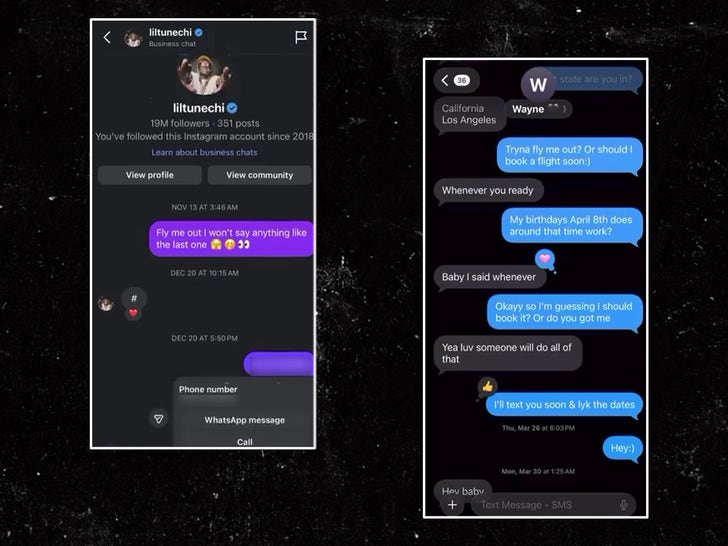
The timeline itself reads like a slow-burn attempt at connection. On November 13, the 23-year-old allegedly slid into Wayne’s DMs with a direct proposition: “Fly me out I won’t say anything like the last one.” Wayne asked for her number, and the conversation moved to text.
According to the alleged messages, Rachel suggested they wait until after Christmas to meet up because she’d need time to arrange childcare for her kids. Then, on January 3 around 5 AM, Wayne apparently reignited things with a simple text: “want u.”
The messages reportedly continued sporadically over several weeks, with talk of travel plans peppered throughout. Eventually the conversation fizzled out—whether that’s because Wayne moved on or blocked her remains unclear. Rachel did get a new phone in the interim.
She’s not completely closed the door either. Rachel says she’d still be open if Wayne wants to fly her out. The ball’s in his court now.
Keke Palmer didn’t earn the nickname “Keep a Job” Palmer for nothing. Since childhood, she’s been a fixture in entertainment, moving seamlessly between acting, hosting, producing, and everything in between. Now that she’s signed on to host “The Voice: Celebrity,” it feels like the right moment to take stock of just how much she’s accumulated over her decades-long grind.
The new NBC gig alone comes with a reported $2 million paycheck, but that’s just the latest addition to a résumé that’s been generating serious income for years. Keke Palmer reached millionaire status by age 12, thanks to films like “Barbershop 2: Back in the Habit,” “Madea’s Family Reunion,” and her standout role in “Akeelah and the Bee.”
Two years after “Akeelah” hit theaters in 2006, she landed her breakout Nickelodeon series “True Jackson VP,” reportedly pulling in $20,000 per episode. That show became a cultural moment, and it set the foundation for everything that followed.
Over the next decade-plus, Palmer worked steadily across film and television. “The Longshots,” “Jump In,” “Joyful Noise,” “Scream Queens,” and “Star” all padded her bank account. But Palmer has been candid about feeling underpaid for much of her career. It wasn’t until Jordan Peele’s 2022 film “Nope” that she felt like she finally got proper compensation—reportedly $700,000 for that role.
Keke Palmer attends “I Love Boosters” screening in New York City, May 2026. Photo by Manoli Figetakis/Getty Images
Her filmography beyond that includes “Hustlers” ($157.5 million at the box office), “One of Them Days” (which she produced and grossed nearly $52 million), plus recent releases like “I Love Boosters” and “The Pick Up.” Add in hosting gigs on “GMA3,” the NBC game show “Password,” and appearances on shows like “Legendary,” and the picture becomes clear: Palmer’s been working constantly and getting paid accordingly.
Voiceover work has been another consistent revenue stream. She’s lent her voice to “Ice Age,” “Sing,” and “Lightyear,” and contributed to TV projects like “Big Mouth” and “The Proud Family: Louder and Prouder.” The exact figures remain undisclosed, but it’s all money in motion.
Palmer’s business moves extend well beyond acting and hosting. She’s secured brand partnerships with Revlon, Old Navy, Meta, and Amazon. In 2024, she became the first Chief Brand Officer for Creme of Nature, the natural haircare line. Her own ventures also generate income: KeyTV network, Big Bosses Entertainment record label, her podcast “Baby, This Is Keke Palmer,” and other projects under her control.
At 32, Palmer has built something most entertainers only dream about: genuine financial independence coupled with creative control. She keeps exact net worth figures private, as any savvy businessperson would. But based on what’s public, her decades of calculated moves have paid off handsomely. And based on her trajectory, it’s safe to assume there are plenty more deals and projects on the horizon.
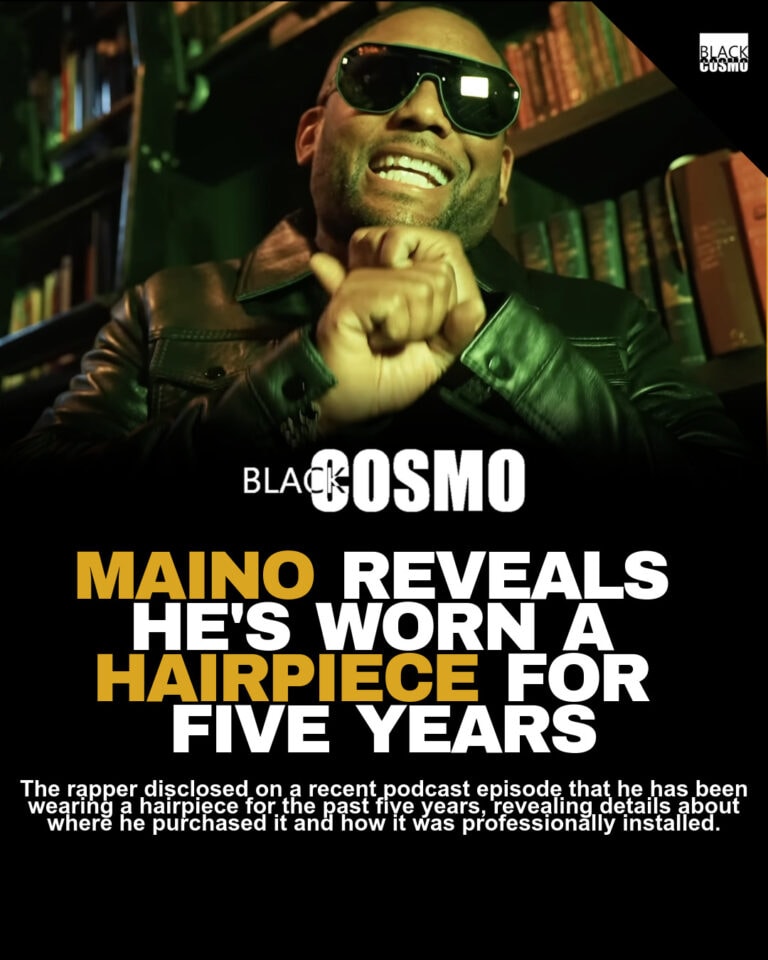
Rapper Maino hairpiece revelation just had the internet in a chokehold. During a recent episode of Let’s Rap About It, the Brooklyn native revealed to his fellow podcast hosts—Dave East, Fabolous, and Jim Jones—that he’s been wearing a hairpiece for the past five years. And honestly? Nobody saw it coming.
“I got this about five years ago,” Maino said when Dave asked when he started rocking the hair unit. The conversation quickly turned into a full interrogation, with the crew asking all the burning questions. When Fabolous wanted to know where he copped it, Maino kept it simple: “Online.” But Jim couldn’t believe how natural it looked. “But how does it look so natural if you got it online?” he asked, genuinely shook. You can check out more about Maino hairpiece discussions across social media.
Maino caught on quick that his boys were trying to get him to spill all the tea. “See, y’all trying to trick me up,” he laughed. “Listen, it’s a hairpiece, n—a.”
The questions kept flowing. Dave compared ordering the unit to buying a fitted cap, while Capo wondered if it arrived as a larger piece that needed trimming and customization. Maino wasn’t shy about explaining the real process though. “You gotta see a doctor, bro. Get your piece first,” he explained with conviction. “My s–t is installed.” He made it clear this wasn’t a DIY situation—professional help was key to getting that flawless finish.
Jim then jokingly offered to help him out during his next fitting, keeping the vibe light and funny throughout the whole exchange.
Once the clip went viral, rap fans everywhere were genuinely shocked. But here’s the thing—everyone praised the execution. The craftsmanship was undeniable. Most people would’ve never known the difference had Maino not brought it up himself. That’s the mark of true quality work. The moment sparked real conversations about self-care, personal grooming choices, and the standards we hold ourselves to in hip hop culture.