Black folks know code-switching well. Now a growing movement in California is reframing how we talk about Black English and its rightful place in classrooms.
Educators and advocates with Black Californians United for Early Care & Education are pushing to recognize Black English—also known as African American Vernacular English (AAVE) or African American English (AAE)—as something beyond slang or “improper” speech. They argue it should be embraced in preschool classrooms as a tool to strengthen early literacy and improve educational outcomes for Black students. The question becomes: What shifts when the language Black children bring to school is treated as an asset instead of something requiring correction?
Dr. Kami J. Anderson, an intercultural communication scholar with a Ph.D. from Howard University and author of “The Color of Language” (2023), frames the debate over Black English as something deeper than linguistics. It touches on how society recognizes Black culture, identity, and history. She points to a historical pattern of dismissing Black contributions when they challenge mainstream definitions of acceptability.
Why Black English Has Been Misunderstood
“We have historically lacked compassion for those elements of Africanness that have found their way into American society if we cannot see the direct benefit to us,” Anderson said. “We are okay with Africanness in jazz because we enjoy the music. We appreciate a yam because it’s tasty; the Africanness of hip hop linguistically inspires us because we have access to the slang and idiomatic expressions birthed there. But when we look at African American English, we are challenged to accept that Americanness can be more than one thing and acknowledge that our understanding of language rooted in contentious history is uncomfortable.”
Smiling male teacher raising hand while playing leisure games with children in classroom
Strengthening literacy requires more than student effort. Teachers carry responsibility too, and Anderson emphasizes building meaningful connections matters. One approach: developing understanding of AAE the way educators would with French, Spanish, or Arabic. Teachers needn’t teach AAE, but learning to use it expands their toolkit and helps students progress.
“It is the teacher’s knowledge of AAE that strengthens literacy, because the teacher will have a stronger linguistic foundation to support learning. The student already comes in with it; the teacher has to learn how to use it,” Anderson explained. “From a research perspective, Dr. April Baker-Bell speaks directly to this in her ELA classroom work. Not to mention the historic contributions of Geneva Smitherman, Gloria Ladson-Billings, and other scholars who shaped this conversation.”
AAE as Asset, Not Deficit
Critics worry embracing Black English discourages Standard American English learning. Anderson sees this concern differently. The worry itself carries implicit bias, she argues, one that “assumes a deficit in children that just isn’t present.”
“Embracing AAE considers the whole student in your pedagogy. This is what pedagogical strategies like Universal Design for Learning call for,” she said. “Bilingual education disproved long ago that including home languages limits students’ capacity to use what I call Mainstream American English. An ELA teacher can use AAE to guide students toward academic language, just as a bilingual educator uses Spanish or Urdu.”
She added: “My biggest wish is this: assume the brilliance of Black children who use AAE with ease, not any shortcoming.”
When Students Feel Seen, They Learn Better
A preschool teacher sits on the floor of her classroom with a small group of students as she reads them a book.
AAE represents identity, not just language mechanics. Anderson believes students flourish when they feel genuinely seen and understood. Their use of AAE isn’t something needing correction—it’s an opportunity to connect and expand what students can do inside and outside the classroom.
“They take risks when they feel safe, and they grow when their identities are honored. By accepting the legitimacy of AAE, we communicate that their whole being is welcomed, appreciated, and needed. When we see a child’s ability to speak AAE as an asset rather than a deficit, we show them how to expand their expression, not merely correct it,” Anderson said.
“This work benefits all students. It encourages empathy and compassion for differences, which our society needs. It’s radical work, but it’s also radical love for students, and both build a strong foundation for adulthood,” she concluded.
When colleges across the country have largely chosen to rewrite scholarship language to comply with the Trump administration’s restrictions on diversity initiatives, one prominent Black family in North Carolina decided to do something else entirely: take their money elsewhere.
For the first time in nearly 30 years, the Upperman family will not award new scholarships at the University of North Carolina Wilmington after refusing to alter the scholarship’s mission to satisfy the UNC System’s new “equality policy,” according to WHQR News. It’s a decision that comes with real weight. The family remains dedicated to honoring the legacy of their loved one, the late Dr. Leroy Upperman, even if it means pulling a scholarship in his name.
“I discussed it with my adult sons, and we decided the climate may never change,” Upperman’s daughter, Linda Upperman Smith, told WHQR. “There’s no way that we’re going to not follow my father’s wishes.”
Dr. Upperman was a pioneering Black physician whose family helped establish UNCW’s Upperman African American Cultural Center. After university officials asked Upperman Smith to remove language giving special consideration to students who demonstrated a commitment to the African American community, the family took a stand.
Rather than revise the scholarship based on the school’s new diversity, equity and inclusion guidelines, the family voted to stop funding new awards and is exploring moving its roughly $1 million endowment to Howard University, Dr. Upperman’s alma mater, according to WECT.
“One thing about Black folks: we have always figured out a way to make things work,” Upperman Smith said.
The decision stands out at a moment when many universities and donors have quietly modified scholarship language to comply with changing legal and political landscapes. According to UNCW Vice Chancellor Eddie Stuart, 18 active scholarships were found to be out of compliance with the UNC System’s policy, but most donors have opted to revise their agreements rather than withdraw funding.
Dr. Leroy Upperman. Screenshot from CCU Digital Commons
It’s a notable use of economic leverage by a Black family whose relationship with the university stretches back decades. Beyond scholarships, the family has invested in cultural programming, mentorship and student success at a campus where Black undergraduate enrollment has hovered around 4% to 5% for years, according to Data USA.
Technically, the scholarship did not require recipients to be Black. Instead, it prioritized students with an interest in or commitment to issues affecting African American communities, though recipients were often Black. University officials argued that evaluating that commitment could conflict with some provisions in the new equality policy.
Upperman Smith told WHQR the family’s decision is about preserving donor intent, not simply resisting administrative changes.
“I’m tired, and I said they’re not going to beat me down every time I ran into some kind of roadblock with something; they’re not going to beat me down, and on some level I feel that they’ve won, but that’s only at UNC Wilmington, that they’ve won,” she said. “I put a lot of time, energy, sweat, and tears into the university, and it’s like everything has just crumpled.”
The Upperman family’s move underscores a reality institutions may increasingly face: if donors believe the original purpose of their gifts can no longer be honored, they can take both their money and their legacy somewhere else.
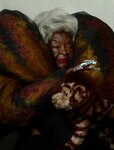
When an independent publication stakes its claim in print, the choice of its cover star is everything. For the second issue of Unguis Oracle, titled TACTUS, the editorial direction went beyond standard commercial casting. The cover introduces Celine Dijkgraaf, the grandmother of the magazine’s Editor-in-Chief, Daniel Smedeman. She is photographed by Dion Bal, dressed in haute couture by Viktor & Rolf, and accompanied by Storm, a canine companion cast for the shoot. This decision challenges the industry’s usual obsession with youth, showcasing a deeply personal narrative of family, heritage, and style.
For Daniel Smedeman, the decision to feature Celine Dijkgraaf is a tribute to her enduring presence. She is described as a cornerstone of her family, a woman who raised five children and her grandchildren with profound care and a steady belief in their potential. Bringing her into the high-fashion editorial space is not a mere novelty. It is an intentional framing of mature grace, demonstrating that high fashion belongs to those with lived experience. The visual language of the cover places her at the center of a sophisticated dialogue on aging and representation.
The cover shoot combines meticulous styling by Jan Hurxkens and precise creative direction. Celine wears an intricate Viktor & Rolf couture piece, a choice that contrasts avant-garde design with the natural dignity of a matriarch. Photographer Dion Bal captures the scene with a sharp focus that highlights texture, form, and emotion. The presence of Storm, the dog featured alongside Celine, adds an unexpected element of playfulness to the editorial structure. Every contributor on the team, from makeup artist Laura Yard to hairstylist Magdalena Loza, worked to honor the subject’s authentic presence.
Unguis Oracle, which launched as a dedicated ‘paper on hands,’ explores nail culture, hand care, and tactile art. It approaches touch as a form of authorship, analyzing how we interact with the physical world. In an increasingly digital era, print magazines that focus on specific, tactile elements of human culture offer a grounding alternative. By highlighting hands and the stories they carry, the publication carves out a unique space in modern publishing. The second issue, TACTUS, expands on this philosophy by examining how touch connects generations.
Through this editorial, the publication touches on themes of lineage and identity. Celine’s hands, which Daniel Smedeman himself styled for the shoot, tell a story of labor, care, and guidance. This connection brings a human quality to the high-fashion layout. It proves that style is not merely about garments. Instead, it is about the history of the person wearing them. The visual presentation strips away the cold distance often found in couture photography, replacing it with warmth and respect.
By dressing a grandmother in Viktor & Rolf, the creative team shows that high-end garments are most compelling when worn by people with profound personal depth. This approach to luxury fashion emphasizes character over commercial trends. The editorial stands out because it avoids the typical tropes of elder-themed fashion shoots, which often lean into parody or extreme eccentricity. Instead, Celine is presented with quiet confidence and absolute composure.
The launch of the issue on July 4, 2026, at Hotel Grand Amour in Paris, marked a significant moment for the indie title. Edited by Daniel Smedeman with graphic design by Karen van de Kraats and Anne van Bokhoven, the magazine is finding its audience among print purists and design enthusiasts. The collaboration of creative minds in Amsterdam and Paris shows the growing strength of independent European fashion media. It reminds us that storytelling in fashion is richest when it originates from personal history.
Editor’s Picks: Elevate your lifestyle with our curated essentials. Immerse yourself in your favorite playlists or podcasts with these premium Apple AirPods Max, and find your next signature scent with our top-rated perfume selection.
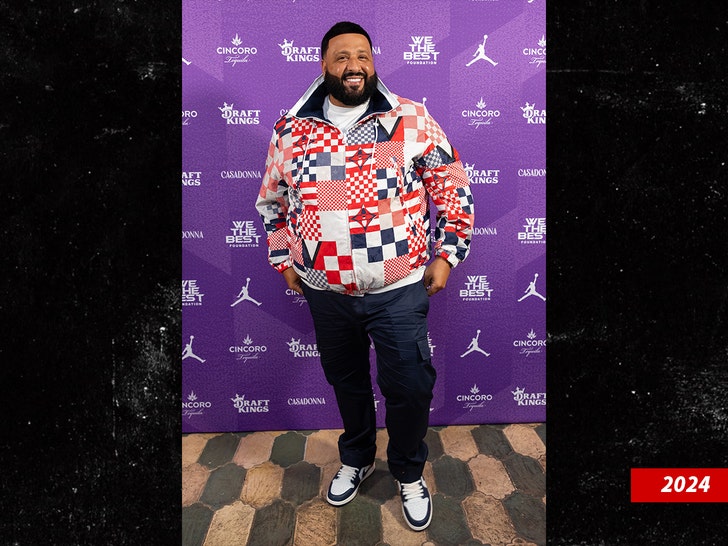
DJ Khaled is spinning fewer plates of grub these days. The famed music producer has dropped serious weight and he’s proudly showing off the results of his efforts.
Khaled stepped out Thursday night in New York City for the MCM x DJ Khaled We The Best launch party, looking stylish and noticeably trimmer than usual.
The “Wild Thoughts” hitmaker has been working to drop pounds since the beginning of the year. Back in February, he revealed his approach: golfing and increasing his daily step count to 15,000.
It’s clearly paying off.
At the time, Khaled explained his philosophy on fitness. “I’m about to show up to greatness,” he said. “Once you show up, you gotta put in that work. It’s 10-15,000 steps a day, just like I said. I’ve been doing 15-20 a day, but as long as you get to 10-15, you’re starting off your day incredibly. And everything after that is a bonus.”
Real Housewives casting just got a whole lot more interesting. Andy Cohen, the mastermind behind Bravo’s biggest franchise, is opening doors we didn’t even know existed. During his appearance at the Newport Beach TV Fest, Cohen dropped some real talk about what authentic representation could look like on the network.
The Watch What Happens Live host made it clear that a transgender “Real Housewife” could absolutely happen—but there’s a catch. It has to feel genuine. “I think if there was a trans ‘Housewife’ who was friends with other ‘Housewives’ that would be the way,” Cohen said, per Page Six. Real Housewives casting moves like this require intention, not gimmicks.
“You wouldn’t want it to be stunt,” Cohen continued. “You know, you wouldn’t want it to be like, ‘Let’s cast into this.’ If someone was friends with that person, then that would be great.” That’s the kind of authenticity that builds real connections—the backbone of any successful ensemble cast.
Cohen, 58, said he has “no idea what franchise that would be,” but made it clear the door is open if the person fits naturally into the world of the show. It’s a refreshing approach in an industry that sometimes treats representation as a box to check rather than a genuine community to build.
The Bravo executive also reflected on earlier casting conversations around The Real Housewives of New Jersey. Production once “flirted with the idea” of casting Jaime Laurita, the brother of Caroline Manzo and Dina Manzo—a move that would’ve shifted the show’s entire dynamic.
“I mean, look, I think that in terms of casting a gay guy on the show, this is a show about women and celebrating women,” Cohen said. “So I’d think we’d leave it there.” It’s a reminder that Housewives franchises have a specific lens, and that lens matters when it comes to storytelling and celebration.
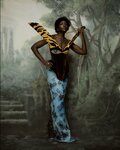
Lupita Nyong’o graced the pages of Who What Wear in a stunning editorial that showcases the acclaimed actor’s timeless elegance and effortless style. Photographed by Knn Grm, this feature captures Lupita Nyong’o at a moment when her influence continues to reshape conversations around fashion, representation, and Black excellence in Hollywood.
The editorial was brought to life through the collaborative vision of stylist Jan Quammie, hair stylist Vernon Francois, and hair stylist assistant Batise Ol. Together, they crafted a look that feels both contemporary and timeless, honoring Lupita’s signature approach to fashion—bold, intentional, and unapologetically her own. This shoot matters because it reminds us that Black style icons continue to set the standard, influencing how the entire industry thinks about beauty and presentation.
For Black readers and fashion enthusiasts, moments like these are a celebration of our visibility and creative power in spaces that haven’t always made room for us. Lupita’s presence in major publications remains a powerful statement about belonging and redefining what luxury and sophistication look like.
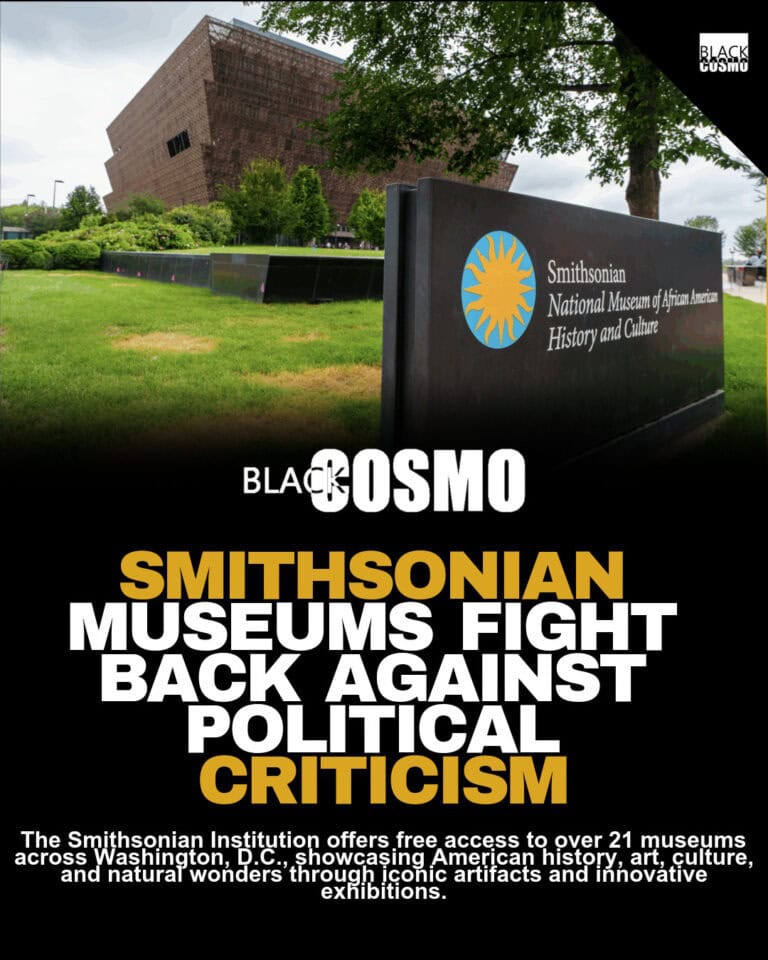
The Smithsonian Institution has long served as America’s attic, a repository for the nation’s triumphs, contradictions, innovations and struggles. But that mission faces scrutiny as President Donald Trump continues to criticize how the institution presents American history. A recent White House Domestic Policy Council report declared the Smithsonian Institution “cannot be trusted to tell America’s story honestly and in a way that is inspiring, unifying, and worthy of our great republic.”
The institution is pushing back, reaffirming its commitment to research and historical accuracy, even when that means confronting some of America’s most difficult chapters. Whatever the political debate, it’s become clear just how influential the Smithsonian has become in shaping how the public understands the nation’s past. With 21 museums, the National Zoo, and millions of objects in its collections, it’s far more than a tourist destination in Washington, D.C. It’s a living archive of American culture, creativity, and resilience.
A World of Free Access
WASHINGTON, DC – AUGUST 20: A sign marks the location of the Smithsonian National Museum of African American History and Culture on the National Mall on August 20, 2025, in Washington, DC. The museum is one of 19 Smithsonian museums in Washington, DC, and New York, NY. (Photo by J. David Ake/Getty Images)
Most of the Smithsonian’s 21 museums are free to enter. Among them are the National Museum of African American History and Culture, the National Postal Museum, and the Anacostia Community Museum, which celebrates the rich history of D.C.’s historically Black neighborhoods.
National Museum of African Art
WASHINGTON, DC – MARCH 28: A visitor looks at art at the Smithsonian National Museum of African Art on March 28, 2025 in Washington, DC. (Photo by Kevin Dietsch/Getty Images)
Tucked into the center of the National Mall is the National Museum of African Art, often overlooked by those rushing to other well-known monuments. Inside, visitors discover the rich visual traditions of the continent through paintings, sculptures, and textiles. Founded in 1964 in a home once owned by Frederick Douglass, the museum features thoughtful exhibitions like “Here: Pride and Belonging in African Art,” which examines how contemporary African artists engage with LGBTQ+ themes and identity. It’s a gem worth the detour.
The National Air and Space Museum
WASHINGTON, DC – JUNE 25: Artifacts on display at the Smithsonian’s National Air and Space Museum on June 25, 2026 in Washington, DC. The museum opens five new and renovated galleries to the public on July 1 as part of its 50th anniversary celebration. (Photo by Maxine Wallace/The Washington Post via Getty Images)
The National Air and Space Museum’s main building opened in 1976, but stepping through its doors still feels like entering a time capsule of American achievement. The museum tells the stories of the Tuskegee Airmen, Bessie Coleman (the first international Black pilot), and other pioneering figures who broke barriers in flight and space exploration.
National Portrait Gallery
WASHINGTON, DC – FEBRUARY 12: Former U.S. President Barack Obama and former first lady Michelle Obama stand next to their newly unveiled portraits during a ceremony at the Smithsonian’s National Portrait Gallery, on February 12, 2018 in Washington, DC. (Photo by Mark Wilson/Getty Images)
The National Portrait Gallery holds more than 26,000 portraits spanning U.S. presidents, civil rights leaders like John Lewis, and countless influential figures. Among its most-visited pieces are the portraits of former President Barack Obama and former First Lady Michelle Obama, unveiled in 2018.
National Gallery of Art
WASHINGTON, D.C. – APRIL 20, 2018: Alexander Calder’s untitled aluminum and steel mobile hangs from the ceiling above visitors at the National Gallery of Art East Building on the National Mall in Washington, D.C. (Photo by Robert Alexander/Getty Images)
The National Gallery houses an extraordinary collection of works by Black artists whose contributions have shaped American art. From Aaron Douglas’ powerful “Into Bondage” to Alma Thomas’ vibrant abstractions, Jacob Lawrence’s narrative paintings, Gordon Parks’ photography, and contemporary voices like Kerry James Marshall and Kara Walker, the gallery’s Black Artists Guide documents more than two centuries of artistic excellence.
The National Museum of American History
The National Museum of American History is packed with iconic artifacts, but Entertainment Nation brings pop culture fully into the conversation. The “Roots to Pop” exhibition explores how movies, music, television, sports, and theater have shaped American identity through over 200 objects. You’ll find Dorothy’s ruby slippers from “The Wizard of Oz,” Prince’s “Yellow Cloud” guitar, Selena’s performance costume, the original Muppets, and Star Wars costumes for R2-D2 and C-3PO. It’s a reminder that entertainment doesn’t just reflect America; it helps define it.
Hirshhorn Museum and Sculpture Garden
(Photo by Jeff J Mitchell/Getty Images)
The Hirshhorn Museum and Sculpture Garden is where contemporary art sparks conversation and challenges assumptions. Yayoi Kusama’s immersive Infinity Mirror Rooms share space with works by Jean-Michel Basquiat, Mark Bradford, Barbara Kruger, and Auguste Rodin. The outdoor sculpture garden features monumental installations in a serene setting, making it a destination for understanding how modern and contemporary artists use their practice to question, inspire, and reimagine the world.
Anacostia Community Museum
UNITED STATES – JUNE 17: The guitar of Chuck Brown, a legendary musician who influenced the go-go music genre, is on display at the Anacostia Community Museum. (Photo By Al Drago/CQ Roll Call)
Nearly 60 years old, the Anacostia Community Museum preserves stories that mainstream historical narratives often leave untold. Founded in 1967 as the Smithsonian’s first neighborhood museum, it documents the history, culture and resilience of Black communities and other historically marginalized groups. The collection also celebrates Washington, D.C.’s distinctive cultural legacy, including a focus on go-go music. Visitors can see Chuck Brown’s Gibson guitar and learn how the “Godfather of Go-Go” shaped D.C.’s sonic identity, connecting music, community, and local history in ways that feel immediate and personal.
International Spy Museum
Visitors tour the International Spy Museum during a media preview ahead of its opening in Washington, DC, May 7, 2019. (Photo credit should read SAUL LOEB/AFP via Getty Images)
Telling America’s story requires acknowledging espionage. The International Spy Museum explores that hidden history and includes exhibitions on Black spies who were instrumental during the Revolutionary War and continue to serve in intelligence agencies today.
Smithsonian American Art Museum
Sir Isaac Julien’s five-screen installation “Lessons of the Hour” offers far more than a historical retrospective. Layering period reenactments, archival imagery, and poetic visuals with an unsettling soundscape, Julien resurrects Frederick Douglass not as a figure to remember but as a thinker whose words remain unfinished business. More than a century after his death, Douglass’ rhetoric on democracy feels less like the past than a challenge to the present.
National Museum of African American History and Culture
WASHINGTON, DC – SEPTEMBER 14: A statue of sprinter Jesse Owens stands in the sports galleries at the Smithsonian’s National Museum of African American History and Culture, NMAAHC, on Wednesday, September 14, 2016, in Washington, DC. The museum opened to the public on Saturday, September 24. (Photo by Jahi Chikwendiu/The Washington Post via Getty Images)
Since opening in 2016, the National Museum of African American History and Culture has become essential viewing for all visitors to the National Mall. Dedicated entirely to Black history, culture, and legacy, the museum offers carefully curated exhibitions on historically Black colleges and universities (HBCUs), sports, the performing arts, and everyday objects with extraordinary meaning. One exhibit features a dress sewn by Rosa Parks herself, a tangible reminder of dignity and resistance.
Smithsonian Gardens
WASHINGTON, DC – MAY 27: The Smithsonian Pollinator Garden in full spring bloom in Washington, D.C., United States, on May 27, 2025. (Photo by STR/NurPhoto via Getty Images)
The Smithsonian Gardens offer respite where nature, art, and history intersect. The Mary Livingston Ripley Garden showcases diverse plantings, while pollinator-friendly landscapes educate visitors about conservation and biodiversity. These aren’t decorative spaces but living exhibits that connect people to science and environmental stewardship.
National Postal Museum
Washington DC, National Postal Museum, Stamps Around the Globe interactive exhibition. (Photo by: Jeffrey Greenberg/Universal Images Group via Getty Images)
The National Postal Museum reveals how the smallest artifacts can carry profound historical weight. Its virtual exhibition “The Black Experience” tells American history through U.S. postage stamps, highlighting figures who transformed the nation in civil rights, science, arts, literature, sports, and exploration. Frederick Douglass, Harriet Tubman, Ida B. Wells, Jackie Robinson, and Bessie Coleman appear on stamps that commemorate their legacies and continue to tell their stories.
National Museum of Natural History
The National Museum of Natural History brings scientific discovery to life across vast timescales and ecosystems. The David H. Koch Hall of Fossils traces billions of years of Earth’s evolution. The Hall of Geology, Gems, and Minerals features the legendary Hope Diamond. The Sant Ocean Hall explores marine biodiversity and conservation. Together, these exhibitions remind visitors of their place in a living, constantly changing world.
A$AP Rocky is at the center of a heated debate after a viral tour photo sparked major conversation online. The Harlem rapper’s outfit during his Don’t Be Dumb World Tour has fans divided—some swear they spotted a thong, while others argue it’s just part of his pants design. Either way, the internet is talking, and now A$AP Rocky has everyone weighing in on what exactly went down onstage.
Boosie Badazz didn’t hold back with his thoughts. In an all-caps post that had people shaking their heads, he wrote: “THIS GOTTA BE AI!! I KNOW THIS N—A AINT GOT A THONG ON.” He went on to express concern about young people and what he sees as a troubling shift in hip hop fashion, declaring that “RAPPERS WEARING THONGS IS ABOUT TO BE A FASHION!!” before concluding, “THIS WORLD COMING TO A END.”
Rocky hasn’t publicly responded to Boosie’s commentary. The tour, announced by Live Nation back in January, kicked off in May 2026 and continues to generate conversation about self-expression, fashion boundaries, and what’s acceptable in hip hop culture today.
It’s worth noting that Boosie has faced criticism before for his public comments on gender and sexuality. His remarks about Zaya Wade in 2020 and comments directed at Lil Nas X in 2021 drew significant backlash. This latest post adds to that ongoing pattern of him weighing in on issues around identity and presentation.
The debate highlights how divided opinions can be in hip hop when it comes to pushing boundaries with fashion choices. What some see as artistic expression and breaking norms, others view as crossing a line—and that generational split continues to spark conversation across social media and beyond.
My grandparents didn’t have degrees. Born and raised in South Carolina during the Depression, they never stepped foot in a college classroom. But they possessed something arguably more valuable: a deep, studied understanding of how wealth actually works. They spent a lifetime observing the patterns of the people they worked for and around, then passed that knowledge down to us in the casual way family wisdom travels—during conversations on the living room couch, over meals at the dinner table.
In Greenville, my grandfather Jay Bird ran a pool hall while my grandmother, Miss Bill (her given name was Wilma), operated a local cafe. These were Black business spaces that functioned as great equalizers. State senators, wealthy lawyers, and working men stood on the same ground. It was the perfect vantage point. Wealth building strategies aren’t complicated when you’re watching them unfold in real time. My grandparents didn’t just observe; they documented patterns. They noticed what the wealthy actually did versus what everyone else believed they did. And they made sure we understood the difference.
Back then, it sounded like family talk. Today, what they knew sits at the center of serious economic research. Sociologists, economists, and psychologists have spent decades confirming what my grandparents learned by simply paying attention. In an era where the Black middle class faces constant pressure, their lessons feel more relevant than ever.
While the broader culture continues copying Black music, style, and creativity, it’s time we returned to what the old folks saw from the cafe counter and the pool hall floor. Here are the financial moves they taught us, and the research that backs them up.
The “Buy Good Stuff” Rule
Miss Bill was relentless about this one: buy the best quality you can afford on items that matter. Shoes. Sweaters. Anything that touches your body regularly or that you use constantly. She’d watched wealthy white women pay substantial money for pieces built to last. They weren’t buying more; they were buying better.
I took this seriously after college. When money was tight, I’d save for one excellent pair of shoes instead of three cheap pairs. Then I’d take them to a cobbler. Five dollars for a repair. Ten years of wear. Those black Coach boots taught me the real math of consumption.
The Research: This principle is known formally as the Sam Vimes “Boots” Theory of Socioeconomic Unfairness—an economic model showing how repeatedly buying low-quality goods costs far more over time than investing in durable, repairable items. Data from the Footwear Distributors and Retailers of America confirms the long-term savings of quality shoes and professional repair over fast-fashion replacement cycles.
The Modest House Strategy
Jay Bird made an observation at the pool hall that stuck with me. The wealthiest men in town often lived in completely ordinary homes. Nothing flashy. Nothing that would make you look twice driving past. But inside? Stunning. They understood something critical: visibility costs money.
Large houses mean high property taxes. High property taxes mean wealth evaporates before it compounds. A modest exterior meant they weren’t caught in the consumption wheel that bankrupts people trying to look rich.
The Research: This insight anchors The Millionaire Next Door by Thomas J. Stanley and William D. Danko, a foundational study of actual wealth. Their research proved that most genuine millionaires live in unassuming neighborhoods and modest homes. They avoid the status-matching trap intentionally.
The Lesson: Don’t stretch your budget buying a house to impress people. Live modestly. Keep your fixed costs low. Let your money work instead of your mortgage.
Treat Your 401(k) Like a Tool
In our community, retirement accounts are often treated like untouchable holy relics. Put money in. Never touch it. Period. My grandfather once told me something different, something he’d learned from conversations with wealthy men. People with real money view cash as fluid. They don’t raid retirement for vacations, but they will strategically borrow against it to fund investments that appreciate.
This seems counterintuitive because we’re taught fear around retirement accounts. But the fear is misplaced. Under IRS rules, wealth building strategies include 401(k) loans where the interest you pay goes directly back into your own account. You become your own bank.
The Research: Data from the Financial Industry Regulatory Authority shows that higher-income demographics strategically utilize 401(k) loans to acquire appreciating assets like real estate. It’s not reckless; it’s intentional capital deployment.
The Lesson: Learn your account’s rules. Don’t be terrified of your own money. Smart borrowing against your retirement to fund investments isn’t the same as raiding it for consumption.
My grandparents understood something fundamental: wealth isn’t mysterious. It’s observable. It follows patterns. And those patterns are available to anyone willing to look closely and think differently about money than they’ve been taught.
Hip hop drama is heating up between two major figures in the entertainment world. DJ Akademiks is telling Ray J to “lawyer up and shut up” after the singer came at him over allegations connected to a Brand Risk fight situation.
The tension escalated when Akademiks played a clip of Ray J throwing shade his way, questioning his journalism and credibility. It’s the kind of hip hop drama that keeps people talking, but this one carries some serious undertones about integrity in media.
In the clip, Ray J didn’t hold back. “Here’s what I want to say to Akademiks. You was a ho, ho,” he said directly. Ray J then went further: “I think that your journalism is starting to go. You’re losing yourself.”
Akademiks caught off guard, decided to address it head-on during his livestream. “A poor little Ray J,” he responded. “Ray, brother, I don’t want to go back and forth with you.” That’s when things got real.
The streamer explained that Ray J was upset because Akademiks had discussed claims that Ray J allegedly tried to rig the Brand Risk fight. Akademiks repeatedly clarified he wasn’t involved and said he was just warning Ray J about potential legal consequences—like you’d find in any serious nonfiction breakdown of industry dealings.
“I have nothing to do with this,” Akademiks stated firmly. “What I’m telling you though is essentially you committed a crime.” He claimed that details about the alleged fight scheme had already circulated to others involved. “There’s text proof with you and the [expletive] setting up the fight,” he added. “What you tried to do could be the subject of a federal, not only investigation, but an arrest.”
He made it crystal clear they weren’t connected outside of this situation. “We’re not cool. We’re not buddies,” Akademiks said. “I’m not hitting you about a crime.” The message was plain: this is serious business, not personal beef.