
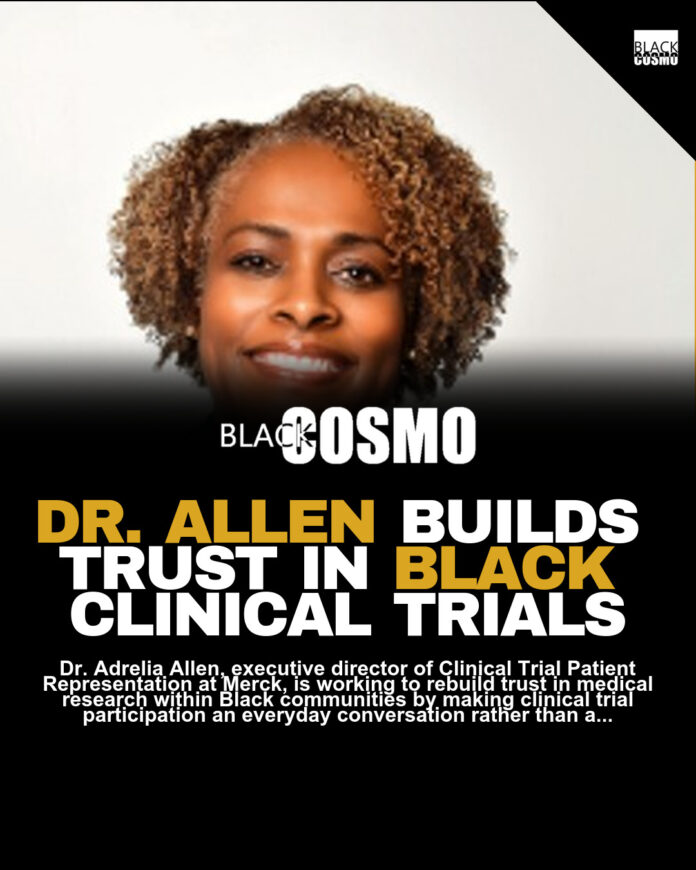
For generations, medical research has asked Black communities to trust a system that hasn’t always earned it. Today, Dr. Adrelia Allen is trying to change that, one conversation at a time.
As executive director of Clinical Trial Patient Representation at Merck in New York, Allen wants discussions about clinical trial participation to move beyond the typical last-minute conversation between a doctor and a newly diagnosed patient. Instead, she’s working to make it a regular part of community dialogue. That means confronting painful history while building something better: ensuring patients understand their rights, know what participation involves, and have practical support.
“As we speak about the Black community, what are those past atrocities? And where have we taken this journey to bridge the gap and make sure Black communities are part of the clinical research landscape?” Allen told The Root. “We cannot ignore the issues of Tuskegee and Henrietta Lacks.”
The reference points are heavy. The Tuskegee syphilis study, conducted from 1932 to 1972, involved hundreds of Black men who weren’t fully informed about the research and were denied effective treatment after penicillin became available. In 1951, cells taken from Henrietta Lacks during cervical cancer treatment were used to create the HeLa cell line without her knowledge or consent. Both cases became foundational to understanding medical exploitation and sparked major reforms in research protections.
Allen has witnessed this history’s shadow firsthand. Her father once refused an MRI after doctors suspected prostate cancer, she said, because the procedure triggered memories of Tuskegee. “He just refused to proceed because he didn’t want to be treated as a guinea pig,” she recalled.
A pharmacist by training, Allen explained to her father that patients have rights and that clinical trial participation is entirely voluntary. Patients can ask questions, choose whether to participate, and withdraw at any time. But distrust is only part of the barrier.
Transportation, time away from work, caregiving responsibilities, and the cost of repeated appointments also create real obstacles. For patients already struggling to afford routine health care, joining a clinical trial can feel impossible.
According to Allen, pharmaceutical companies and research institutions can help by offering transportation, supporting caregivers, making visits more flexible, and partnering with community organizations. Just as important is representation. Black patients often feel more comfortable when they see doctors, researchers, and clinical trial staff who reflect their own communities.
Dr. Adrelia Allen‘s work includes Merck’s “Let’s Talk Trials” campaign, which moves clinical research conversations beyond the doctor’s office through accessible information, videos, and participant stories.
But Allen points to something simpler that often gets overlooked: Black patients may not be rejecting clinical trials. They may never have been asked.
“It’s not a lack of us not wanting to participate,” Allen said. “The main reason we see Black and underrepresented communities participating in clinical trials is they haven’t been asked.”
Representation matters because researchers need diverse data to understand how medicines work across different populations. Without it, researchers miss crucial pieces. “I can have all the pieces of my puzzle in place, but if I don’t have that one particular piece, that’s an incomplete picture of what the outcome should really be,” she explained.
For Allen, closing that gap isn’t about convincing people to participate. It’s about providing trustworthy, understandable information so they can make their own choice. “Everyone’s individual right to choose whether or not to participate remains central,” she emphasized. The goal is ensuring people have “the information to make the right decision that is best for them.”
★TR★