
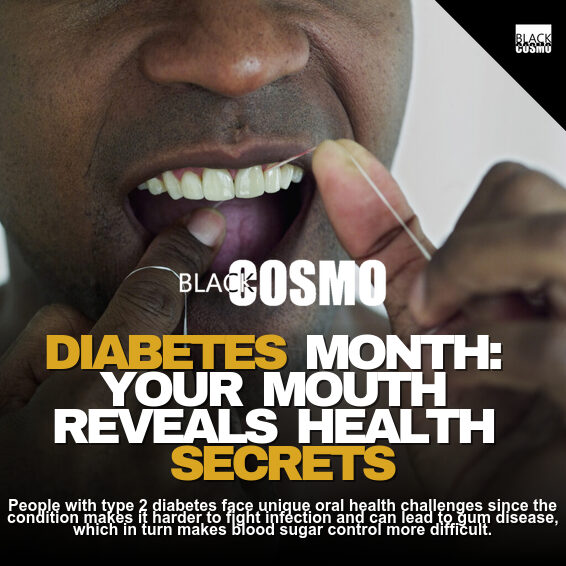
Most people keep their oral routine simple: brush twice, floss when they think about it, maybe rinse with mouthwash. But for those managing type 2 diabetes, teeth cleaning is only part of a much larger health equation. Diabetes and oral health are deeply intertwined in ways many don’t realize.
November marks National Diabetes Month, making it an ideal moment to consider what your mouth is actually telling you. “The mouth is a gateway to the body,” says Dr. Jamar McKay, DMD, of Express Smile Buckhead in Georgia. While most people treat oral health as separate from overall wellness, McKay pushes back on that false divide. Gum disease—inflammation of the tissues around your teeth—connects directly to serious conditions including uncontrolled diabetes and high blood pressure.
The relationship works both ways. Your mouth affects your body, and your body affects your mouth. Diabetes makes fighting infection harder, leaving gums more vulnerable to disease. Once gum disease takes hold, bacteria and inflammation slip into the bloodstream. For someone with diabetes, that cascading effect makes blood sugar control significantly harder. The CDC has found that treating gum disease actually improves blood-sugar management, which matters enormously for Black Americans. According to the Office of Minority Health, Black Americans were 24 percent more likely to have diabetes in 2024 and 78 percent more likely to die from it than the general population in 2022.
Getting the Technique Right
McKay stresses that how you clean matters as much as that you do. Use a soft or medium-bristled toothbrush and brush in circular motions, angling the bristles toward the gumline. Hard scrubbing and side-to-side strokes wear down teeth and cause gums to recede. If you use an electric toothbrush, let the device do the work. Pressing too hard damages gums.
For flossing, curve the strand around each tooth, clean along its side, then repeat on the neighboring tooth. McKay suggests pairing traditional floss with a water flosser to flush out remaining debris, especially for those with diabetes.
And skip the temptation to avoid the dentist when everything feels fine. “The thing with dental is once you start to have pain, the problem has progressed further,” McKay explains. He recommends checkups every six months, or every three to four months if you already have gum disease.
What Your Mouth Is Telling You
Saliva does far more than keep your mouth moist. It washes away food and bacteria, carries immune factors, and maintains the mouth’s pH balance. When saliva flow drops, that protection weakens, leaving teeth vulnerable to cavities. “It’s something so natural, just saliva. But when there’s an imbalance of that, we can have issues,” McKay says.
Dry mouth is common in diabetes, so drinking plenty of water throughout the day helps. Persistent dryness warrants a conversation with your dentist, as it could signal elevated blood sugar, dehydration, or medication side effects. Consistent bleeding during brushing or flossing is another signal worth investigating. Some dental offices can test saliva flow and pH to identify underlying problems.
Dental Care Doesn’t Have to Be Out of Reach
Cost remains a real barrier. If you lack insurance, many cities offer free or reduced-cost dental services. If cost is holding you back from an appointment, ask your dental clinic about payment plans or discounts. Many practices work with patients to make care accessible.
McKay’s final thought on managing both oral health and diabetes is straightforward: “Pay attention to changes in your mouth.” Small shifts signal larger things happening in your body. Catching them early makes all the difference.
For more on diabetes and oral health, speak with your healthcare provider or dentist about screening and prevention strategies tailored to your needs.
★TR★