
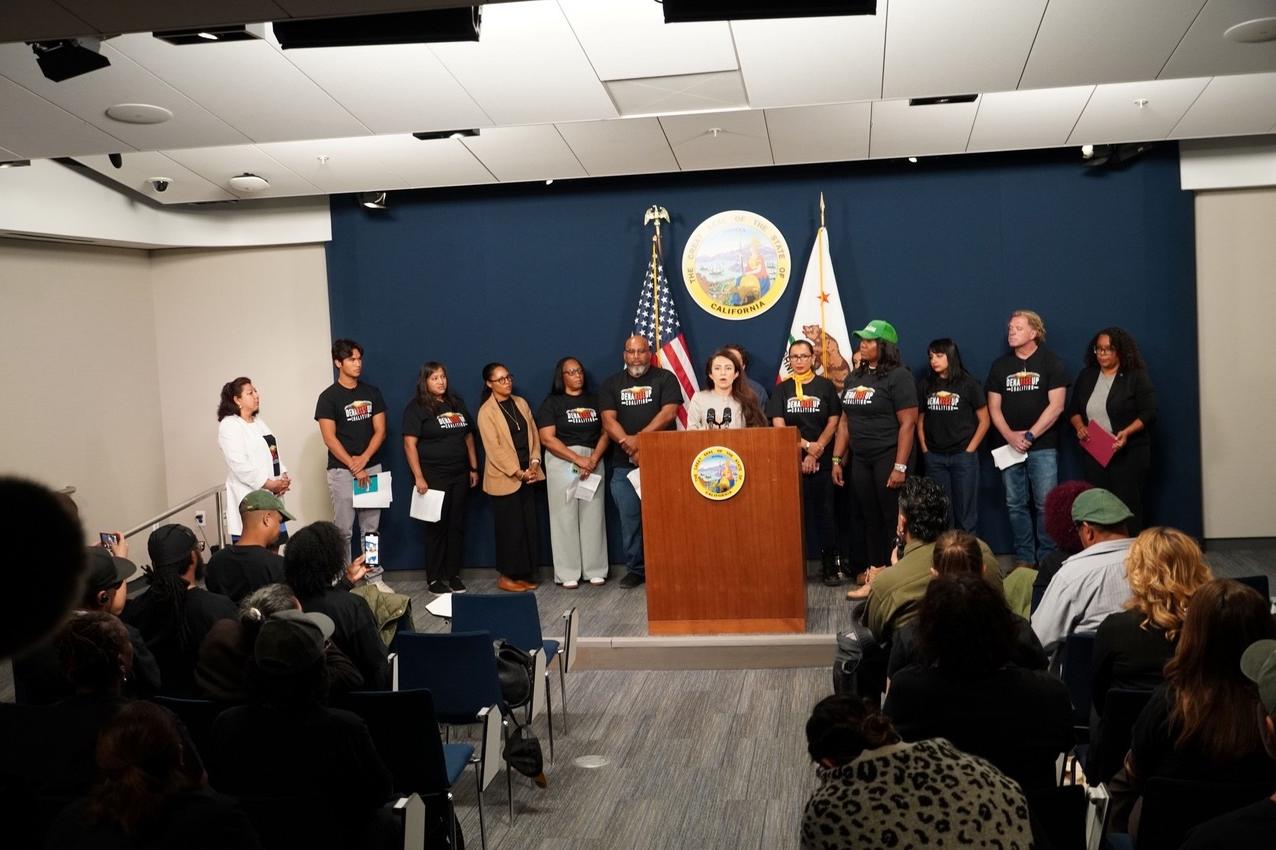
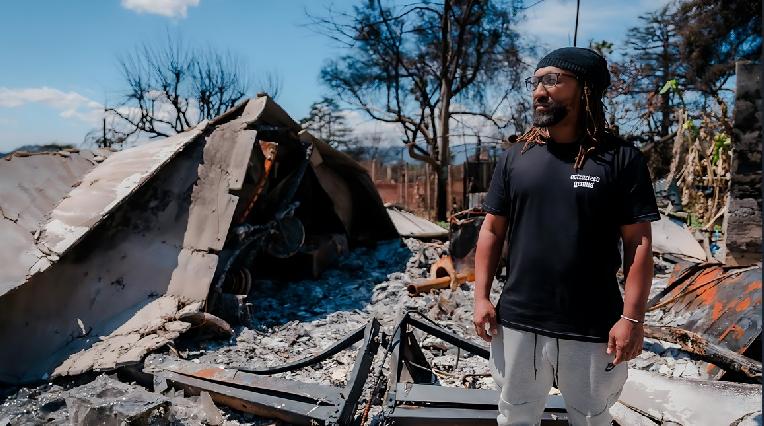
More than 80 survivors of the Eaton Fire traveled from Pasadena and Altadena to the California State Capitol on May 19, pressing lawmakers to move faster on recovery aid. For many of them, this is not just about rebuilding houses. It is about whether Black families who helped define Altadena can actually make it back home.
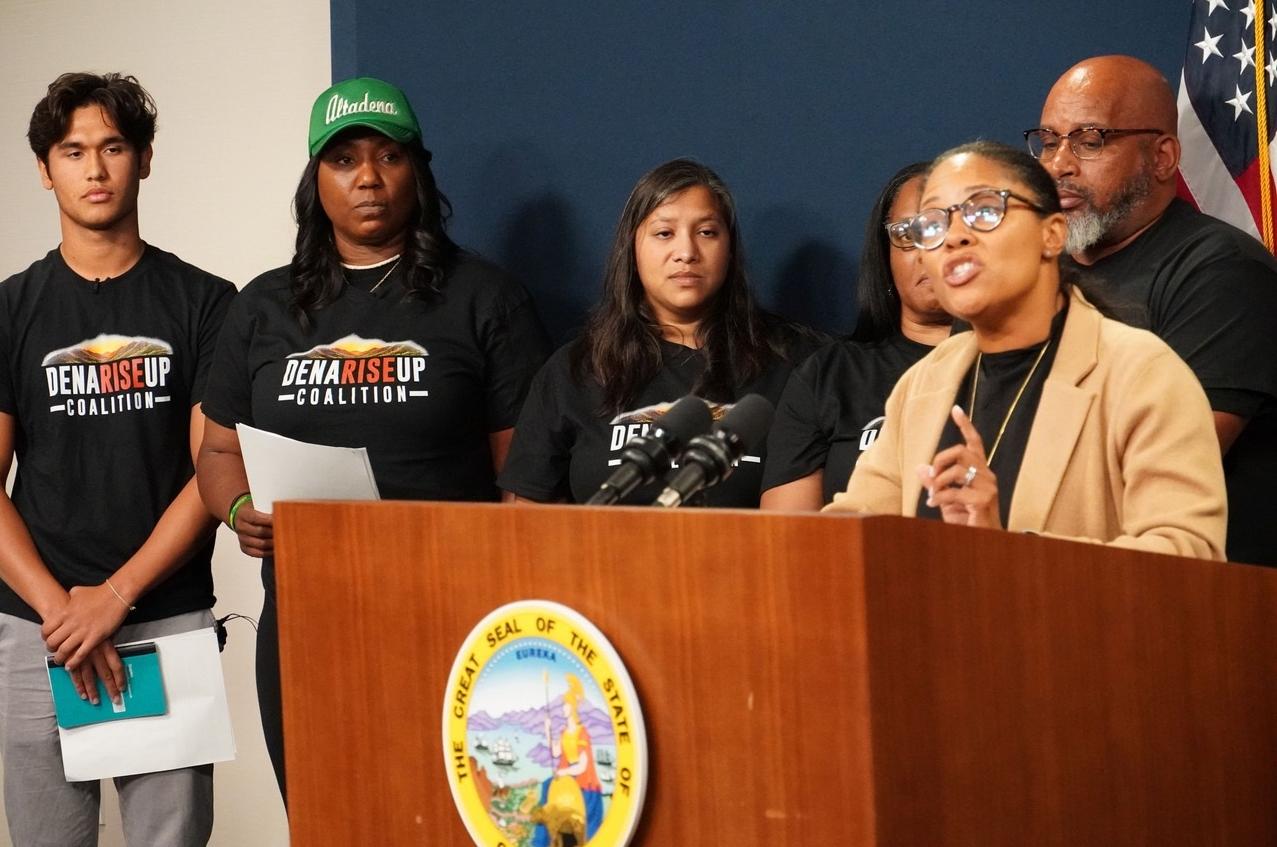
That urgency shaped the day in Sacramento. Survivors organized by Dena Rise Up said the recovery has been painfully slow, with housing costs, insurance delays, toxic cleanup concerns, and displacement all colliding at once. In the middle of those demands was Eaton Fire fallout that now feels bigger than a natural disaster. It has become a fight over land, legacy, and who gets left behind when a historic community is vulnerable.
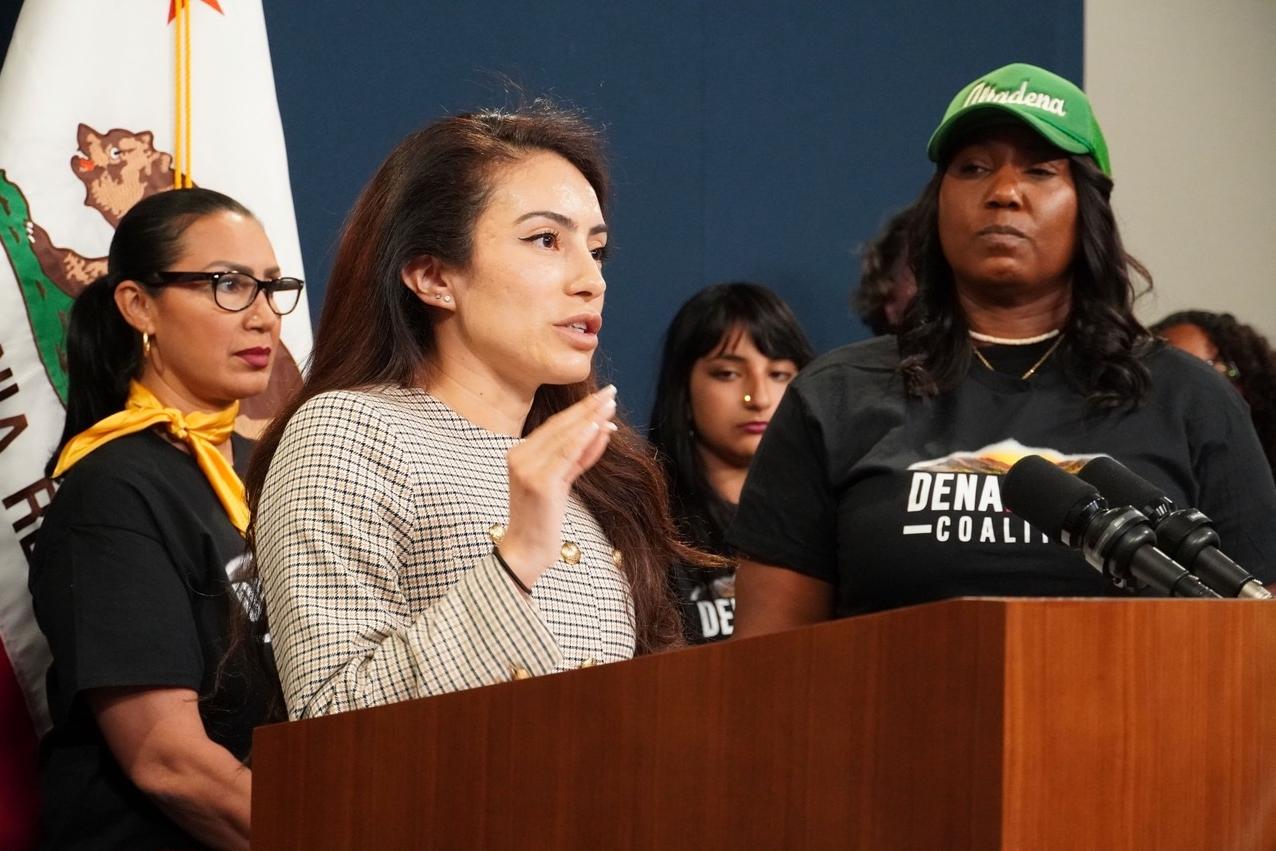
Heavenly Hughes, co-founder and executive director of My Tribe Rise, put it plainly. She said residents are at risk of never returning to Altadena without immediate help. Her message to the state was direct: survivors need money now for housing and rebuilding, not vague promises tied to a slow-moving process.
The stakes are especially sharp in Altadena, long known as a haven for middle-class Black families and one of the largest Black homeownership communities in Los Angeles County. That history matters. It is the kind of place where ancestral roots are not an abstract talking point, but visible in homes passed down across generations, church networks, neighborhood memory, and the everyday rhythm of people who built stability there over decades.
Hughes said her own home, which she shared with her 78-year-old mother and grandchildren, was destroyed in the Jan. 8, 2025 fire after more than 50 years in the family. Since then, through My Tribe Rise, she has helped distribute emergency cash grants to residents trying to stay afloat, including families still paying mortgages on homes that no longer exist.
She said some families are still living in tents, cars, or temporary rentals. For survivors, the practical questions are relentless: where to sleep, how to pay, what contamination remains in the soil, and whether insurance checks will ever arrive in time to matter. It is not hard to see why frustration is boiling over.
Gov. Gavin Newsom previously approved a $2.5 billion state relief package for Los Angeles-area wildfire survivors, including those affected by the Eaton Fire. Survivors say that while the funding was significant on paper, too much of it has not reached the people who need it most. Hughes told lawmakers that nearly 16 months later, roughly $1.5 billion remains unspent.
Newsom’s May 2026 budget revision proposes another $100 million for disaster recovery. Survivors and advocates described that as progress, but limited. It may help bridge gaps between insurance payouts and actual construction costs, yet it does not fully answer the deeper crisis of displacement.
Some of the language around this fight can sound bureaucratic, but the human reality is much sharper. Residents are trying to keep communities intact while resisting the familiar pressures that often follow catastrophe: speculation, rising land values, and the quiet push toward selling. The My Tribe movement has been focused on preventing Black and Brown families from being priced out or pushed off generational land in the aftermath.
There is also a larger cultural dimension here. What is being defended in Altadena is not just property, but community memory. That can show up in ways both public and personal, from local organizing to a spoken word fundraiser, from neighbors sharing a curated reading list on the freedom struggle to younger residents trying to understand how disaster and displacement connect to bigger patterns of mass incarceration, wealth loss, and unequal recovery. Not every family names it that way, but the through line is there.
State Sens. Sasha Renée Pérez and Ben Allen joined the Capitol event in support of survivors. Several bills now moving through Sacramento are central to what advocates want next.
Assembly Bill 1642, authored by John Harabedian, is the Wildfire Environmental Safety and Testing Act. The bill would tighten contamination testing and environmental remediation standards in fire-impacted communities. It cleared the Assembly Appropriations Committee on May 14 with an 11-0 vote.
Senate Bill 1301, authored by Allen, would stop insurers from dropping policyholders who are still recovering from disasters. It passed out of the Senate Appropriations Committee on a 5-2 vote and now heads toward a Senate floor reading.
Another measure, SB 878, authored by Pérez and titled the Insurance Payment Accountability Act, targets delayed insurance payouts. The proposal would require insurers to pay a 20% annual interest penalty on claim payments that are not made on time. Pérez said the point is simple: if timely payment is already the law, insurers should face real consequences when they drag their feet.
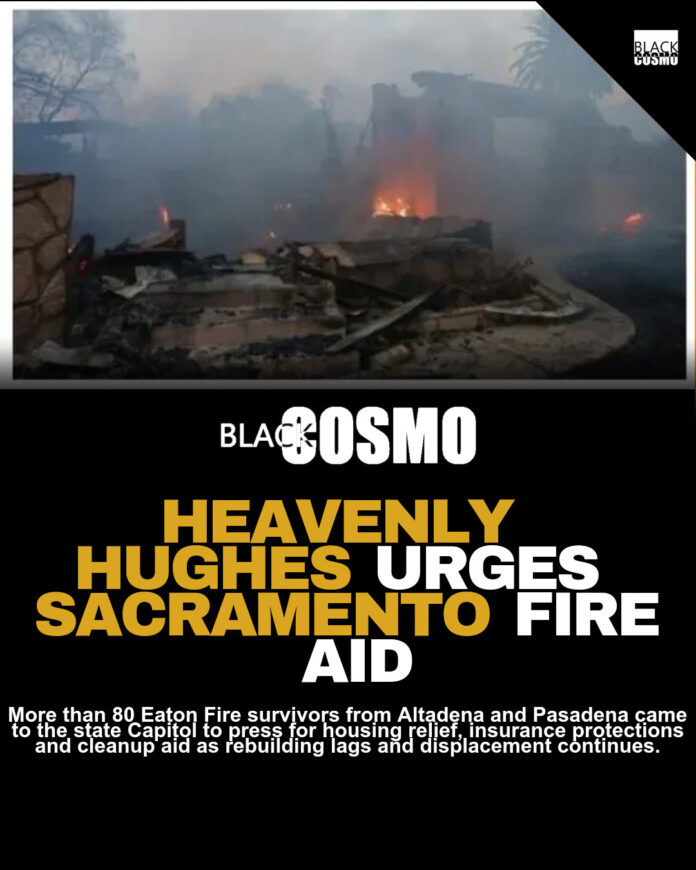
The Eaton Fire destroyed 9,418 structures across Southern California. Numbers like that can flatten a story. The testimonies from survivors brought it back into focus.
Damon Blount, who lived in Altadena with his wife Audra for 26 years, said the fire wiped out the home where they raised their family and planned a future for their daughters and granddaughter. He also lost his work truck and the jobs tied to it. What hit next, he said, was the shock of realizing that insurance delays could become a second disaster layered on top of the first.
Kai Timbadia, 18, described a family already carrying enormous strain. His mother, he said, suffered a brain injury and is now paralyzed and wheelchair-bound, while his sister has special needs. His point was hard to argue with: families should not have to fight the very systems that are supposed to protect them.
There is no stylish way to package that kind of loss, and maybe that is the lesson. While some stories get dressed up in easy metaphors, this one resists it. No tuxedo blazer polish, no Y2K fashion distraction, no designer handbags spin on resilience. This is the opposite of aesthetic tragedy. It is paperwork, waiting, grief, and a long line at the edge of state power.
And still, people showed up. Organizing. Testifying. Pushing. The persistence feels familiar in Black communities, even when the specifics change. Mutual aid tables, meal prep containers passed around after long days, cold brew in hand during strategy meetings, a bamboo cutting board loaded with donated food at a church hall, maybe a casserole carrier headed to a family trying to hold itself together for one more week. Small things, but not small. That is often how survival looks before policy catches up.
For Altadena survivors, the ask is not complicated. Spend the money already promised. Hold insurers accountable. Test the land properly. Keep families housed long enough to return. Protect a community whose value cannot be reduced to real estate comps.
That part should be clear by now.
★e★