

The traditional live R&B serenade has long operated on an unwritten contract of mutual theater. When an artist pulls a fan under the spotlight, the crowd expects a performance of pure adoration. That unspoken rule met a blunt reality check during Usher’s recent stop in Nashville. When Gabrielle Cheyenne stepped onto the stage, the expected fantasy dissolved into a moment of human boundary setting, sparking a wave of online chatter that reached far beyond the arena walls.
The sequence unfolded during Usher‘s performance of his classic, sensual track “Can U Handle It?”. Handled as a signature piece of his live set, the segment involves inviting a female audience member to join him on a bed prop. When she sat down, the vibe shifted. Instead of lean-in participation, she maintained a reserved, distinct distance. Sensing the reluctance, Usher backed away, looked at the crowd, and called an audible. “I don’t think she want to be on the stage, y’all,” he said with a smirk, ending the performance early and having her escorted off. The moment felt abrupt to those watching in the arena, but it was only the beginning of a larger discussion online.
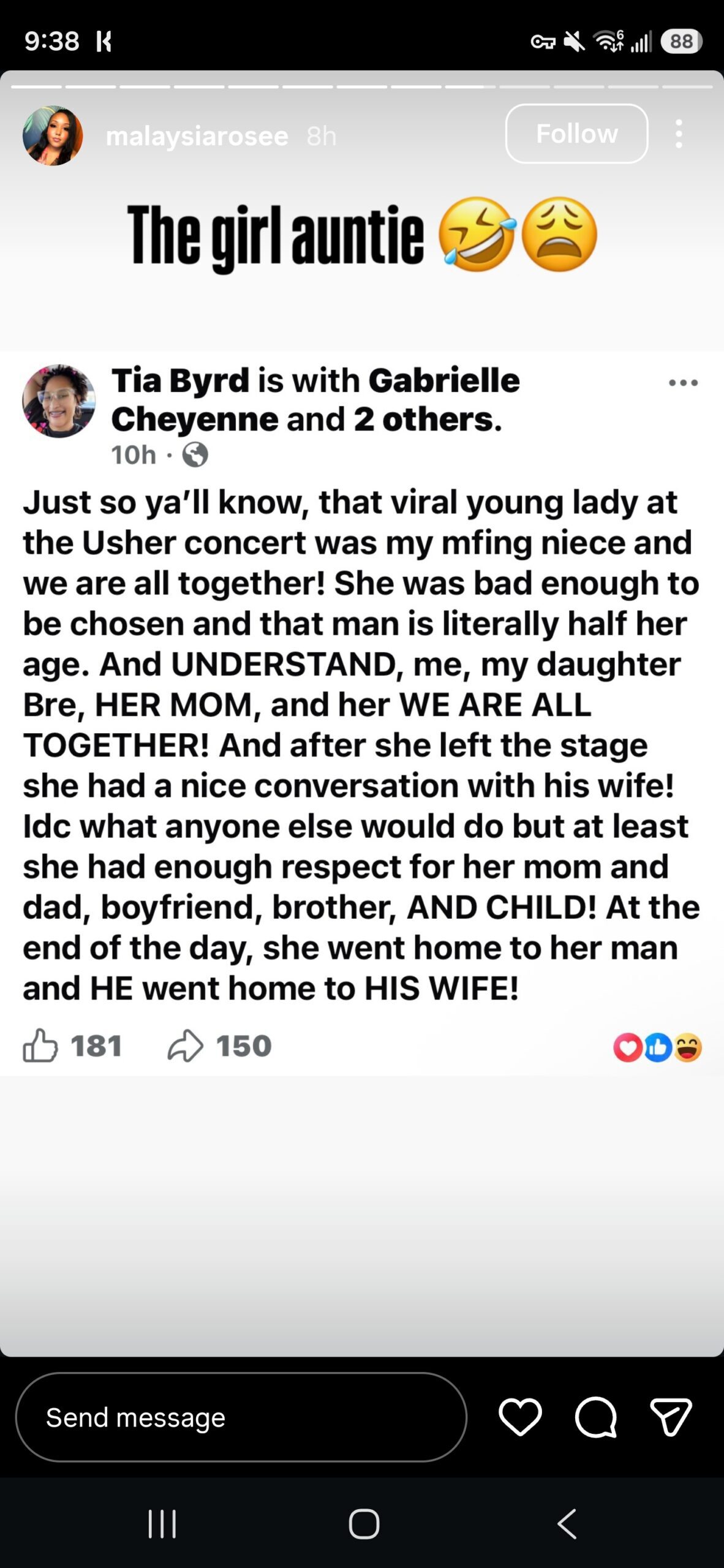 The clip quickly circulated, and onlookers began offering harsh critiques. Critics focused on her body language, labeling her as stiff and suggesting she wasted an opportunity many would have cherished. The criticism grew particularly personal from observers in her hometown of Chattanooga, who focused on her appearance and attitude. Rather than letting the comments slide, Gabrielle Cheyenne jumped onto Facebook to clarify exactly what happened behind the scenes. Her response was direct, leaving no room for speculation about her motives or her mood.
She explained that she and her mother had originally purchased standard floor seats to enjoy the concert. Before the show began, Usher’s team approached them to offer a VIP upgrade. There was no briefing or explanation about what would happen next. She was suddenly brought to the stage without context, expecting a simple moment of appreciation, only to be placed in an intimate, choreographed sequence with one of the most famous entertainers in the world. She pointed out that she had no desire to pretend to be someone she was not, asserting that she looked great on the jumbotron and felt no obligation to play into the staged intimacy. Her confidence remained intact, regardless of the criticism from local commenters.
Support came quickly from her family, who refused to let the internet define the narrative. Her mother went online to counter the negative commentary, sharing a photograph of her posing with Usher’s wife, Jennifer Goicoechea, backstage. The image showed a warm, comfortable interaction, proving that the tension on stage stayed on stage. Backstage, the environment was hospitable and respectful, contradicting the narrative of a hostile rejection. It became clear that the interaction was simply a case of a fan choosing comfort over showmanship.
R&B concerts have always relied heavily on these moments of stage-managed intimacy. Artists like Usher have built their live reputation on the ability to make a single fan feel like the center of the universe, a performance that thrills the rest of the venue. But that dynamic assumes the selected fan is ready to play their part in the show. When a fan prefers to simply spectate, the machinery of the concert falters. The brief pause in Nashville exposed the gap between what an artist expects from their audience and what the audience is actually willing to give.
The incident brings up an interesting shift in live entertainment. For decades, being chosen for an on-stage serenade was treated as an unmitigated honor. Fans were expected to act as willing participants in the singer’s romantic production, often playing along with high energy. But modern concertgoers are increasingly conscious of personal space and consent. When an average spectator is suddenly elevated to a performer’s level without preparation, the pressure is immense. Expecting a fan to smoothly jump into a suggestive, highly produced routine is a tall order, especially when thousands of phones are recording every movement.
By standing her ground and refusing to play a part she did not sign up for, she challenged the assumption that fans must perform on demand. The response from her local community reflects a classic pattern of online scrutiny, where spectators project their own desires onto a brief, unchoreographed moment. Her refusal to stay quiet afterward shows a refusal to let anonymous commenters dictate her experience. She attended a concert to enjoy the music with her mother, and she walked away with her dignity, a VIP experience, and a direct response to those who sought to criticize her boundaries.