
There’s something deeply unserious about needing a financial plan, high-speed Wi-Fi, and divine intervention to see your favorite artist perform live. But in this day and age, concert culture has become quite the paradox. And Gen Z is fed up.
The industry keeps asking us to support artists—stream their music, buy merchandise, show up in person. But when it finally comes time to attend a show, the cost of admission can feel like a barrier rather than a welcome. For young people already choosing between rent, groceries, student loan payments, and a social life, a $200 concert ticket isn’t just a splurge. It’s a decision with serious consequences.
Concert ticket prices have increased more than 41 percent since January 2016, according to Bureau of Labor Statistics data reported by Axios. Add service fees, transportation, parking, and overpriced concessions to that base cost, and what was supposed to be one night of enjoyment becomes a financial burden that many young people can’t afford. We’re not talking about luxury vacations here. We’re talking about standing in a crowd, singing songs everyone already knows by heart.
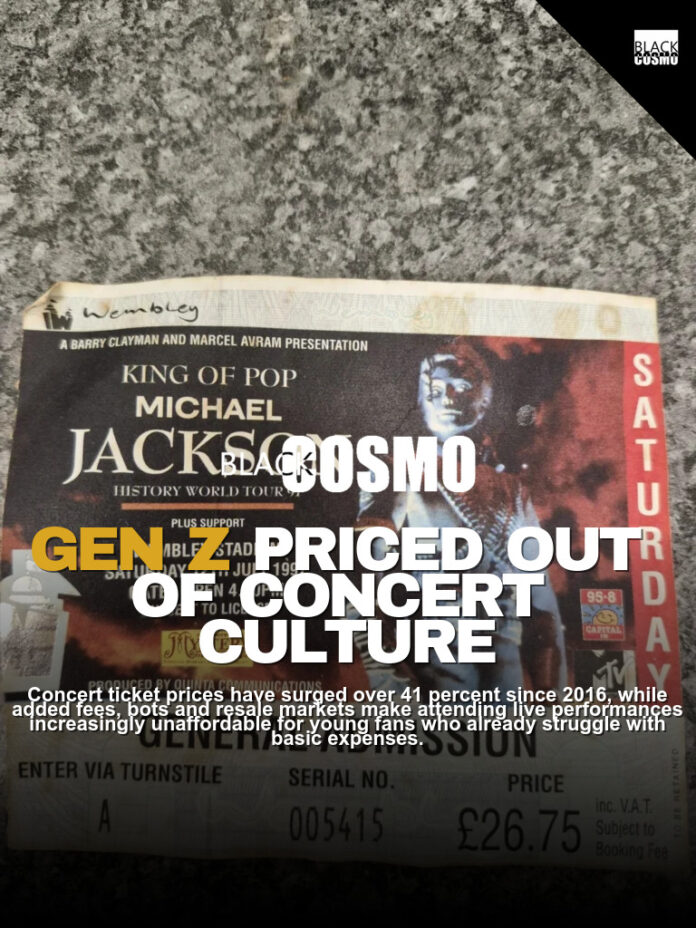
There was a time when buying concert ticket prices meant going to the box office, speaking to an actual person, and walking away with a ticket in hand. You could see Michael Jackson during his prime for $30. Now? The entire transaction feels designed to extract maximum value at every step.
The ticketing landscape has shifted dramatically. Ticketmaster has become synonymous with frustration—dynamic pricing, excessive fees, endless virtual queues. Then there are the AI-powered bots, scooping up tickets for resale before genuine fans even reach checkout. British singer RAYE has spoken out about bots affecting access to her Royal Albert Hall performances, and she’s far from alone in that complaint.
The consequences ripple through the industry. Atlanta rapper Deante Hitchcock has expressed concerns about low ticket sales, while R&B artists Ravyn Lenae and 6lack canceled their planned solo tours despite releasing some of the year’s best modern R&B projects. Each situation has its own context, but the pattern is clear: artists need audiences, and the systems designed to connect them make that harder every year.
That’s the real issue. The industry is making it harder for fans to attend concerts while artists are still expected to fill venues. Everyone is being asked to participate in a system that doesn’t always serve them.
This isn’t a generational disengagement problem. Gen Z streams the albums, learns the lyrics, creates the viral moments, and builds the online communities that keep artists relevant. But cultural investment doesn’t automatically translate into purchasing power, especially when basic living expenses take priority.
The solutions are straightforward. Ticketing platforms need greater pricing transparency, stronger protections against bots, and mechanisms to prevent resellers from exploiting demand. Artists and promoters deserve more direct control over how tickets reach their actual audiences.
Because if the people who love the music most cannot afford to experience it, who exactly are these concerts for?
★TR★