
Before Motown Records undergoes its major renovation, the legendary label’s original Detroit headquarters is opening its doors for an intimate look inside. Berry Gordy founded the operation with an $800 family loan, and within these walls, icons like Marvin Gaye, Diana Ross, Stevie Wonder, and the Jackson 5 crafted the sound that defined a generation. Now, Motown Records‘ original HQ at Hitsville U.S.A. is getting a major refresh thanks to a $1 million donation from The Links Inc., a social organization of over 15,000 prominent Black women leaders, including Kamala Harris and Condoleezza Rice. The expanded museum is slated to open in summer 2027, but right now, there’s plenty to explore in the space that changed music forever.
Walking through Hitsville U.S.A. feels less like touring a museum and more like stepping back into a working creative studio frozen in time. Every detail matters here, from the worn wooden floors where musicians once tapped their feet to the original recording equipment still in place. The museum offers something few spaces can: a genuine sense of how Motown operated at ground level.
Berry Gordy Boulevard
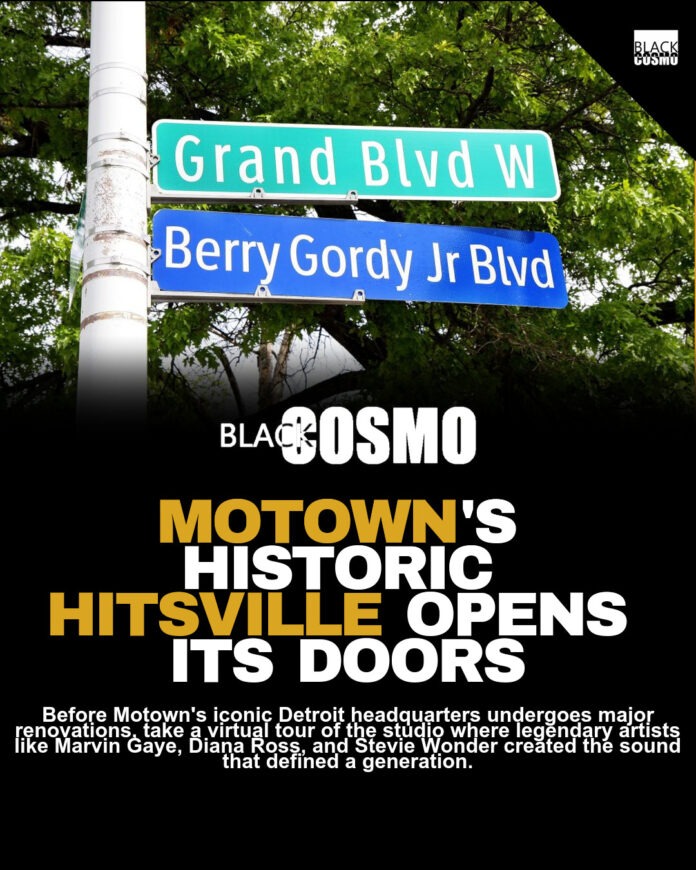
Before you even reach Hitsville U.S.A., you’ll spot the Berry Gordy Jr. Boulevard street sign. The city gave the street this secondary name in 2007 to honor the legendary founder who gave so many Black artists the recording space and opportunity they deserved.
The Outside of the Museum

The museum building itself is unmistakable. Painted with bright blue doors and a bold Hitsville U.S.A. sign across the front, it’s an immediate visual announcement. You can almost picture the parade of artists who walked through those doors to make music history.
Studio A Control Room

Inside Studio A, the space remains largely untouched. The wooden floors show their age, scuffed and worn from decades of musicians moving to the beat. A chalkboard in the control room still displays recording session schedules, a small window into the organized chaos of how Motown operated.
Grand Piano In Studio A

The grand piano that sits at the center of Studio A arrived in 1967 and became the instrument of choice for Stevie Wonder and other artists recording in the space. The piano underwent restoration in 2012 after Paul McCartney visited the museum and donated funds for its repair. It’s one of those objects that connects you directly to the past.
Gold Records

Among the displays is Motown’s first gold plaque, awarded for Smokey Robinson and the Miracles’ 1961 hit “Shop Around.” It’s a tangible marker of the moment Motown proved it could produce chart-topping records.
Staff Time Clock

The original time clock and punch cards tell a story about daily life at Hitsville. It’s easy to forget that behind every Motown masterpiece were staff members clocking in and out, working regular hours to build something extraordinary.
Sheet Music for “My Girl”

The sheet music for the Temptations’ “My Girl” still rests on a music stand in the studio, preserved exactly as it was during recording. It’s one of those small touches that makes the space feel less like a museum and more like the artists just stepped out for a moment.
Secretary’s Desk

The secretary’s desk tells its own story. Three phones and a typewriter sat front and center, a testament to how busy the operation was. This was the first stop for countless musicians walking through the doors.
Microphone Wires in Studio A

The vintage microphone wires still hang in Studio A. While they’re no longer in use, they’re a physical reminder of the voices that traveled through them—recordings that are still on people’s playlists decades later.
The Entrance to Berry Gordy’s Apartment

Upstairs from the studio sits Berry Gordy’s apartment, preserved in its original state. It’s a more intimate look at how Gordy lived and worked, literally living above the operation that was changing music.
Candy Machine

A vintage candy machine sits in the apartment, a small reminder that keeping creative energy flowing sometimes required simple pleasures. Staff and musicians could grab a quick snack between sessions.
Living Area

The living area is modest but comfortable. A television set sits in the corner alongside a floral-patterned chair. It wasn’t extravagant, but it was functional and reflected Gordy’s focus on the work rather than flashy living.
More of Berry Gordy’s Apartment

An orange leather couch and a nearby playpen for Gordy’s children complete the living space. The apartment shows that Gordy balanced business with family, even as Motown was becoming a cultural force.
Packaged Vinyls and Old Newspapers

The dining area tells a different story. Instead of plates and cookware, packaged vinyl records and old Billboard newspapers fill the space. Motown didn’t have the luxury of relying on large distribution networks early on, so they handled much of the work themselves, personally getting their music to radio stations.
The Other Departments for Hitsville

As Motown expanded, Gordy couldn’t contain the entire operation in a single apartment anymore. He purchased multiple houses on the same street, each dedicated to different departments like publishing, finance, and administration. It was a sprawling ecosystem built one house at a time.
The Former Finishing School for Artists

One of those houses was designated as Motown’s finishing school for artists. It taught performers how to dance, conduct themselves in public, and polish their stage presence. This was distinctive to Motown and not something other record labels were doing at the time. It gave Motown artists a competitive edge and helped establish them as complete entertainers, not just singers.
★TR★