The 1990s produced some of the biggest superstars in music, but it also gave us an incredible group of artists whose influence far exceeded their fame. Their voices became part of the soundtrack of a generation, even if casual listeners never learned their names.
Some were background vocalists. Some were featured artists. Others fronted beloved groups before stepping into successful but quieter careers. Their contributions remain essential to the sound of ’90s R&B and hip-hop.
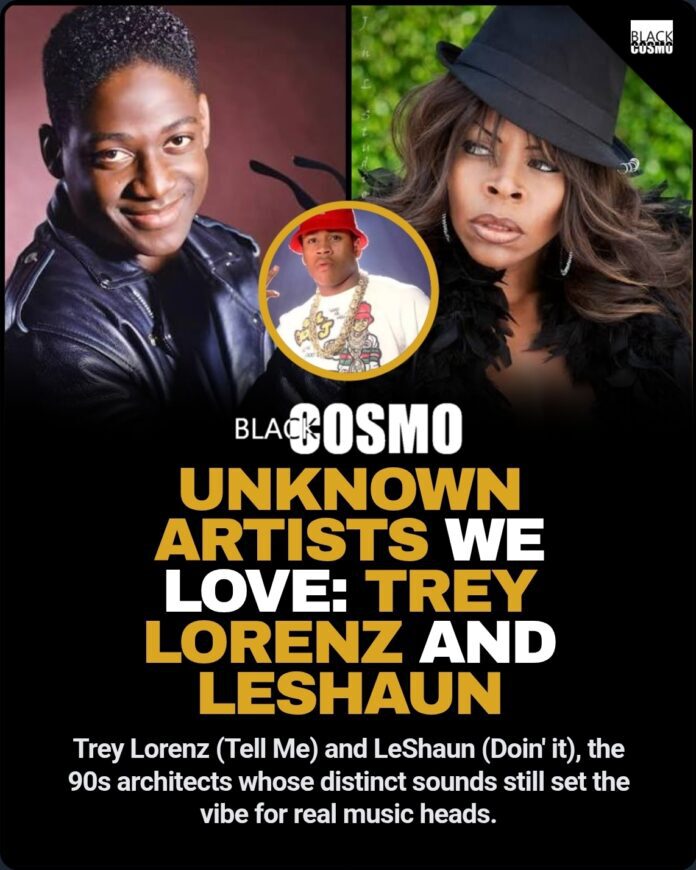
Trey Lorenz: The Voice You Know, Even If You Don’t Know His Name
For many fans, Trey Lorenz will always be remembered for his unforgettable duet with Mariah Carey on the chart-topping remake of “I’ll Be There.” The Grammy-nominated vocalist also scored a solo R&B hit with “Someone to Hold,” proving he had the talent to stand on his own.
What many listeners don’t realize is just how often they’ve heard Trey Lorenz without knowing it.
His smooth harmonies appear throughout the 1990s, including the iconic Groove Theory hit “Tell Me,” where his background vocals help give the record its warm, soulful chemistry. His résumé also includes work with artists such as Selena, TLC, Da Brat, Usher, and years of touring alongside Mariah Carey.
Sometimes the greatest singers aren’t the loudest names on the marquee—they’re the voices that quietly elevate everyone around them.
Amel Larrieux: A Neo-Soul Pioneer
Calling Amel Larrieux “unknown” doesn’t quite tell the story.
As one-half of Groove Theory alongside producer Bryce Wilson, Larrieux helped redefine contemporary R&B with the group’s self-titled 1995 debut. Their breakthrough single, “Tell Me,” became a Top 5 Billboard hit and remains one of the defining records of the neo-soul movement.
What made Amel special wasn’t just her voice. She co-wrote much of Groove Theory’s material, arranged vocals, and brought an effortless blend of jazz, soul, hip-hop, and sophisticated songwriting that influenced countless artists who followed.
After leaving Groove Theory, she built one of the most respected independent careers in R&B. Albums like Infinite Possibilities, Bravebird, and Morning earned critical acclaim and established her as one of neo-soul’s most beloved singer-songwriters. While she may not dominate mainstream headlines, musicians and longtime R&B fans continue to celebrate her artistry.
LeShaun: The Voice Behind “Doin’ It”
Few hip-hop singles defined the mid-1990s like LL Cool J’s “Doin’ It.”
While LL commanded the spotlight, the record’s unforgettable hook belongs to LeShaun. Her sultry vocals created the chemistry that transformed the song into one of the biggest crossover hits of 1996 and one of the most recognizable rap collaborations of the decade.
LeShaun never became a household name, but her performance remains inseparable from the song’s identity. It’s a reminder that featured artists often leave the biggest impressions with only a few verses or a memorable chorus.
The Legacy of the Unsung
Music history often celebrates the stars while overlooking the collaborators who helped create the magic.
Trey Lorenz, Amel Larrieux, and LeShaun each represent a different kind of legacy. One became one of R&B’s most respected supporting vocalists. One helped shape the sound of neo-soul before flourishing as an acclaimed independent artist. One delivered a feature that became part of hip-hop history.
Their names may not always top the playlists, but their voices continue to echo through samples, streaming playlists, radio rotations, and the memories of everyone who grew up on ’90s R&B.
At BlkCosmo, we believe the culture isn’t built by superstars alone. It’s built by every singer, songwriter, producer, background vocalist, and featured artist whose talent helped define an era.
Sometimes the greatest legends are the ones whose names deserve to be spoken more often.