Brittany Cartwright is keeping it real about her ongoing divorce from former Vanderpump Rules star Jax Taylor. The Valley personality recently opened up about how their separation continues to drag on, with unresolved issues around finances and their family home taking center stage. Like many high-profile splits, this one involves serious legal matters that require patience and strategy. If you’re interested in following celebrity freedom struggle narratives and personal empowerment stories, there’s plenty of drama unfolding here.
In a recent chat with Entertainment Tonight, Brittany explained that the house has been the main holdup keeping things from wrapping up. “That’s why our divorce is taking so long, by the way: The house,” she said. “There’s another one in July, so fingers crossed.” She also revealed she’s been making monthly payments to cover Jax’s tax bills while keeping their son Cruz stable and comfortable in his home. For those following along with celebrity freedom struggle moments, this is definitely one to watch.
Jax’s attorney, Mark Vincent Kaplan, quickly shut down those claims. “She is not paying any of Jax’s tax liability,” he stated to ET, emphasizing that the home is still community property owned by both parties. It’s the kind of he-said-she-said that makes divorce proceedings messy and emotional.
When it comes to co-parenting their son, Brittany admitted the adjustment hasn’t been smooth. “It’s not easy,” she shared. “We both want to put Cruz first.” That’s the real tea here—no matter what happens with the finances or the house, both parents are trying to do right by their kid. That takes real strength and commitment, even when things get heated with a statement piece of a custody agreement.
On a lighter note, Brittany revealed she’s gotten back into the dating scene after her split with boyfriend Brandon Hanson. Life goes on, and she’s moving forward with grace—handling the complexities of modern relationships while balancing family responsibilities and public scrutiny.
Snoop Dogg Wants Out of Lawsuit Over Drakeo the Ruler’s Death
Published
Snoop Dogg‘s company is pushing to get out of a wrongful death lawsuit, claiming it bears no responsibility for the tragedy that occurred at the 2021 Once Upon a Time in L.A. festival.
The rapper filed a motion for summary judgment in the case brought by Snoop Dogg‘s family members of the slain artist, arguing through his company that it had zero involvement in festival operations and shouldn’t be held liable for what happened there.
According to legal filings, Snoop’s company never signed any lease or licensing agreement for Exposition Park, where the stabbing took place. They hold no ownership stake or leasehold interest in the venue.
His position is straightforward: he performed at the festival. That’s it. Everything else falls outside his company’s scope, and they shouldn’t carry legal liability for what happened off stage.
The declaration emphasizes that no one from his company witnessed or participated in the stabbing. They had no connection to the people who killed Drakeo the Ruler.
The paperwork is thorough on this front. Snoop’s team claims the company didn’t hear about the incident beforehand, didn’t participate in event planning, didn’t arrange security, and had no operational role whatsoever.
Drakeo’s brother filed suit in 2022, months after the rapper was killed at the festival. The lawsuit alleged security was inadequate and failed to protect attendees.
The lawsuit casts a wide net. It names Live Nation, LAFC, and other defendants, treating the venue and all involved parties as potentially responsible.
LAFC filed its own motion for summary judgment, which was granted earlier this month. Whether Snoop’s company achieves similar success remains to be seen.
Real Housewives of Beverly Hills fans are getting some piping hot tea. Camille Grammer just dropped some major criticism about Dorit Kemsley, and honestly? It’s a conversation people are having.
While appearing on the Humble Brag podcast with Crystal Kung-Minkoff and Cynthia Bailey, the former Real Housewives of Beverly Hills star accused Dorit of becoming “full of herself” and said she believes fame changed the longtime Bravo personality in ways that aren’t sitting right with her.
“[Dorit] turned into a monster,” Camille claimed. “She’s full of herself.”
Camille, 57, said she saw both the positive and negative sides of Dorit during their years on the show. She’s got perspective that comes from being in the trenches together.
“I’ve had the Dorit monster come for me, and I’ve seen the nice, sweet Dorit,” she explained. “I think it got … her head blew up. She bought into the hype.”
Dorit is currently dealing with her separation from husband PK Kemsley, but Camille says that it’s PK she actually feels sorry for. That’s a statement piece in itself.
“She’s a mom, again, and I feel bad for anybody going through such a difficult time,” Camille shared.
According to Camille, the show itself hasn’t been delivering the goods lately either.
“I’ve found the last couple of seasons redundant and boring,” she said. “The energy just isn’t there.”
Her comments mirror much of the fans who have called the current season a snoozefest and are begging for Bravo to bring back some of the show’s popular names, including Lisa Rinna and Garcelle Beauvais. People want that gold hoop earrings energy back—the realness, the drama that felt organic and not manufactured.
Drake and Kendrick Lamar beef just got messier. DJ Akademiks is claiming Elliott Wilson got caught in the crossfire, and the details are wild.
According to Akademiks during a recent livestream, things between Wilson and Drake soured after the rap icon allegedly stopped giving the veteran journalist interviews. Wilson then showed up to Kendrick’s “Not Like Us” video shoot—and Drake and Kendrick Lamar beef tensions made that appearance uncomfortable, to say the least.
“All respect to my n—a Elliott Wilson,” Akademiks said on stream. “Him and Drake fell out ’cause he felt entitled to Drake giving him an interview.”
The internet personality then alleged that K. Dot and Wilson’s interaction wasn’t as friendly as people assumed. “He went to the ‘Not Like Us’ video… Kendrick called him a rat straight to his face,” Akademiks claimed. “How you diss the man who gave you multiple interviews, run to the other side, and the man not even happy that you switched sides?”
Wilson later addressed the moment on social media, keeping it real: “Kendrick dapped me up and whispered ‘you’re a rat.’ I ❤️ hip hop.”
Throughout 2024, Wilson openly sided with Kendrick in the feud. He’s also claimed that Drake essentially banned him from Toronto. “I got the calls from OGs—I’m not really welcomed in Toronto right now,” Wilson explained. “I grew up in NYC and you know not to go into other people’s projects. You might visit shorty but you ain’t got no business being over to those projects looking for no problems.”
Wilson continued, “So, I would not go to TO if me and Drake weren’t good. I just think it’s a tough time to manage these relationships with artists. You develop these connections with them, and then you have to manage these relationships and its ups and downs with that.”
The timeline is in shambles again, and this time, it’s a blast from the past. Raven-Symoné’s old Oprah interview is making the rounds online, pulling everyone back into a conversation that started more than a decade ago. Back in 2014, the former child star sat across from the media mogul and casually rejected the label “African American.” She wanted to be called an American, point blank. People lost their collective minds. The clip is going viral right now because, honestly, the internet still doesn’t know how to handle it when a Black public figure questions the categories the United States created around race.
Let’s get the facts straight before the hot takes fly. Raven-Symoné wasn’t dodging her Blackness. She later went on the record to clarify her stance. Her issue was always the prefix. She pointed out the obvious double standard. White citizens get to exist simply as “Americans,” while Black citizens carry a hyphenated identity. It was a critique of how belonging and nationality are policed. Instead of chewing on that nuance, social media is treating the clip like a brand-new controversy. Twitter users are dragging up the exact same arguments from 2014, fighting ghosts from a decade ago.
The current climate thrives on this chaos. When Raven-Symoné’s old Oprah interview hits the feed today, it lands in a space that is hyper-aware of racial identity but entirely stripped of context. A short clip circulates, and suddenly everyone is an expert on her internal life. The reactions range from heavy side-eyes to outright cancellation attempts. Fans tweet out the short snippet, asking why she wants to erase her roots. They missed the actual point. She didn’t want to erase her roots. She wanted the exact same baseline nationality granted to the dominant culture.
You have to look at the energy of the debate. Some folks understand exactly what she meant. They see the exhaustion of constantly being boxed into subcategories just to navigate daily life in the US. Others view her comments as an abandonment of the culture that raised her. They remember her as the kid who grew up on a premier Black sitcom, carrying a specific cultural weight. To them, rejecting the label feels like rejecting the community. Both sides are screaming past each other. The friction is real, and it proves we still lack the language to discuss identity without turning it into a loyalty test.
The obsession with categories isn’t accidental. The US relies on labels to maintain order. When someone steps outside of that structure and demands to be seen as the default, the system glitches. People panic. They demand clarification. They drag you onto a podcast ten years later to explain yourself again. Raven wasn’t playing by the accepted rules of public relations. She spoke her mind, raw and unfiltered, knowing it would ruffle feathers. She owned her space.
The discourse refuses to die because we are stuck in a loop. Every few years, the same clip resurfaces, the same outrage flares up, and the same takes drop. It exposes a raw nerve. We are still wrestling with what it means to belong here, to claim a country that often refuses to claim us back. The hyphen in “African-American” isn’t just punctuation. It represents a deep, historical divide. Choosing to drop it is a political act, whether people want to admit it or not.
Go ahead and watch the clip again. Read the comments. Look at the people fighting for their lives in the replies. The conversation is messy, loud, and entirely necessary. It strips away the polite fiction that we have this all figured out. We don’t. And until we do, we will keep fighting over the same twelve seconds of television, waiting for a resolution that might never come.
Higgsfield Supercomputer, Claude Clones, and the AI Trust Problem Nobody Wants to Talk About
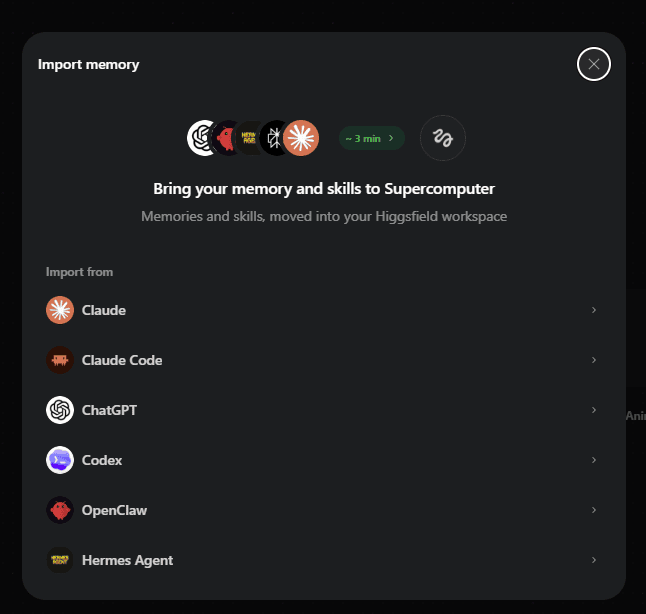
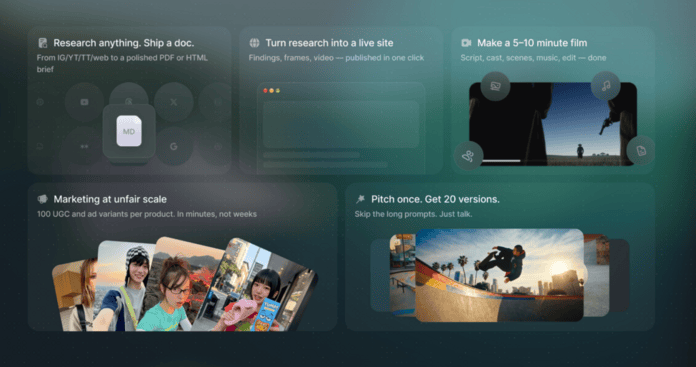
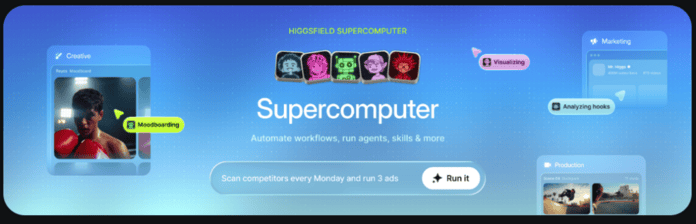
Higgsfield’s new Supercomputer has entered the chat, and the reaction has been immediate: curiosity, skepticism, and a whole lot of side-eye. Positioned as an agentic AI system built to streamline creative work, automate production, and orchestrate multiple models from one interface, it is being framed as a breakthrough moment in the growing race to build the next generation of AI tools.
But beneath the polished marketing language and futuristic branding, a much bigger conversation is taking shape. The question is no longer just what the tool can do. It is whether creators should trust it, whether the hype is ahead of the product, and whether this is really innovation or just another tech flex wrapped in premium branding.
What Higgsfield’s Supercomputer Is Really Selling
Higgsfield’s Supercomputer is not a standalone model in the traditional sense. It functions more like an orchestration layer, routing across different frontier models and creative systems inside one centralized workflow. In theory, that means users can prompt once and move from concept to execution without bouncing between multiple tools, tabs, or platforms.
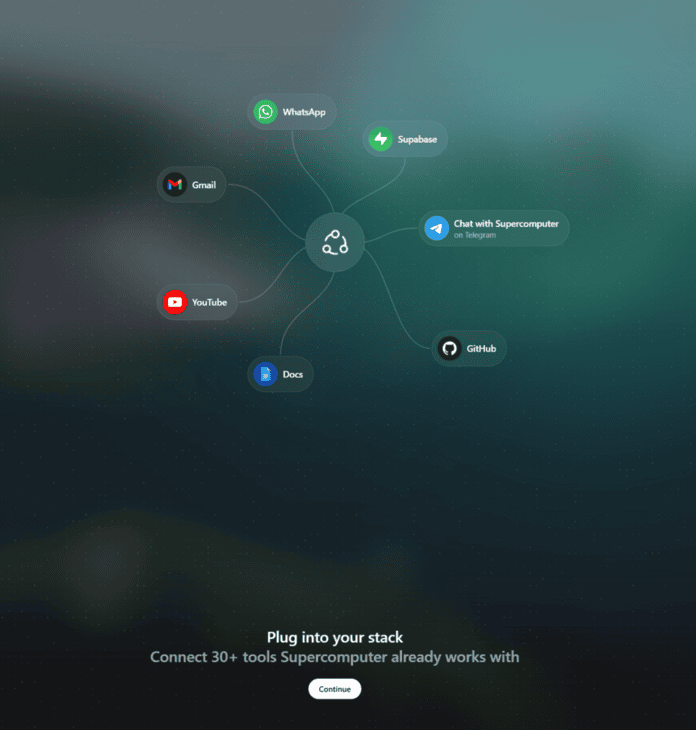
That pitch is exactly why people are paying attention. The company is presenting the system as an all-in-one creative brain, capable of handling memory, connectors, workflow automation, and asset generation across tools like Slack, Notion, Drive, and Figma. According to its public positioning, it is designed to speed up production and reduce friction for teams and creators alike Higgsfield Supercomputer.
Still, calling it a “supercomputer” feels more like branding than precision. What users are actually looking at appears to be a multi-model automation interface with aggressive packaging and a high-concept name built to sound bigger than a standard AI workflow tool.
The Claude Clone Conversation
One reason the internet keeps circling back to Claude is because Higgsfield seems to rely on the same broader class of reasoning systems to power parts of its experience. The result is a wave of comparisons that raise a simple question: is this a true competitor, a remix, or just a wrapper around existing models with a flashier presentation?
That distinction matters. In the current AI landscape, the real innovation is often less about inventing something from scratch and more about packaging existing intelligence into a smoother, faster, more accessible workflow. Higgsfield appears to be leaning into that trend by turning model access into a more visual, agent-driven experience.
For users, that can be appealing. For critics, it can also feel like the tech equivalent of a luxury label over the same basic fabric.
Why the Hype Feels So Loud
The marketing around Higgsfield has been impossible to ignore. The company’s presence across social platforms has amplified the sense that something major is happening, whether through repost chains, polished demos, influencer-style clips, or highly optimized launch content. That kind of visibility can create momentum fast, especially in an industry where attention is currency.
But hype cuts both ways. When a product is introduced with this much spectacle, audiences naturally start asking what is being shown, what is being staged, and what is being left out. In AI especially, the line between demo, real-world capability, and promotional theater can get blurry very quickly.
That is why the conversation around Higgsfield is not just about the tool. It is about trust, framing, and whether the audience is being sold a vision before they have seen the full system in practice.
Creator Credit and Culture Concerns
There is also a deeper cultural issue here. In creator spaces, people are already asking what happens to attribution when machine-assisted work becomes the norm. If a platform helps generate the idea, execute the workflow, and package the final asset, then where does the creator’s ownership begin and end?
That question is especially sensitive in communities that have historically been undercredited, underpaid, and overexposed to exploitative tech cycles. Black creators, designers, and cultural workers have repeatedly watched platforms learn from their labor while the value gets redirected elsewhere. So when a tool promises speed, scale, and automation, skepticism is not irrational. It is experience.
The bigger fear is not only that creators may lose credit. It is that they may become the training ground, testing lab, and unpaid quality-control team for systems that eventually price them out of the process.
The Data Trust Problem
If the branding feels ambitious, the data conversation feels even more serious. A system like this depends on access. It may need memory, permissions, connected services, approvals, preferences, and repeated user feedback to function effectively. That is what makes the workflow powerful, but it is also what makes people uneasy.
The more a system learns your taste, your process, and your creative instincts, the harder it becomes to separate convenience from extraction. Users are not just feeding prompts into a tool. They are teaching it how they think, what they reject, and how they define quality. Over time, that can feel less like assistance and more like quiet intellectual harvesting.
Public-facing promises around trust and safety are important, but they do not answer every question. Independent audits, transparent retention policies, and clearer explanations of how user data is handled remain part of what determines whether people feel safe using these tools at scale.
Why This Matters Beyond One Company
Higgsfield is not happening in a vacuum. It is part of a larger shift in which AI platforms are becoming content engines, media machines, and distribution systems all at once. That means the product is no longer just the software. It is also the narrative, the marketing, and the ecosystem built around it.
That shift matters because it changes the power dynamic. When a platform can generate, direct, optimize, and distribute creative output in one place, it starts to function less like a tool and more like infrastructure. And infrastructure usually favors the people who control it.
That is why so many creators are watching this moment closely. The concern is not that innovation is happening. The concern is that the speed of innovation may be outrunning the systems meant to protect the people feeding it.
Final Word
Higgsfield’s Supercomputer may very well be one of the more interesting AI products to enter the conversation this year. It is ambitious, polished, and clearly built for a market that wants faster creative output with less friction.
But the real story is not just about capability. It is about accountability, attribution, and whether creators are being asked to trust a system that still feels bigger in marketing than in transparency.
So yes, the tech is impressive. But the culture is right to ask a harder question: is this the future of creative work, or just the latest version of AI hype dressed up as inevitability?
Wendy Osefo is still filming for the next season of ‘The Real Housewives of Potomac,’ despite her legal troubles.
Published on
Wendy Osefo might be facing up to 15 years in prison, but she’s not stepping away from filming new episodes of The Real Housewives of Potomac, a source says. Despite the intensity of her situation, she’s showing up for the work—much like many of us pushing through our own challenges while sipping cold brew and staying grounded.
Recently, rumors surfaced that Wendy might have taken a break from the Bravo show as she and her husband, Eddie Osefo, prepare to battle multiple charges of insurance fraud. Specifically, someone on X claimed that Wendy has paused filming after fellow cast member Gizelle Bryant “caught her in a lie about her case.” Meanwhile, other RHOP followers have speculated that Wendy might choose to avoid the cameras in season 11 because appearing on the show could put her in legal jeopardy. But here’s the thing—none of that reflects what’s actually happening behind the scenes.
All of those rumors are false, an insider recently told Reality Blurb.
“Wendy is still filming. None of that is true,” the source said.
Wendy and Eddie have been accused of bilking insurance companies out of hundreds of thousands of dollars after filing claims for allegedly stolen goods. Prosecutors say that an investigation found that the supposed theft never happened and that the Osefos had reported items stolen that they still owned or had already returned to various stores. They were arrested in October 2025. Earlier this year, a judge in Maryland ordered that the couple be tried separately. It’s the kind of legal storm that would make anyone want to retreat, but Wendy’s choosing a different path.
Wendy hasn’t directly addressed her alleged crimes. But she has thanked people for their support in ways that feel genuine and grounded in her values.
“I just want to say thank you to everyone who has reached out to my family during this time,” she said at BravoCon 2025. “I can’t respond to everyone, but your love and support means the world to me. You know, it’s an unfortunate situation. And right now I can’t say too much, but I will say when the time is right, I will share my story with everyone, and for now, they’re just allegations. So we will continue to push forward.”
Despite her legal troubles, Wendy is confirmed to be returning for the next season of RHOP. Bravo announced the season 11 cast in April. In addition to Wendy, fans can expect to see Karen Huger (returning to the show after serving time for drunk driving), Gizelle, Ashley Darby, Stacey Rusch, and Tia Glover. RHOP alum Robyn Dixon will be back as a friend of the Housewives.
“We’ve begun filming, and it’s going great,” Andy Cohen teased. “So you’ll be happy to know.”
Christopher Nolan’s upcoming adaptation of The Odyssey was always going to dominate film conversations. What nobody expected was the internet completely unraveling over Lupita Nyong’o stepping into the role of Helen of Troy. Suddenly, timelines filled with self-appointed mythology experts clutching their pearls over “historical accuracy” in a story packed with gods, monsters, prophecies, and mythological chaos.
The backlash surrounding Lupita Nyong’o says far more about modern beauty politics than it does about Homer’s ancient epic. Critics rushed to label the casting “woke” while recycling tired talking points about race and fantasy storytelling. What actually unsettled people was the image itself: a dark-skinned Black woman occupying one of mythology’s most iconic symbols of beauty and desire. That conversation exposed how aggressively certain audiences still guard who gets positioned at the center of fantasy, prestige cinema, and cultural mythology.
For all the outrage, Homer never gave Helen of Troy a detailed racial identity. The ancient texts focused on her beauty, influence, and the destruction tied to her presence. That leaves plenty of room for interpretation, especially in a cinematic adaptation from a director known for reinventing familiar narratives. Nyong’o entering that space feels less like a disruption and more like an evolution Hollywood has resisted for decades.
And visually, the casting makes perfect sense. Nyong’o has long existed at the intersection of high fashion, prestige acting, and global beauty culture. The Academy Award winner has fronted luxury campaigns, dominated magazine covers, and become a red carpet reference point in everything from gold plated jewelry trends to modern tuxedo blazer styling. Whether she arrives in sculptural couture or minimalist elegance, she carries the kind of commanding screen presence these mythological epics demand.
The film itself is shaping up to be one of Nolan’s biggest productions yet. Nyong’o is reportedly taking on dual roles as both Helen of Troy and Clytemnestra alongside an A-list cast that includes Matt Damon, Anne Hathaway, Tom Holland, and Zendaya. Fans of the Black Panther actress already know she approaches every role with intense preparation and emotional precision. Her performances rarely feel manufactured. There’s always texture underneath the glamour.
Still, the backlash machine moved fast. Elon Musk amplified complaints online while conservative commentators pushed the familiar “DEI casting” narrative that appears every time Black actors enter traditionally white fantasy spaces. It happened with Halle Bailey in The Little Mermaid. It happened when Idris Elba joined the Thor franchise. Anthony Mackie dealt with it after becoming Captain America. The cycle repeats because some audiences still see whiteness as the default setting for mythology, heroism, and fantasy storytelling.
Ironically, Hollywood history is full of racially inaccurate casting choices that never triggered this level of outrage. Elizabeth Taylor famously portrayed Cleopatra in the 1963 classic while mainstream audiences largely embraced the performance without launching endless debates about authenticity. But when Black actors occupy legendary or culturally symbolic roles, the standards suddenly shift. The scrutiny becomes louder, harsher, and deeply personal.
Support for Nyong’o poured in anyway. Actor Alec Baldwin publicly defended her beauty and talent online, while fans flooded social media with side-by-side comparisons showing how naturally she fits Nolan’s mythological world. Across fashion circles, film spaces, and even curated reading list communities centered around Greek mythology and classical retellings, excitement around the casting continues to outweigh the noise.
There is also something culturally important about seeing a Black woman portrayed as the face capable of launching a thousand ships. Cinema has historically narrowed beauty standards to a very specific image. Casting Nyong’o in this role quietly disrupts that visual monopoly. It reminds audiences that beauty has never belonged to one ethnicity, one aesthetic, or one era.
The irony is that many of the loudest critics probably will still buy tickets opening weekend. Nolan films are events. And visually, this adaptation already feels positioned to dominate conversations across film Twitter, fashion media, and entertainment culture. Expect editorial spreads, viral beauty breakdowns, Olympic athlete memoir comparisons around discipline and performance, and endless analysis of costume design ranging from gladiator sandals to modern reinterpretations of ancient silhouettes.
At the center of it all stands Nyong’o. Calm. Unbothered. Talented enough to let the work speak louder than the outrage. The internet may continue spiraling for now, but once the first official footage drops, the conversation will likely shift from manufactured controversy to the obvious reality sitting in front of everyone: Christopher Nolan cast one of the most captivating actresses in modern cinema to play one of mythology’s most captivating women.
When the topic of dating women from New York hits the timeline, the conversation rarely stays neutral. The culture knows the archetype: bold, fiercely defensive. A walking masterclass in escalation. That specific regional energy was on full display this week when a video of Cardi B aggressively arguing with NFL star Stefon Diggs outside a Maryland coffee shop made the rounds. For two men who built their legacies on the streets of Harlem, the viral moment felt less like a surprise and more like validation. On a recent episode of their hit podcast “It Is What It Is,” Cam’ron and Mase held nothing back, using the loud public spat to explain exactly why they retired from that specific dating pool.
The footage of the Bronx native putting the wide receiver on blast was an easy setup for Cam’ron and his co-host. While Cardi later chalked the outburst up to hanger, joking on X that everyone has cursed out their child’s father when they need a meal, the Harlem duo viewed the incident through a different lens. To them, it wasn’t about missing a snack. It was a pure, unfiltered display of Big Apple aggression.
“Cardi B is dope. Sexy, personality, and everything,” the veteran MC admitted on the show, making sure to preface his critique with respect for the global superstar. “But this is why I just don’t deal with women from New York. I just don’t. I stopped.” The declaration landed perfectly in the middle of the barbershop-style banter that has made their sports and culture show a daily staple. The co-hosts laughed, but the underlying sentiment was dead serious. There is a distinct, unyielding edge that comes with navigating romance alongside someone forged in the five boroughs.
Mase immediately backed the claim, adding his own layer of analysis. “I was going to bring that up, but I didn’t want to line step,” he admitted, before breaking down the unspoken rules of regional romance. “Guys from New York don’t date girls from NY because they know what they are about to say during an argument is not going to be good.” He took it a step further, describing the physical escalation that often accompanies the verbal sparring. “Because a girl from New York will punch you in your mouth as a guy.” The visual alone speaks volumes to anyone who has ever survived a high-stakes argument on a crowded subway platform.
The back-and-forth captured a larger truth about compatibility and the energy people are willing to tolerate as they get older. When a man reaches a certain tax bracket of peace, the chaotic allure of an aggressive partner loses its shine. The podcast hosts were not criticizing the Bronx hitmaker’s character, but rather acknowledging an exhausting regional trait. The expectation to engage in public shouting matches, or worse, physical altercations, just doesn’t fit into a sophisticated lifestyle. The host quickly clarified that he was not promoting domestic violence or men fighting with their partners, but he accurately pinpointed the volatile trap many native men actively avoid.
Cardi and Diggs’ relationship has been a chaotic media fixture long before this coffee shop clash. Just days prior, they were spotted looking comfortable and affectionate at a Mother’s Day event for the receiver’s foundation, squashing earlier rumors of a bitter split. The whiplash from public displays of affection to viral arguments is exactly the kind of turbulence the podcast hosts were referencing. The culture loves the authenticity of a woman who keeps it raw, but living with that rawness requires a specific kind of patience. Dating women from New York often means signing up for a partner who will go to war for you, but will just as easily go to war against you over a perceived slight.
For established men looking for stability, the choice is clear. The Harlem legends have lived through the peak of city nightlife, the hip-hop feuds, and the high-profile romances. They know the terrain better than anyone. Their perspective isn’t rooted in malice. It comes from survival and exhaustion. The viral debate in Maryland was just the latest reminder that while the attitude makes for undeniable music and legendary internet moments, bringing that same heat into a domestic partnership is a young man’s game. Dating women from New York might build character, but these two are fully done volunteering for the curriculum.
DRAKE BREAKS THE INTERNET! New Single “Janice STFU” Becomes The Most Streamed Song On The Planet With 50 MILLION Plays!
We’re talking a moment that shook the entire music world. Just days after dropping his massive, surprise triple-album rollout, Drake has achieved the absolute unthinkable. On May 18, 2026, his dark, hypnotic breakout single “Janice STFU” officially became the most streamed song globally. This is the kind of Drake moment that reminds us why he’s the most streamed artist of all time.
The track, which serves as the crown jewel of his new album ICEMAN, has been completely dominating the global charts. We’re talking about a hip hop biography in the making—this is the sound of an artist reclaiming his narrative after years of public battles and criticism.
The Numbers Don’t Lie: Overtaking A Legend
To see just how massive this moment really is, we did a deep dive into the global data. We calculated the daily listenership across the top 10 music streaming platforms on earth:
Spotify
Apple Music
YouTube Music
Amazon Music
Tencent Music (QQ Music)
NetEase Cloud Music
Deezer
TIDAL
Audiomack
SoundCloud
When we combined the daily numbers from all ten of these global powerhouses, the results were jaw-dropping. For the May 18th tracking day alone, “Janice STFU” was streamed approximately 50 million times. That’s the kind of cultural moment that defines generations.
That massive 50-million play surge was enough combined global listenership to officially dethrone Michael Jackson’s timeless masterpiece, “Billie Jean,” as the most heavily streamed record on the planet for a single day. Moving past the King of Pop’s daily metrics is a feat most industry insiders thought was completely impossible in 2026.
Why Is “Janice STFU” Going So Viral?
Sonically, the record is classic, toxic, late-night Drake. Built around a thick bass line and a distorted, hypnotic Lykke Li vocal sample interpolation, the song has become an instant earworm that gets stuck in your head for days. It’s the kind of spoken word energy wrapped in production that makes you want to replay it endlessly.
But the real reason it’s breaking records is the gossip surrounding the lyrics. Fans have spent the entire weekend decoding the meaning behind every bar. While some thought “Janice” was a real woman from Drake’s life, the internet has largely concluded that “Janice” is actually Drake’s stand-in code name for the media blogs and online critics whom he feels have been trying to assassinate his character. Legendary producer Timbaland even took to social media to crown the track, declaring, “Take it from the king… that song gon’ be timeless.” This is Black excellence in real time.
He’s Back On Top
After a chaotic couple of years filled with high-profile rap feuds and endless public scrutiny, Drake just reminded everyone exactly why he holds the crown. He didn’t just return—he completely suffocated the charts with 50 million plays in 24 hours. This is freedom struggle energy applied to the music industry, taking back control of his narrative with one undeniable statement.
Have you been contributing to those 50 million streams, or do you think Michael Jackson’s “Billie Jean” still holds the real crown? Let us know in the comments!





 Higgsfield’s new Supercomputer has entered the chat, and the reaction has been immediate: curiosity, skepticism, and a whole lot of side-eye. Positioned as an agentic AI system built to streamline creative work, automate production, and orchestrate multiple models from one interface, it is being framed as a breakthrough moment in the growing race to build the next generation of AI tools.