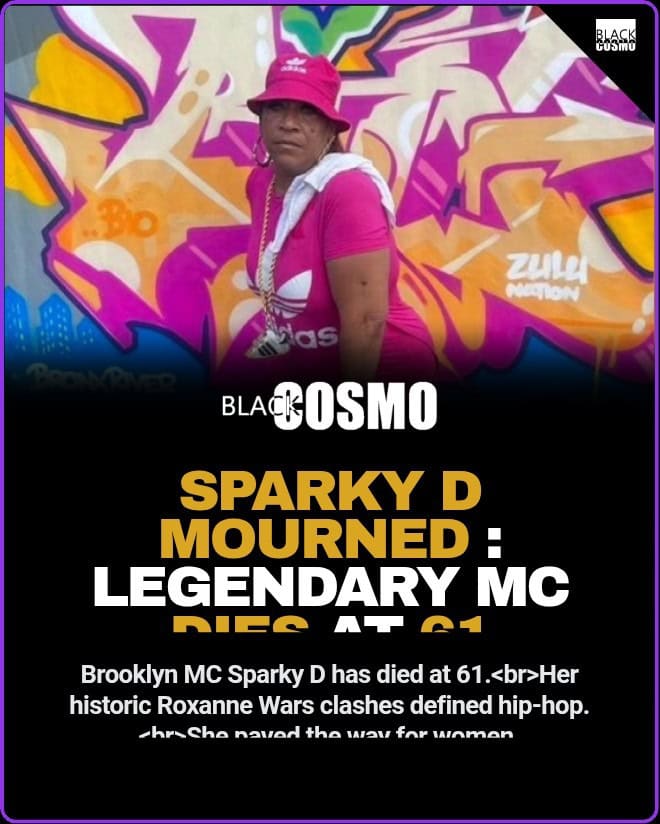
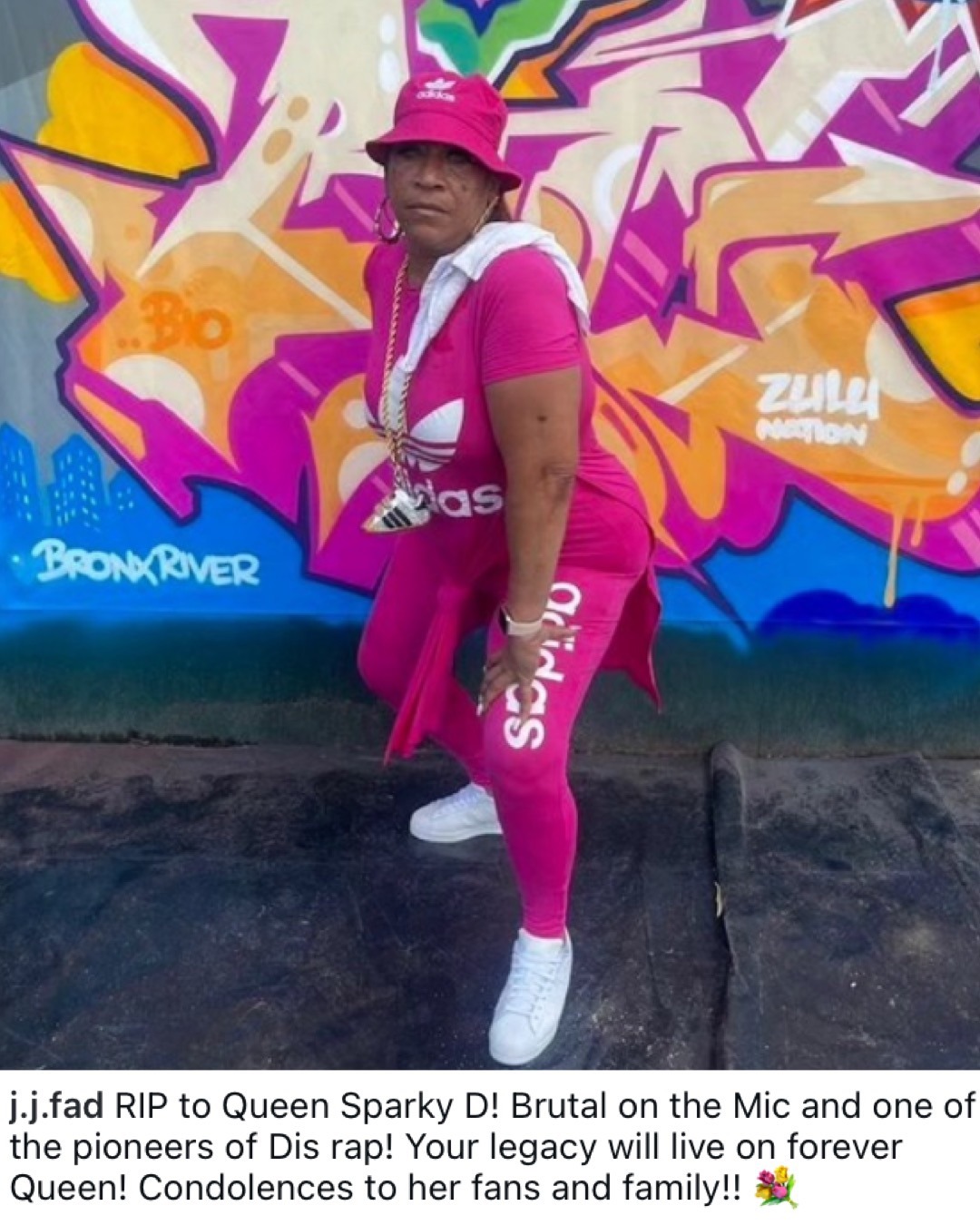
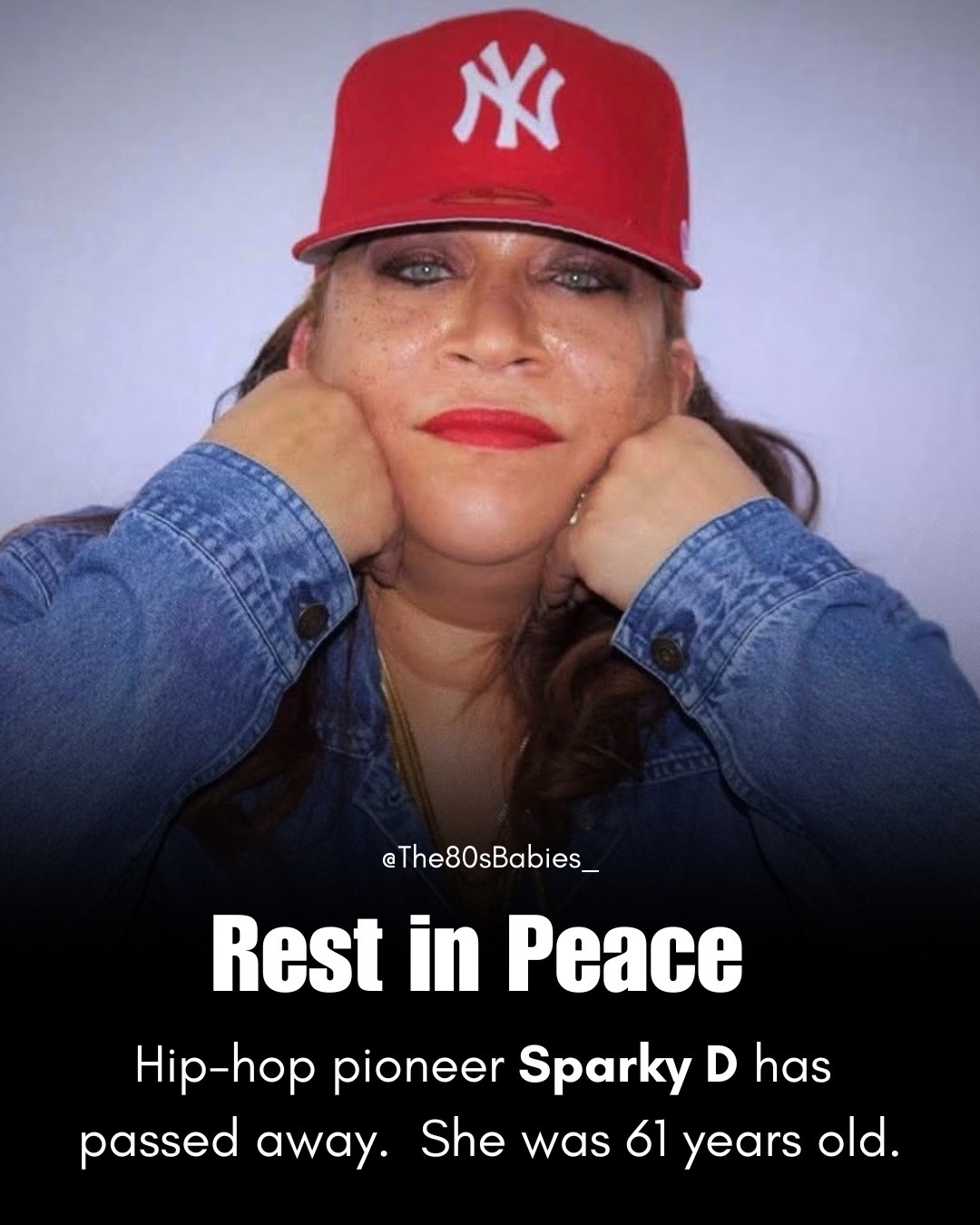
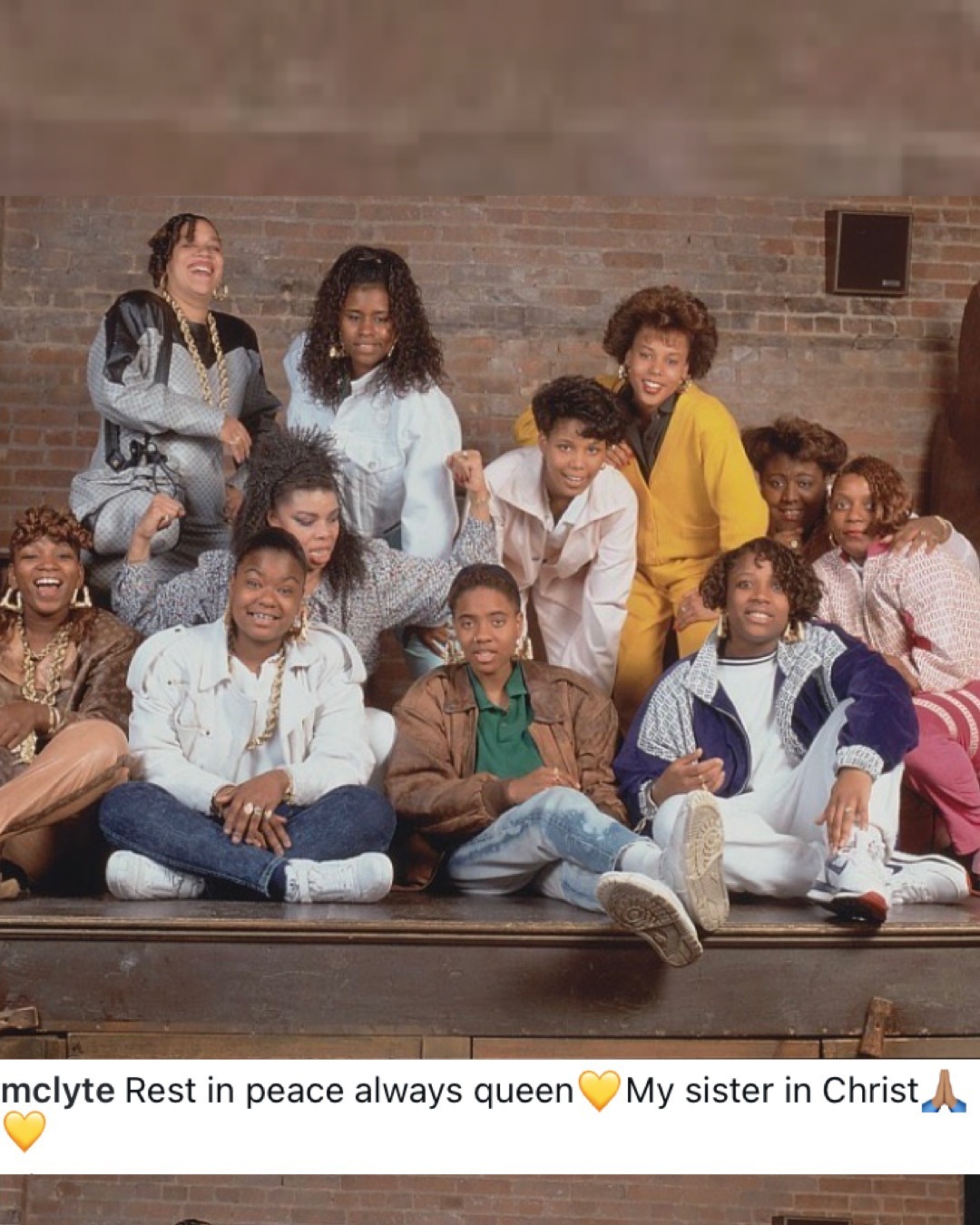
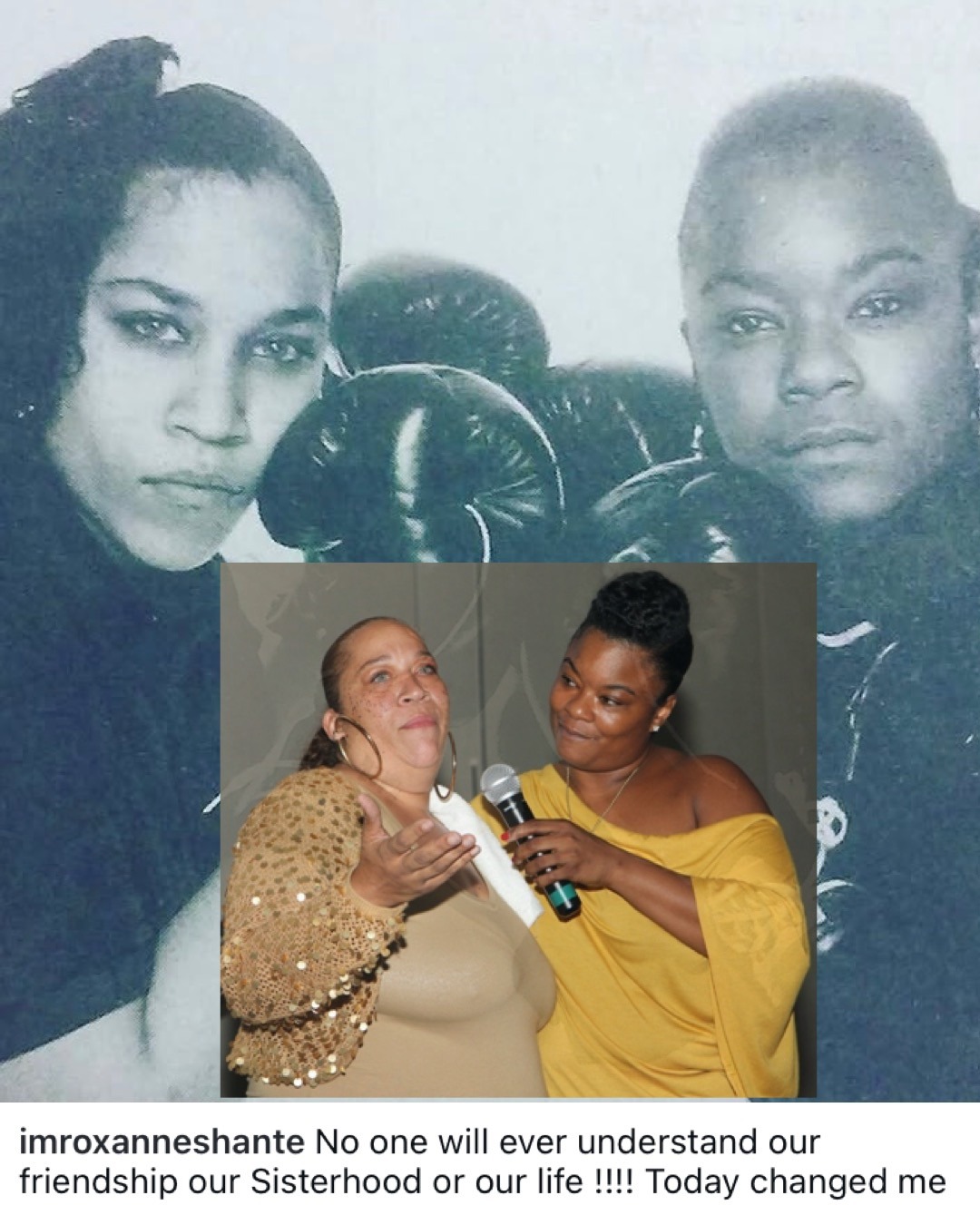
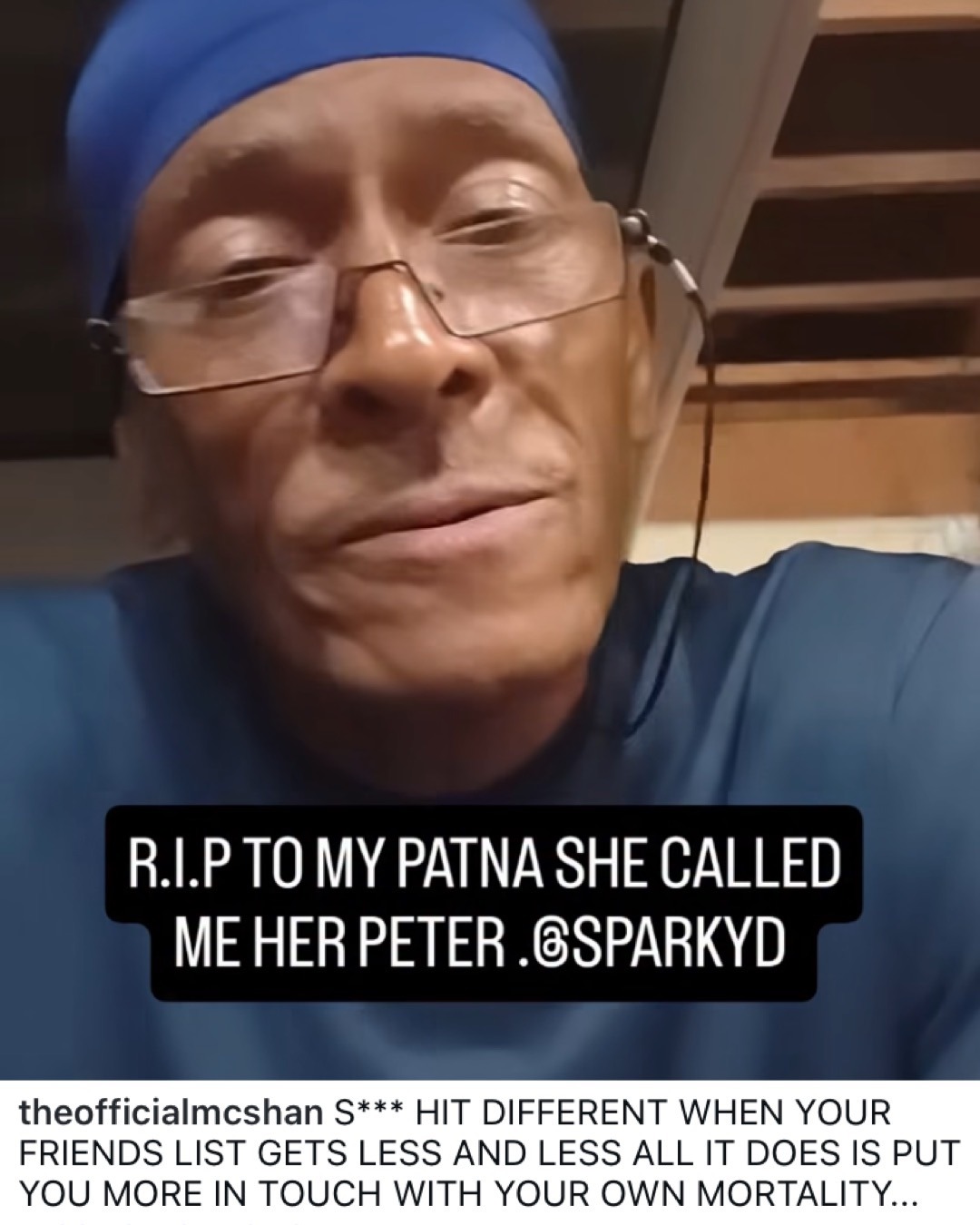
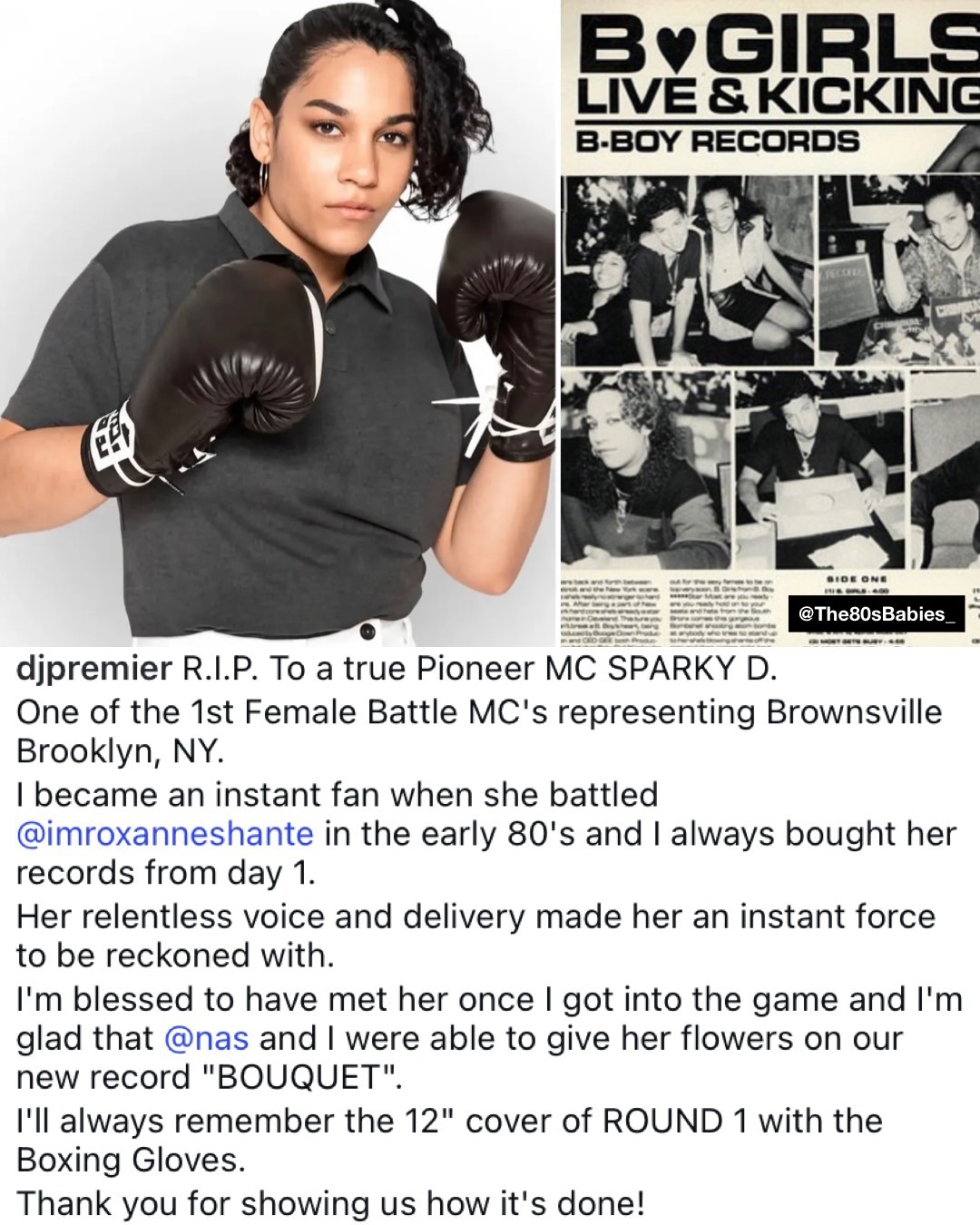
Hip-hop has lost one of its original mic commanders. Doreen Broadnax, known to the world as the fierce and unyielding Sparky D, has passed away at the age of 61. For generations of heads who remember the crackle of vinyl and the fierce pride of New York’s outer boroughs, this loss hits deep. She did not just participate in early hip-hop. She helped build its combative, lyrical foundation from the ground up.
Born and raised in the Van Dyke Housing Projects of Brownsville, Brooklyn, Doreen Broadnax faced the raw grit of city life early. She was a product of her environment in the best way possible, absorbing the rhythms, the boasts, and the street-level poetry that defined the early eighties. Around 1983, she joined a local rap group called The Playgirls alongside Lisa (City Slim) and Mona (Mo Ski). Together, they recorded “Our Picture of a Man” for Sutra Records, introducing her voice to a growing underground audience. But it was her partnership with producer Spyder D that set the stage for her defining moment on the microphone.
The Flame of the Roxanne Wars
To understand the stature of Sparky D, one must look back to 1984. A young Roxanne Shante had fired shots across the boroughs with “Roxanne’s Revenge,” a response to UTFO’s “Roxanne, Roxanne.” The track was a local sensation, circulating heavily on WBLS’s Mr. Magic’s Rap Attack. Hearing the record on New Year’s Eve, Spyder D knew there had to be an answer from Brooklyn. The next morning, he got Doreen into the studio.
The result was “Sparky’s Turn (Roxanne, You’re Through),” released on NIA Records in 1985. It was a fierce, sharp-tongued rebuttal that instantly caught fire. The record sold over 300,000 copies, earned a gold certification, and kicked off the famous Roxanne Wars. This was not a soft pop rivalry. This was street-level lyricism at its finest, proving that female emcees could trade verbal blows with the absolute best in the business. Rather than adapting to a male-dominated battle space, she aligned with its competitive core to define it, setting a high standard for microphone dominance.
Later that year, the two competitors took the rivalry directly to the wax with “Round One, Roxanne Shanté vs Sparky Dee.” They traded freestyles and disses in a raw display of lyricism. It was the first time two female artists clashed so publicly and successfully, establishing a template for every battle rap league that would emerge decades later.
A Life of Resilience and Faith
The path of an early hip-hop artist was rarely smooth. Doreen Broadnax openly shared the struggles that came after the initial rush of fame. She dealt with severe personal hardships, including domestic violence and drug addiction. Yet, her story was not defined by those battles, but by how she overcame them. She reclaimed her life, eventually relocating to Atlanta to be closer to her children and dedicating herself to her faith. She transitioned her musical talents into the gospel rap circuit, earning a Gospel Choice Award in 2007 for her track “This is for the church.”
Her authenticity made her a highly respected figure. In recent years, legends continued to pay her homage. Just recently, Nas and DJ Premier recognized her on their track “BOUQUET,” giving her flowers while she could still smell them. Upon hearing of her passing, DJ Premier shared a touching tribute, recalling how he became an instant fan in the early eighties and praised her relentless voice and delivery.
The departure of Doreen Broadnax leaves a void in the history of East Coast hip-hop, but her records stand as permanent markers of an era when the culture was raw, competitive, and entirely pure. She showed the world that a girl from Brownsville could stand toe-to-toe with anyone, mic in hand, and command absolute respect. Our thoughts are with her family, friends, and the global hip-hop community mourning this true pioneer.
1 of 6
Vintage portrait of hip-hop pioneer Sparky D (Doreen Broadnax) posing confidently in a retro music photo shoot.
Vintage portrait of hip-hop pioneer Sparky D (Doreen Broadnax) posing confidently in a retro music photo shoot.
Vintage portrait of hip-hop pioneer Sparky D (Doreen Broadnax) posing confidently in a retro music photo shoot.
Vintage portrait of hip-hop pioneer Sparky D (Doreen Broadnax) posing confidently in a retro music photo shoot.
Vintage portrait of hip-hop pioneer Sparky D (Doreen Broadnax) posing confidently in a retro music photo shoot.
Vintage portrait of hip-hop pioneer Sparky D (Doreen Broadnax) posing confidently in a retro music photo shoot.
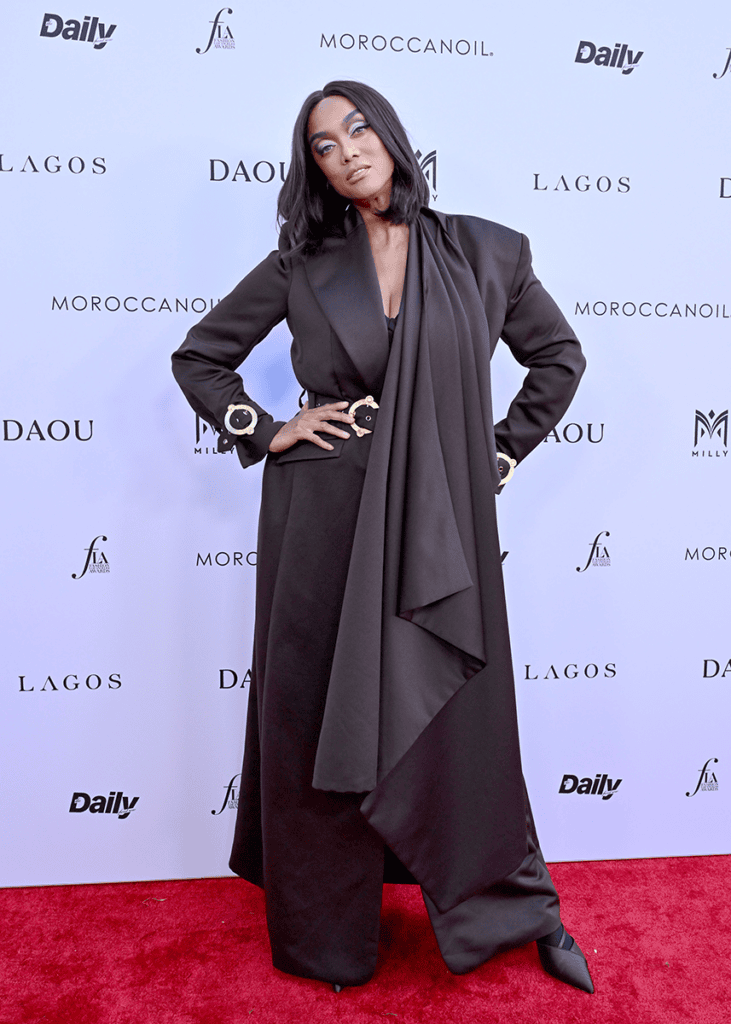
THE BATTLE OF THE AIRTIGHT CONTRACT! Tyra Banks Blasts Netflix With Multi-Million Dollar Defamation Lawsuit Over Savage ‘ANTM’ Exposé—But Insiders Snitch She Signed Her Rights Completely Away!
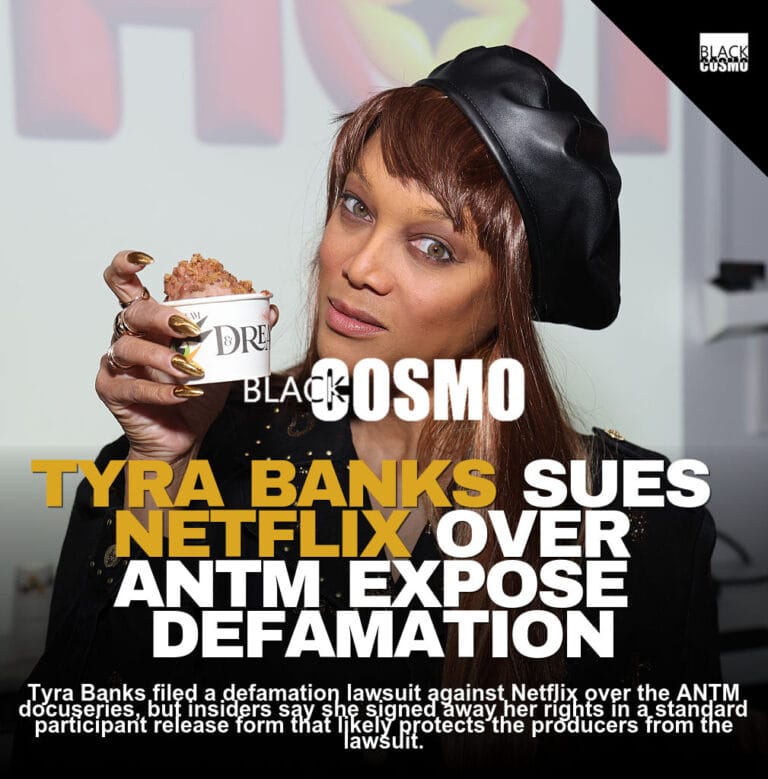
Honey, pull up an absolute front-row seat and grab your legal dictionary, because the fashion world and the streaming universe are officially locked in a catastrophic, multi-million-dollar courtroom war! The legendary supermodel, smize icon, and television pioneer Tyra Banks filed a bombshell defamation lawsuit against Netflix and the producers behind the highly controversial three-part docuseries Reality Check: Inside America’s Next Top Model. This case is pulling back the curtain on how Tyra Banks sees her legacy—and what happens when creative control goes too far.
NEW YORK, NEW YORK – DECEMBER 10: Tyra Banks attends Tyra Banks Hosts “SMiZE & DREAM” Hot Ice Cream First Taste at Artechouse NYC on December 10, 2025 in New York City. (Photo by Manny Carabel/Getty Images)
Tyra has officially reached her absolute limit with the public backlash, claiming the filmmakers used “surgical manipulation” and malicious, deceptive editing to turn her from a reality TV queen into a heartless, exploitative villain. The legal battle centers on questions of artistic freedom versus personal narrative—a tension that resonates deeply in conversations about radical women of color and how their stories get told. But while Tyra’s legal team is demanding a full jury trial and screaming for blood, insiders suggest this entire legal war might be entirely dead on arrival.
Inside Tyra’s Lawsuit: Accusing Producers Of Creating A “Complete Fabrication”
To understand why Tyra is sprinting to the courthouse, you have to look at the absolute devastation Reality Check caused to her legendary brand. According to the explosive court documents, Tyra sat down with the directors for a grueling, candid three-and-a-half-hour interview because she genuinely believed audiences deserved a real conversation about ANTM‘s historic legacy—including its massive successes and its deep shortcomings.
But honey, out of that massive hours-long sit-down, producers ultimately used just a measly 16 minutes of her footage! Tyra fiercely alleges that her words were completely stripped of their actual context and reassembled to support a deeply defamatory narrative. Specifically, the lawsuit takes aim at a segment involving Cycle 2 contestant Shandi Sullivan, who revisited her infamous, dramatic 2004 incident in Italy—revealing she now views the encounter as a non-consensual sexual assault rather than the juicy “cheating scandal” production marketed it as at the time.
Tyra’s lawsuit claims producers edited her responses to make it appear as though she couldn’t even remember Shandi’s story, cutting out a sequence where she unmistakably nodded and stated on camera, “I do remember her story.” The lawsuit states flatly:
“The false narrative the producers constructed… included that Ms. Banks knowingly allowed a contestant to be sexually assaulted on her show, exploited that contestant’s trauma for ratings, and then could not even remember it when asked… That narrative about Ms. Banks is a complete fabrication—one that Netflix streamed to a global audience of millions.” Tyra claims the fallout has heavily damaged her personal brand and even caused a massive decline in online ratings for her luxury Sydney-based ice cream business, SMiZE & DREAM!
The Production Tea: The Airtight Release That Could Kill The Case!
While Tyra is out here trying to protect her legacy and her ice cream coins, high-level corporate insiders close to the Netflix and EverWonder Studio production teams are practically laughing behind closed doors. This situation speaks to larger questions about creative freedom versus accountability—conversations happening across the independent press and in cultural meditation spaces about who gets to control the narrative.
A deep-cover source closely embedded within the docuseries production exclusively revealed that before a single high-definition camera even started rolling, Tyra’s camp signed a standard, completely airtight omnibus participant release form. These notorious entertainment contracts are specifically designed by elite corporate lawyers to grant filmmakers the absolute, unconditional right to edit, arrange, and present interview footage in whatever dramatic manner they choose, explicitly protecting the network and producers from any future defamation or emotional distress lawsuits.
Our insider whispers that the production executives are entirely unbothered by the dramatic headlines, confident that Tyra’s high-powered legal team is simply putting on a public relations performance for the fans. “We don’t know whether Tyra actually sat down and thoroughly read every single page of that release before she signed her name on the dotted line,” the production source told us. “But the legal department is fully confident that the absolute second our lawyers present that signed contract to the judge, this entire multi-million dollar defamation lawsuit will be thrown completely out of court!” Honey, it looks like Tyra might have accidentally smized herself right into a legal corner! Keep your eyes completely locked onto this story, because the battle over the ANTM legacy is about to get exceptionally nasty!
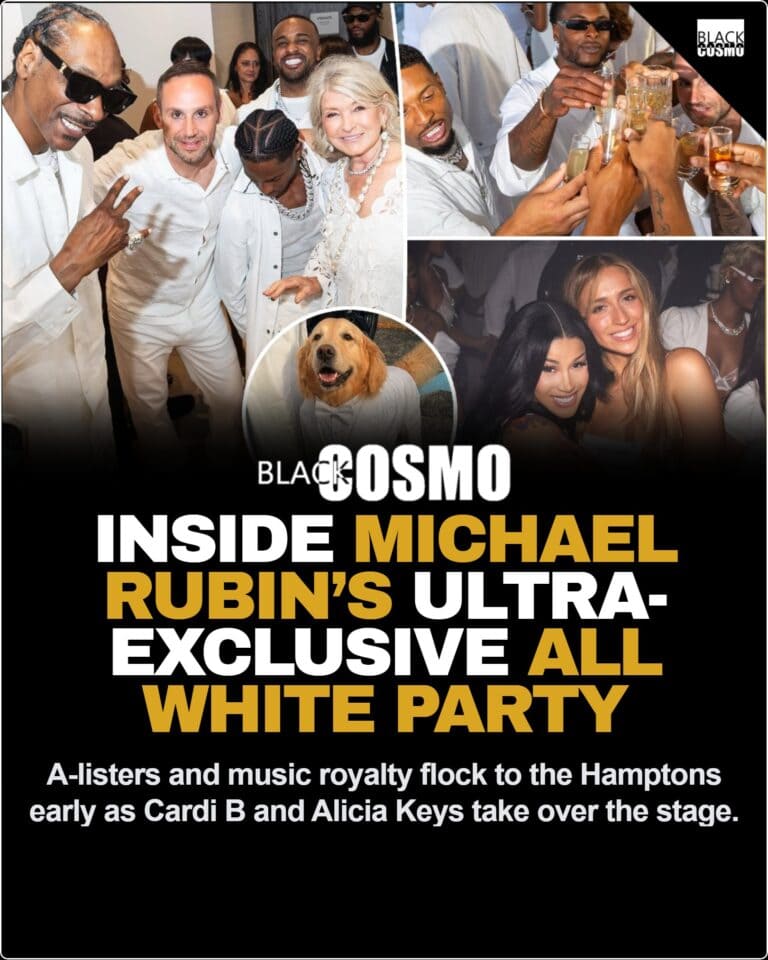
The Hamptons just witnessed the ultimate kickoff to summer as Michael Rubin hosted his highly anticipated annual White Party. Although the festivities started slightly earlier than usual on Wednesday, the high-profile gathering was nothing short of spectacular. This year’s shift in timing was a strategic move by the Fanatics mogul to accommodate other massive celebrity events happening in New York City.
There was some drama surrounding someone filming Teyana Taylor while she was dancing, but… she looked good though. 👀
According to reports, Michael Rubin chose to adjust the date of his legendary bash to avoid a conflict with the high-profile wedding of Taylor Swift and Travis Kelce, scheduled for Madison Square Garden. Rubin expressed his desire to ensure guests didn’t have to split their loyalty between the two grand celebrations, securing a powerhouse turnout for his own legendary event.
The guest list read like a who’s who of cultural icons, featuring the likes of Travis Scott, Winnie Harlow, and Emma Roberts. Making the night truly unforgettable, the legendary Alicia Keys and hip-hop sensation Cardi B took over the stage, delivering show-stopping performances that kept the energy at an all-time high.
With gorgeous white-clad fits filling the estate and elite vibes in every corner, this year’s celebration solidified its status as the most exclusive ticket of the summer season. From epic group photos to candid moments of pure joy, the night was a masterpiece of luxury and high-vibe networking.
As clips from the exclusive event made their way online, fans quickly noticed Teyana Taylor dancing alongside Ciara, bringing their signature high energy to the dance floor. The star-studded guest list featured heavyweights like Jay-Z, Cardi B, Lil Wayne, and Alicia Keys, alongside sports icons like Russell Wilson, Tom Brady, Karl-Anthony Towns, and Mike Tyson. Attendees arrived at the oceanfront estate dressed in impeccable luxury fashion, maintaining the event’s high-end aesthetic. But the lighthearted mood of the night took a different turn when a specific recording began to circulate, leading some onlookers to allege that the footage captured a compromising angle.
In the wake of the upload, unconfirmed reports and internet chatter suggested that legal action might be on the table. Rumors claimed the artist was deeply displeased with the unauthorized recording and was exploring options to address the breach. As of now, these assertions remain entirely speculative, with no official statement or confirmation from her camp. The lack of direct commentary has not stopped the public from debating the hypothetical legalities of filming inside a private gathering.
Comment sections across different platforms quickly filled with varying perspectives on the matter. One user offered a defense for the uploader, suggesting that the person who recorded was also drunk and they didn’t know they were recording. Others focused on the practical aspects of the law, asking, do you think she can actually sue? Meanwhile, some downplayed the severity of the video entirely, noting that she wasn’t half naked though, and arguing that the dancing was simply a display of someone having a good time at a party.
This scenario points to a much larger tension within modern celebrity culture. For decades, exclusive industry parties were treated as safe havens where high-profile figures could let their guard down without the fear of public scrutiny. Today, the ubiquity of smartphones has turned every guest into a potential camera crew. Even at an invite-only gathering of billionaires and celebrities, the expectation of complete privacy seems increasingly unrealistic. The line between sharing a fun moment and exploiting a private interaction has become remarkably thin, leaving many to wonder if public figures must remain on guard even behind closed doors. The discussion around the Teyana Taylor All-White Party incident highlights the ongoing battle between personal boundaries and public exposure.
When an individual attends an exclusive celebration, there is an implicit understanding of trust among peers. When that trust is breached for the sake of online engagement, it changes the way people interact in these spaces. Some observers argue that if someone records and uploads an embarrassing private moment from a party without your knowledge, they should be held legally responsible. Others counter that attending a highly publicized media event means accepting a certain level of exposure. This clash of expectations forces a deeper examination of digital ethics in an era where attention is the ultimate currency. While the truth behind the legal rumors remains to be seen, the Teyana Taylor All-White Party conversation serves as a cautionary tale for the digital age.
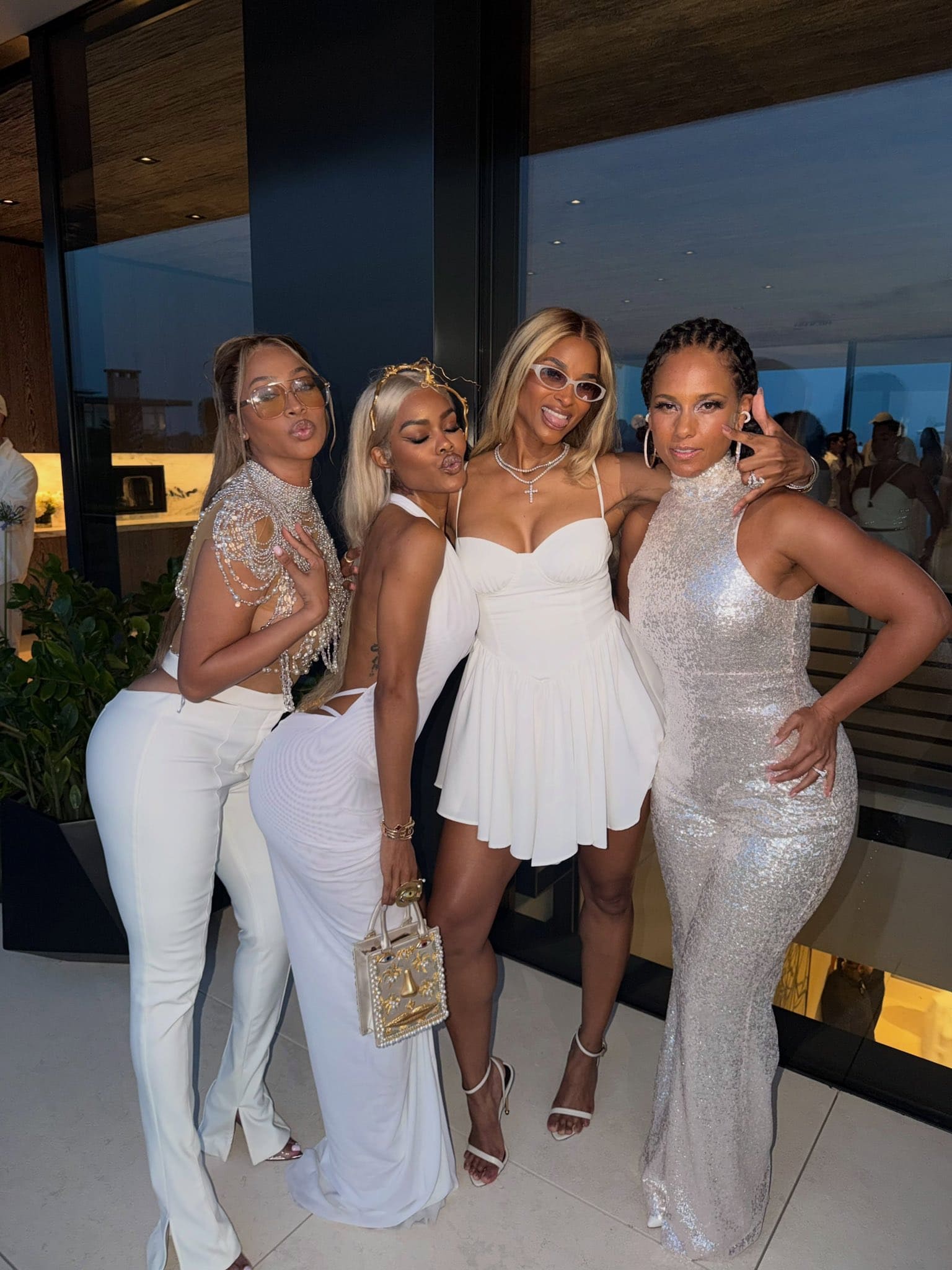
Ciara, Alicia Keys, La La & Teyana Taylor at the All White Party 🤍
From a legal standpoint, the question of whether an individual can sue over a video recorded at a private residence is complex. Laws regarding the expectation of privacy vary significantly by jurisdiction. In New York, where the Hamptons are located, the law generally requires the consent of at least one party to record conversations, but visual recordings in semi-public or shared social spaces within a private home occupy a legal gray area. If a gathering is held at a private residence, guests generally expect a higher level of privacy than they would on a public street. Yet, when hundreds of people are in attendance and media coverage is actively encouraged, establishing a reasonable expectation of privacy in a courtroom becomes a steep uphill battle. This legal ambiguity is precisely why these situations rarely result in formal lawsuits, often remaining confined to the court of public opinion.
The nature of these elite gatherings has shifted dramatically over the past two decades. In the pre-smartphone era, legendary parties hosted by industry giants were shrouded in mystery, with only a few polished photographs ever reaching the public. Today, events like Michael Rubin’s white party are designed with high visibility in mind, serving as significant branding opportunities for both the host and the high-profile guests. When the entire premise of an event relies on generating digital buzz, it becomes difficult to police where the camera stops. This environment creates a challenging paradox for attendees who want to support their peers and celebrate their successes but feel pressured to maintain a polished, camera-ready persona at all times.
Editor’s Picks:
For deep reflections on culture, identity, and the nuances of public life, explore our curated selection of Black literature. If you want to block out the noise of the digital world and focus on your favorite tunes, check out our recommended active noise cancelling headphones. And for those planning their own exclusive gatherings at home, elevate your space with these premium home essentials.
Get to know a little more about NBA coach Mitch Johnson and his family.
Published on
For 29 seasons, Gregg Popovich coached the San Antonio Spurs. When he suffered a stroke five games into the 2024-25 season, Mitch Johnson stepped in as interim head coach. Mitch, who is the son of late NBA player John “J.J.” Johnson, had spent nearly a decade within the Spurs organization and was promoted to head coach in May 2025 following Popovich’s transition to President of Basketball Operations.
In his first full season at the helm, Mitch guided the team back to the NBA Finals for the first time since 2014. Now, many fans want to know more about his life off the court as well. Mitch Johnson has built a meaningful life beyond the sidelines, balancing family, faith, and community engagement.
Mitch is married to Jessica Johnson, and they are the parents of four children. They have two daughters, Tasia and Tatum, and two sons, Johnnie and Jameson. The couple announced in 2023 that they were expecting their youngest, Jameson, while their oldest, Tasia, graduated from high school in 2025. Tasia is active on Instagram and has shared some photos at Spurs games, capturing family moments and sporting memories.
Mitch’s wife doesn’t have an Instagram presence, but Jessica is active on TikTok, where she posts about family milestones and glimpses into their everyday lives for her more than 16,000 followers. Her content offers a genuine look at their world, from quiet family dinners with nonstick cookware set moments to major celebrations.
Mitch and Jessica met in Seattle, where they’re both from. In one TikTok, Jessica spoke about moving to Texas for her husband’s career, writing, “We took the opportunity to be part of the Spurs organization and leave the only place I knew my entire life.” It’s a beautiful reminder of the sacrifices families make to support their loved ones’ dreams.
Some more family moments are shared on Tasia’s social media, like when she posted a carousel of happy photos and video clips as they celebrated the Spurs Western Conference Finals win. These posts reveal a tight-knit family that celebrates victories together, whether big or small.
The Johnson family has also participated in community outreach efforts alongside the Spurs. During the 2025-26 season, Mitch and Jessica joined players and staff in visiting children at Methodist Children’s Hospital in San Antonio, reflecting the franchise’s long-standing emphasis on giving back to the local community. Their commitment to service mirrors the values they’re instilling in their children—compassion, resilience, and a spirit of cultural meditation on what truly matters in life.
There’s nothing quite like Independence Day in America. You see it in the big cities and small rural towns. You see it in neighborhood block parties and family cookouts. You see it in the faces watching those fireworks displays, whether the rockets are exploding behind the Statue of Liberty or the little league ballpark. It’s special, and it’s important.
But while we celebrate this year, there is an undertone of struggle. After all, skyrocketing gas prices have caused many of us to cancel this year’s family road trip. Independence Day layoffs have too many of us trying to figure out how to make ends meet instead of gazing at exploding bottle rockets with childlike wonder.
Energy costs are up 21%, so running the air conditioner may not feel like an option during this hot July. Inflation has made those hamburgers and hot dogs so expensive that the cookout may not happen this year. All of our families are struggling when we should be celebrating because the people in charge have created an unnecessary affordability crisis.
But here’s the thing: we don’t have to accept it. You see, while some tout patriotism as empty platitudes that cheer a flag regardless of how the people suffer, we know that our story, America’s story, is about resilience.
America has never been about perfection. It’s about progress, and progress is not permanent. That’s especially true for Black America.
Think about this nation’s story from slavery to now. Think about how we went from the highs of the Thirteenth and Fourteenth Amendments to our Constitution to the lows of the KKK and Jim Crow. Think about how the Progressive Era and Harlem Renaissance were followed by a new segregation era, the Red Summer of 1919, the Tulsa Massacre and the assassination of Marcus Garvey.
We started integrating the classroom, and white families flocked to private schools and started defunding public education. We saw the violent pushback after the Civil Rights Act of 1964 and the Voting Rights Act of 1965. White flight followed fair housing. Then Nixon’s Southern Strategy, the War on Drugs and mass incarceration.
And when Black voters turned out in droves to elect Barack Obama in 2008 and 2012, the response came swiftly: Voter ID laws, purged voting rolls, and the Tea Party movement that paved the way for what followed.
Today, we find ourselves struggling with those same issues and leaders who insist on living in our past instead of marching toward tomorrow. As a Black man, I can’t help but see it because our past and present represent the same struggles, the same obstacles, that some leaders don’t want to remove. In fact, they’re replacing the obstacles we already overcame.
Consider the reality: Trump’s war on DEI cost 300,000 Black women their jobs in one three-month span last year. 600,000 Black women are currently out of work. More than half a million Black men lost their jobs between November and February. While we’re all looking at the 4.3% unemployment rate with concern, the Black unemployment rate sits at 7.3%.
Black men are 30% more likely to die from heart disease and 60% more likely to die from stroke than white men. We have higher rates of oral cancer, prostate cancer, diabetes and HIV/AIDS, and we’re 75% less likely to have health insurance than white men.
Black farmers have had over $127 million in USDA grants stripped away. Our history is being whitewashed, erasing everything from the horrors of slavery to Jackie Robinson. Rural hospitals are closing, health insurance costs are climbing, poor children are being kept off Medicaid, and since the Supreme Court gutted the Voting Rights Act, efforts have launched to wipe majority Black Congressional Districts off the map.
That’s the reality as our nation celebrates its 250th birthday. But I said it before, and I’ll say it again: we don’t have to accept it.
In his two-volume work Democracy in America, French writer Alexis de Tocqueville wrote, “The greatness of America lies not in being more enlightened than any other nation, but rather in her ability to repair her faults.” Tocqueville, an aristocrat whose parents were jailed during the French Revolution, developed his opinion while visiting the United States and studying our prisons. I doubt he would recognize our nation today for many reasons. But while we continue to strive toward the more perfect union imagined in our Constitution’s preamble, the work is far from complete—particularly when it comes to liberty and justice for all.
Let us embrace the greatness Tocqueville pronounced because right now, America needs some repairs, and those repairs should focus on the core issues we’ve always led on.
America needs repairs, but instead of wrenches and screwdrivers, our tools are our voices and our votes. They always have been.
A decade after signing the Constitution, Ben Franklin was met outside of Independence Hall by a woman who asked a simple question: do we have a monarchy or a republic? Franklin looked her in the eye and told her, “We have a republic, but only if you can keep it.”
That’s what some leaders don’t understand. They never have. America isn’t a land or a flag. It isn’t a president or a party. It’s a people. America is only free if we are too, because freedom is more than just liberty.
Liberty is simple. It’s the absence of constraint in all its forms, the removal of chains. A hermit in the woods has liberty. A stray cat searching the trash can for a meal has liberty.
Freedom is advanced citizenship. It’s independence guaranteed in the interdependence of community, the mutual self-governance of a people where all voices are heard and all voices carry weight.
A man, woman, child or beast can have liberty. Only a people can be free. And the only way to guarantee that freedom is to do it ourselves.
So let’s get to work. Let’s make those repairs. Let’s have an Independence Day we can be proud of.
The 2026 FIFA World Cup kicked off in Mexico City with a spectacular celebration and performance by Shakira. But was it actually her on that stage? The internet had thoughts—lots of them.
People online were convinced that a body double took over during her performance of “Dai Dai” with Nigerian artist Burna Boy at the Estadio Azteca stadium on June 11. Fans dissected every movement, every gesture, and every facial expression. They swore it wasn’t really the Colombian superstar. But here’s where things get interesting: a body language expert decided to investigate these claims and break down exactly what went down. And their verdict? Pretty revealing.
Let’s talk about what this expert found.
A viral fan theory claims a body double took Shakira’s place at the World Cup opening ceremony
Inbaal Honigman is a body language expert with over 20 years of media experience. She’s been featured in outlets like Big Brother’s Little Brother, Elle Magazine, and talkSPORT radio, breaking down everything from pop culture moments to current events through the lens of body language.
Honigman explained that belly dancing is about so much more than hip movement. “Belly dancing mainly involves the undulation of the hips and torso, but strong, stabilising footwork and rolling, flowing hand gestures are also typical,” she said. Here’s where it gets specific: Shakira’s signature pointed forefinger is genuinely unique in the belly dancing world. “This pointed index finger has accompanied Shakira throughout her entire career,” Honigman noted, adding that this particular gesture is highly unusual within belly dance spaces.
“The gesture suggests that this is either Shakira herself, or someone who has spent a very long time unlearning standard belly dance movements and adopting one of Shakira’s most specific quirks,” the expert said. That’s either dedication to the craft or just proof it was really her.
According to Honigman’s analysis, it was definitely the real deal. The expert examined the “Whenever, Wherever” songstress’s facial structure and walking style to reach this conclusion.
“When Shakira turns and smiles at Burna Boy during the performance, her slightly forward-placed chin is seen in profile, and it is unmistakably Shakira,” Honigman insisted. She’s always had a strong jawline that’s become one of her most distinctive features—the kind of defining characteristic that sticks with you through a career spanning decades.
“This chin-heavy profile suggests that this is indeed Shakira, as it is an unusual facial feature, and certainly not one that would typically be requested from a surgeon. It’s been part of her natural face shape all along.”
But there’s more. Honigman looked at how Shakira walks. “In fan clips of Shakira walking onto and off the pitch, her gait appears to favor her right side. Her right leg and hip seem stronger than the left, causing her right hip to rise slightly higher, her right leg to step out more powerfully, and her right stride to be marginally longer.”
“This is consistent with older footage of Shakira simply walking around New York with her children. Her hips truly don’t lie,” Honigman added. “The Colombian star’s gait and pace during the World Cup opening match appeared much the same as they always have. It’s a subtle quirk, but it’s definitely there.” Those little movements we don’t always notice? They’re what make someone uniquely themselves.
James Harden was arrested in Houston early Saturday after authorities said a handgun was seen on the seat of a car he owns, according to Harris County court documents. The Cleveland Cavaliers guard, 36, was taken into custody at 3:41 a.m. CT on June 13 and charged with misdemeanor unlawful carrying of a weapon. It’s a serious moment for the James Harden story that has shocked the sports world.
Records from the Harris County District Clerk show that the athlete was later released on bond, and Harden is scheduled to appear in court on June 22 at 9 a.m. CT. Court documents allege Harden “unlawfully, intentionally and knowingly” carried the weapon. Under the terms of his release, he is barred from possessing firearms, ammunition, or other weapons. He cannot use, possess, or consume alcohol, controlled substances, dangerous drugs, or marijuana unless prescribed by a doctor. He must also submit to random urinalysis.
“The Cleveland Cavaliers are aware of the arrest of James Harden this morning and are in the process of gathering additional information,” the team said in a statement. “We are in contact with James and his representation and will continue to monitor developments as they become available. At this time, we will have no further comment.”
Harden recently completed his first season with Cleveland after being acquired from the Los Angeles Clippers on Feb. 4. The 11-time All-Star averaged 20.5 points and 7.7 assists per game as the Cavaliers reached the Eastern Conference Finals. His Olympic athlete memoir has inspired many fans over the years, and this incident marks a troubling chapter in his career narrative.
As the United States approaches its 250th anniversary, confronting American history requires remembering the enslaved Black Americans who physically and economically built this nation. While plantation tours can be powerful tools for understanding the horrifying realities of slavery, not all historic sites treat the past with the same honesty. Tracking visitor reviews, online ratings, and community word-of-mouth reveals which locations offer an unflinching look at Black American history—and which ones still gloss over slavery to sell a romanticized fantasy of the antebellum South.
Whitney Plantation, Louisiana
Screenshot: YouTube/The Misadventures of Team A.J.
On 200 manicured acres sits the pristine white main house of the Whitney Plantation, built with the blood and sweat of enslaved Black Americans. But here’s the difference: the luxury lives of the White masters aren’t the focus. This is a museum where history looks you right in the eye.
When founder John Cummings, who is white, purchased the property in 1999 and restored it, he made a deliberate choice to center the injustice against Black Americans. He did this by ensuring Black folks were included in every aspect of the museum’s construction, according to its website.
Slavery Exhibits at Whitney Plantation
On the porch of a former slave cabin at the Whitney Plantation, a sculpture by artist Woodrow Nash depicts two enslaved children. Photo by Apolline Guillerot-Malick/SOPA Images/LightRocket via Getty Images
Sculptures of enslaved African American children and adults sit on the deck of preserved slave quarters. You’ll see the stark difference in size and quality between the gorgeous main house and the sheds Black people were crammed into. Visitors can take self-guided tours, but descendants of the enslaved who work there can answer every question you have.
Online, Whitney has over a thousand five-star ratings and has been praised for its detailed, emotionally honest, and respectful account of enslaved lives. The museum honors what people endured without flinching.
Monticello Plantation, Virginia
Charlottesville, VA – February 6: Monticello, home of Thomas Jefferson is working to more fully integrate the stories of the enslaved at the historic plantation. Photo by Norm Shafer/ For The Washington Post via Getty Images
Monticello Plantation is a UNESCO World Heritage Site once owned by Thomas Jefferson, the third president of the United States. Its website promises education and preservation. Yet while the grand main house—built by skilled enslaved bricklayers and carpenters—remains the centerpiece, the recreated slave quarters feel secondary.
Slavery Exhibitions at Monticello
Screenshot: YouTube/Thomas Jefferson’s Monticello
The site does offer slavery-focused tours and encourages visitors to grapple with the contradiction: Jefferson condemned slavery while enslaving people. Online reviews are split. Some visitors felt the slave tours were more like “reading about history than experiencing it.” Others found them eye-opening and informative.
Historic Stagville Plantation, North Carolina
Screenshot: YouTube/WXII 12 News
Stagville in Durham was once North Carolina’s largest plantation, with more than 1,200 enslaved people working across 30,000 acres. Now 165 acres are preserved as what online reviews call a “memorial to the enslaved.”
This property teaches history through the eyes of those who were forced to labor there, not from the perspective of the White masters who lived comfortably on that abuse.
Exhibitions at Stagville Plantation
Screenshot: YouTube/Abiyah Bina
Preserved by descendants of the enslaved, the quarters still stand along a dirt road far from the main house. The physical distance tells the story: enslaved people traveled from their tiny living spaces to the grand homes where their White enslavers lived. Stagville teaches not just slavery but emancipation too, offering a full reckoning with Black American history.
Natchez Pilgrimage Plantation Tours, Mississippi
UNITED STATES – NOVEMBER 19: Rosalie, a 19th century Greek Revival style antebellum plantation mansion in Natchez, Mississippi. Photo by Tim Graham/Getty Images
The Natchez Pilgrimage tours in Mississippi have long been criticized for their glamorous portrayal of the antebellum South and their erasure of the enslaved African Americans who suffered there. For decades, these tours have catered to a specific fantasy—one built for White tourists seeking a romanticized Old South. That remains the core of what Natchez offers.
Longwood Plantation, Mississippi
Mississippi, Natchez, Longwood – an architectural wonder and the grandest octagonal house in the US, never completed after 1861. Photo by Universal Images Group via Getty Images
Visit Longwood Plantation in Natchez and you’ll hear plenty about architect Samuel Sloan and owner Haller Nutt. You won’t hear much about the skilled enslaved Black Americans who actually laid the foundations and worked under the beating sun to create its stunning structure.
One online reviewer noted: “It was told to us several times who the house was purchased by or given to, but not once was it mentioned who built the house and why.” While the property includes slave quarters, slavery itself remains backdrop rather than the story.
Oak Alley Plantation, Louisiana
UNITED STATES – NOVEMBER 15: Slave quarters at Oak Alley plantation by the Mississippi at Vacherie, Louisiana. Photo by Tim Graham/Getty Images
Oak Alley Plantation in Louisiana maintains a database about enslaved Black Americans who worked there and preserves slave quarters for self-guided tours. But according to visitor reviews, the museum’s real focus remains the main house and the lives of White inhabitants. On its website, the guided tour of the “big house” requires reserved time slots, a contrast to the leisurely, self-paced slavery tours.
Exhibitions at Oak Alley Plantation
USA, Deep South, Louisiana, Great River Road, Oak Alley Plantation, National Historic Landmark. Photo by Dukas/Christian Heeb/Universal Images Group via Getty Images
On Tripadvisor, a five-star reviewer wrote, “This tour focuses on the actual plantation property and the families that owned the property. You have time before and after to tour the beautiful grounds.” A one-star reviewer was blunt: they didn’t get a detailed look at slavery, but instead “a watered-down run-through of the family that owned the land, their personal interests, their parties, and their family histories.”
Oak Alley does have archaeological collections including shackles and digital databases of those who lived on the property. But the emphasis isn’t nearly as focused on enslaved people as it is at museums like Whitney Plantation.
Aiken-Rhett House, South Carolina
Screenshot: YouTube/Carolina Tony
Unlike most plantations surrounded by vast land, the Aiken-Rhett House was an urban antebellum home where enslaved African Americans lived in close quarters to their White enslavers. The home is preserved in its original structure as much as possible, including the slave quarters. Tourists can see directly how differently the masters and the enslaved lived—separated by a few feet and a world of disparity.
Aiken-Rhett House Exhibitions
Screenshot: YouTube/VA Travels
Online reviews note that the Aiken-Rhett tours open visitors’ eyes to the poverty that African Americans endured while their White masters lived in luxury just steps away. One Tripadvisor reviewer wrote that learning Black children died of malnutrition “casts a new light” on the true horrors of enslavement within that home.
Melrose Plantation, Louisiana
Screenshot: YouTube/Calluna Trip
Melrose Plantation tells a different story. Louis Metoyer was deeded land by his father and mother’s former enslaver, Claude Thomas Pierre Metoyer. With his mother and brothers, he built a thriving community for free Black Americans who would go on to build businesses, own plantations, and—in a troubling historical note—own enslaved people themselves.
Exhibitions at Melrose Plantation
Screenshot: YouTube/Calluna Trip
The guided tour centers on Clementine Hunter, who arrived as a sharecropper at age 12 and later became a renowned artist. She created murals depicting enslaved life at Melrose, and they’re displayed at the African House, one of the former slave quarters. Online reviews praise tour guides for their detailed knowledge and emphasis on Hunter’s legacy. Visitors note the site is well-preserved and carefully maintained.
McLeod Plantation, South Carolina
The McLeod family home, constructed around 1858 in the Georgian style. Photo by Christopher Pillitz/Getty Images
At McLeod Plantation in Charleston, tourists can see the impressive main family home, but the real focus is on the enslaved people who maintained it. The site functions as a Gullah Geechee heritage museum, chronicling how enslaved Black Americans built a distinct culture that endured despite their oppression. That culture survives today and continues to shape the Lowcountry.
Exhibitions at McLeod Plantation
Screenshot: YouTube/Explore Charleston
Online reviews consistently praise McLeod for its preservation and its tour guides—some of whom are descendants of the enslaved. They speak with extensive knowledge of Gullah Geechee history and tell the story entirely from the perspective of enslaved people, without romanticizing the antebellum era. The true stories are heartbreaking, and McLeod doesn’t look away.
plantation tours offer a crucial lesson: how we remember history matters. Where you choose to visit, whose stories are centered, and how those stories are told shapes what we learn and carry forward. Some plantations have made the deliberate choice to honor the enslaved. Others have not. The difference is stark.
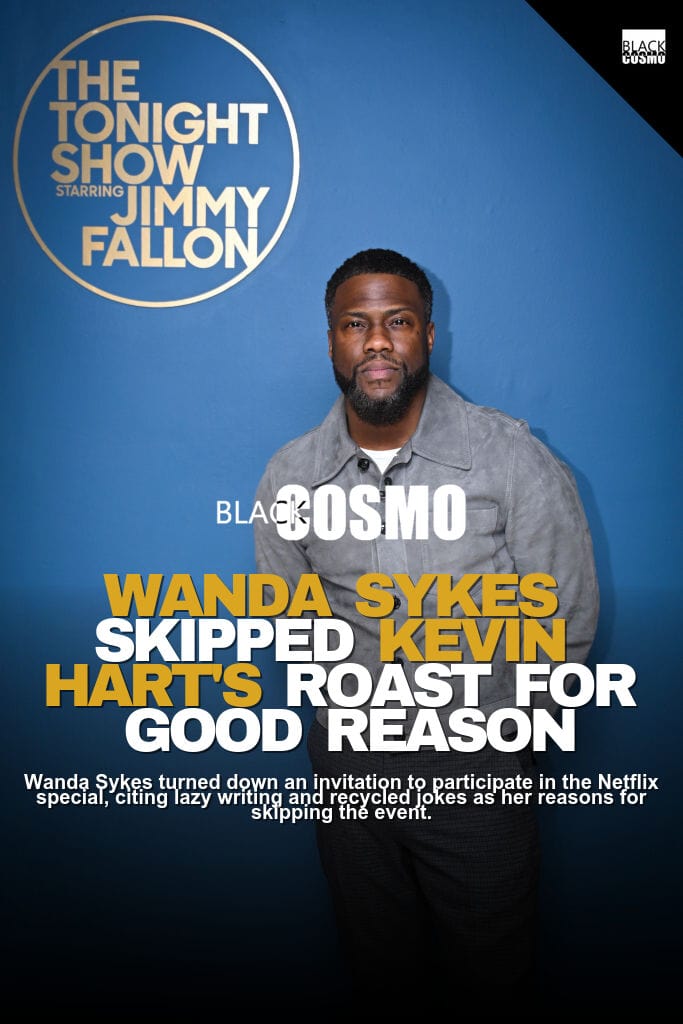
Kevin Hart‘s Netflix roast had some major players sitting it out—and Wanda Sykes is perfectly fine with that decision.
On Vulture’s Good One podcast, Sykes opened up about why she passed on Kevin Hart‘s roast special. The comedian revealed that Hart personally called her before the Netflix announcement even dropped, pitching her to participate.
“Kevin called me before it was announced, and I said, ‘No!'” Sykes said. “He said, ‘Come on, Wanda. Come on, it’ll be good. It’ll be good for your special. You’ve got a special coming out.’ I was like, ‘Kevin, you know I love you, man.'”
Sykes explained that Hart knew roasts weren’t really her comedic lane, but he still encouraged her to make a quick appearance. Instead of taking the stage, she chose to spend her evening differently—catching a Los Angeles Sparks game. Smart move, honestly.
“I consumed enough to go, ‘Thank god,'” she said about watching the final special later.
When Sykes finally did see the roast, she wasn’t impressed with the material. She criticized the writing as “just lazy, lazy writing,” noting that recent roasts recycle the same tired jokes about sex, race, and sexuality. It’s the kind of criticism that hits different coming from someone with her sharp comedic sensibility and spoken word presence in the industry.
The roast has continued to draw backlash, particularly over Tony Hinchliffe’s distasteful George Floyd joke. Hart later defended the joke, but fans weren’t buying it. Some accused the star of compromising his values for a paycheck—a conversation that speaks to larger questions about artistic integrity in comedy.