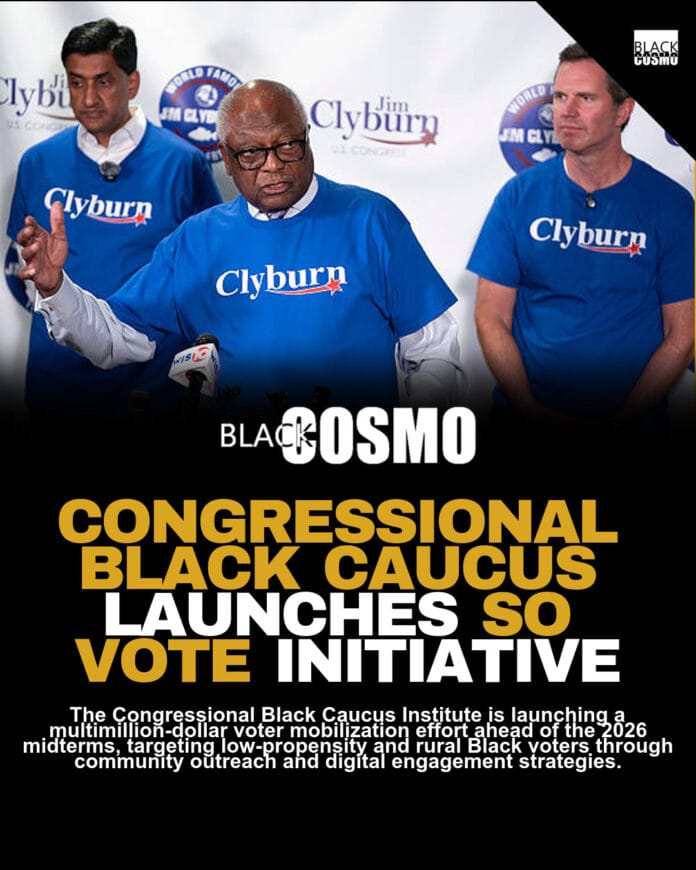
Congressional Black Caucus Institute just rolled out SO VOTE, a new civic engagement push aimed at getting Black voters to the polls ahead of the 2026 midterms. The multimillion-dollar initiative launches as National Voter Registration Day approaches, targeting low-propensity and rural Black voters through community organizing, digital outreach and strategic partnerships.
The effort signals a recognition that reaching Black voters requires meeting them where they actually are. That means HBCU campuses, neighborhood cookouts, social media feeds and direct messaging. Congressional Black Caucus Institute leaders are banking on a blend of ground game and digital strategy to convert voters who’ve tuned out or felt invisible to the political process.
Building From the Ground Up
Rep. Jim Clyburn framed the stakes plainly. Young Black voters, rural communities and people skeptical their vote matters all factor into the calculus. “If you feel groceries are too high, SO VOTE,” Clyburn said. “If you feel energy costs are through the roof, and Medicare should be expanded, SO VOTE.”
The messaging is deliberate. It’s not abstract civics talk. It’s rooted in material concerns that shape daily life: inflation, healthcare, the cost of living. That resonates differently than generic get-out-the-vote appeals.
The timing matters. The Supreme Court’s April decision in Louisiana v. Callais weakened Section 2 of the Voting Rights Act, and the Trump administration’s Justice Department has already moved against majority-Black districts. Voting access itself is under pressure. That context makes voter mobilization feel less like routine politics and more like defensive action.
Cedric Richmond, a former Louisiana congressman, emphasized the human dimension. “We will go out and talk to Black families that pay more while working harder and falling behind,” he said. That includes people pushed out of the workforce and those carrying the heaviest burden of economic strain.
The Youth Factor
Young voters present a particular challenge. According to Richmond, 43 percent of people ages 18 to 29 say voting isn’t important at all. That’s not apathy born from laziness. It’s disconnection. They don’t see themselves reflected in political outcomes or feel heard by institutions claiming to represent them.
SO VOTE’s strategy acknowledges that. Traditional door-knocking gets paired with WhatsApp outreach, algorithmic targeting and what organizers call “surround sound” messaging. Clip farming, direct messaging, polling place information sharing. The playbook is modern and messier than old-school campaigns.
The initiative also commits to rural America. Farmers, people without adequate healthcare, residents in underserved inner cities. These are voters who’ve watched themselves disappear from political conversation, replaced by swing state suburbs and college-educated exurbs.
Whether SO VOTE can translate messaging into turnout remains open. What’s clear is that the Congressional Black Caucus Institute sees 2026 as consequential enough to commit serious resources to the effort. Black voter participation will likely determine midterm outcomes. This initiative is built on that assumption.
★TR★