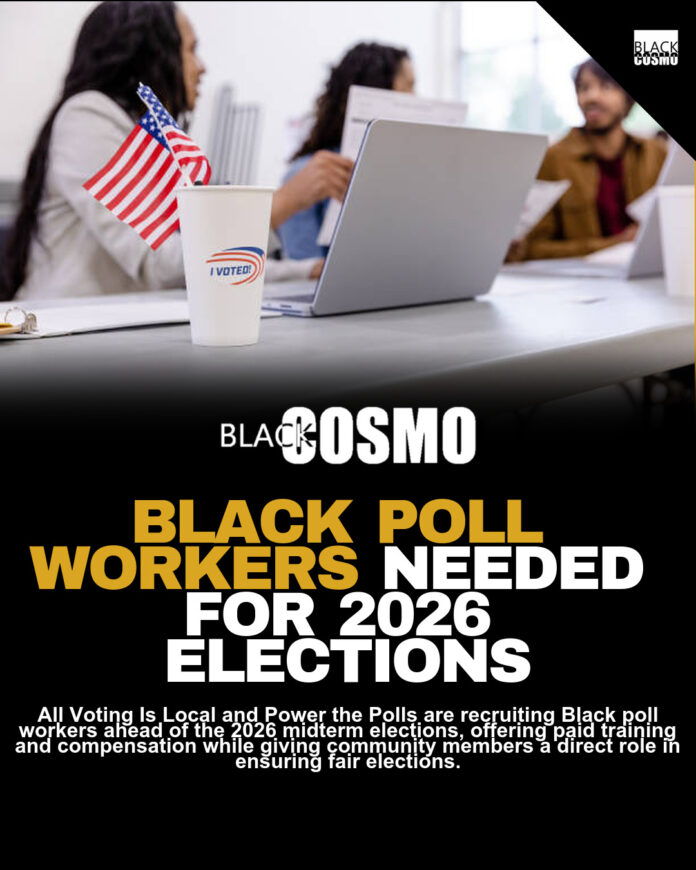
Black people fought too hard for the right to vote to sit on the sidelines when it comes to running elections. Now, ahead of the 2026 U.S. midterm elections, the effort to recruit more Black poll workers is a critical part of ensuring our communities have a hand in the democratic process.
Jessica Switzer, Wisconsin campaign manager for All Voting Is Local, works with Power the Polls, a nonpartisan initiative recruiting the next generation of Black poll workers to help ensure safe and fair elections. Switzer has voted at James E. Groppi High School in Milwaukee since she was 18, and she views voting as a right ancestors fought, marched and died for. She sees poll work as a way Black folks can participate beyond casting ballots, ensuring everyone has a fair opportunity to exercise their right to vote.
“Especially for us right now, we have to participate,” Switzer told The Root. “It’s wild to me that we’re dealing with accusations of voter fraud, when we just got the right [to vote] within 60 or so years.” She was referring to the Voting Rights Act of 1965, which helped dismantle barriers that had long kept Black Americans from exercising their voting rights.
“My grandmother marched with Father Groppi for our voting rights. So, in everyone’s mind we are so far from where we started, but in reality, we are just getting to a point where everyone has an equal opportunity at the ballot box,” she emphasized.
Becoming a Poll Worker Is a Communal Experience — and It Pays
Becoming a poll worker goes beyond helping people cast their ballots. It’s an opportunity to bring a welcoming sense of community to the voting process while playing a hands-on role in ensuring elections run smoothly.
“I’ve been voting at the same polling location since I turned 18, and it’s been the same Black woman greeting me since. I’m 34. It’s so different talking to a Black person checking me in to vote. And just like politics, the more of us that exist in a space, the better off everyone is, because that’s who we are as people,” Switzer explained.
And the commitment actually comes with real incentives. Poll workers earn $220 for a full day or approximately $117 for a half-day, according to Switzer. Chief inspectors who manage polling sites can earn $325 for a full day shift. Workers also receive paid virtual training to prepare for their responsibilities. Pay rates vary by municipality and role, per the League of Women Voters Milwaukee.
“They do very comprehensive training. You’re able to ask the clerk questions should something come up. There’s also a CI—the chief inspector—they’re super helpful as well. So it’s really easy. It’s honestly fun,” Switzer said. “It’s a communal experience all day long. That’s special. I like that.”
How You Can Get Involved

For folks looking to get involved, Switzer recommends connecting with local social and civic organizations to spread the word about poll worker opportunities. Word-of-mouth conversations can go a long way, especially when people know the job pays and offers a chance to serve their communities. The goal is making elections a process “for us, with us in mind, with us in the process.”
Ready to sign up? Visit Power the Polls and enter your contact information and ZIP code to get started. The nonpartisan initiative connects prospective poll workers with opportunities to staff local polling places. No prior experience is necessary, and workers receive training.
For those feeling discouraged about voting or questioning whether their participation makes a difference, Switzer urges them to stay engaged, even if their preferred candidate doesn’t win. The right to vote carries significance beyond any single election or outcome; exercising it honors the generations who fought to make that right possible.
“Don’t be discouraged just because your candidate doesn’t win. You’re honoring your ancestors by voting,” she told The Root.
★TR★