
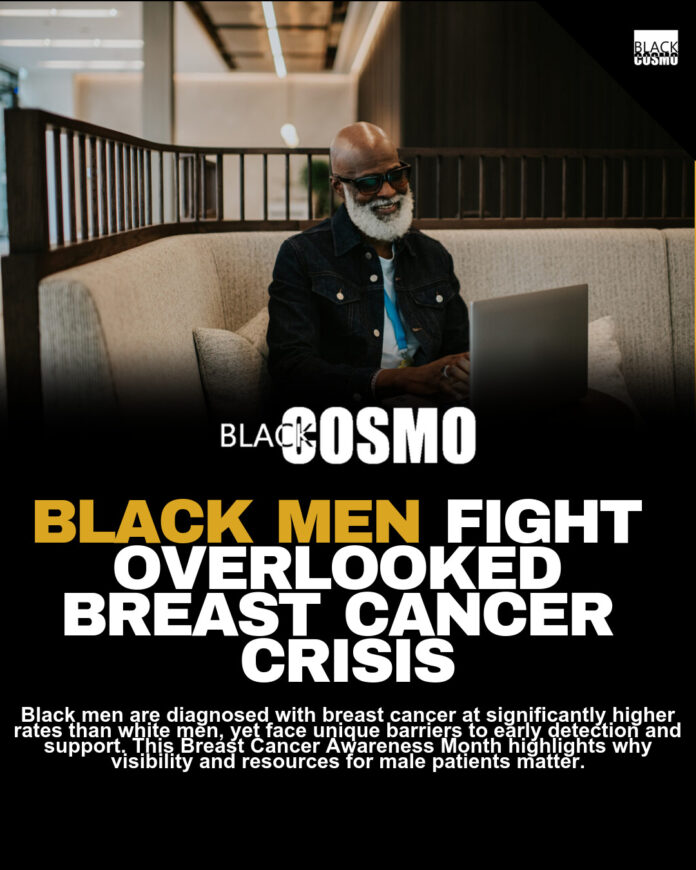
When breast cancer in Black men is left out of the conversation, the silence can be deadly. Men who develop it face a particular kind of invisibility, one that delays diagnosis and complicates treatment. Understanding this gap in awareness is the first step toward closing it.
When Breast Cancer is Branded a “Woman’s Disease”
Women are diagnosed with breast cancer far more frequently than men, and that reality shapes how we talk about the disease. But biology doesn’t erase the men who get it. The American Cancer Society reports that non-Hispanic Black men are 52 percent more likely to develop breast cancer than white men. They’re also more likely to die from it than men of other races and ethnicities, according to Susan G. Komen.
When awareness campaigns and support networks center women’s experiences exclusively, men can miss critical information about their own health. For Black men, this erasure compounds an already difficult diagnosis with a layer of isolation that shouldn’t exist.
Knowing The Warning Signs
Awareness means recognizing what to look for. In men, breast cancer symptoms can include a lump or swelling in the breast, nipple discharge, changes in the nipple or breast skin and swollen lymph nodes under the arm, according to the National Cancer Institute.
Most breast changes aren’t cancer, but men who notice anything unusual should see a health care provider promptly. Early detection and medical evaluation can make the difference between catching the disease early and dealing with advanced-stage complications.
The American Cancer Society hasn’t pinpointed exactly why Black men have higher breast cancer rates than white men, but the barriers are clear: less access to screening, delayed diagnosis, and systems that weren’t built with them in mind. Risk factors include older age, family history, hormonal imbalances, excess body weight and heavy alcohol use. Inherited gene mutations like BRCA1 and BRCA2 also increase risk. In 2019, music executive Matthew Knowles, Beyoncé’s father, publicly revealed his breast cancer diagnosis after genetic testing showed he carried the BRCA2 mutation. His openness helped shift the conversation, at least slightly.
Finding Support After a Diagnosis
A rare diagnosis can carry shame and a sense of not belonging. Men with breast cancer sometimes feel out of place in support spaces designed for women, but community exists for them too. Reaching out matters.
Susan G. Komen’s Breast Care Helpline (1-877-465-6636) connects men with local, online and telephone-based support groups. Male Breast Cancer Happens offers virtual support groups, online forums and one-on-one connections with other diagnosed men. HIS Breast Cancer Awareness builds online community for men affected by breast and hereditary cancers.
While these resources aren’t specifically tailored to Black men, they’re a starting point for finding information and talking to others who understand what you’re going through. Finding your people matters, even when the mainstream narrative hasn’t made space for you yet.
★TR★