
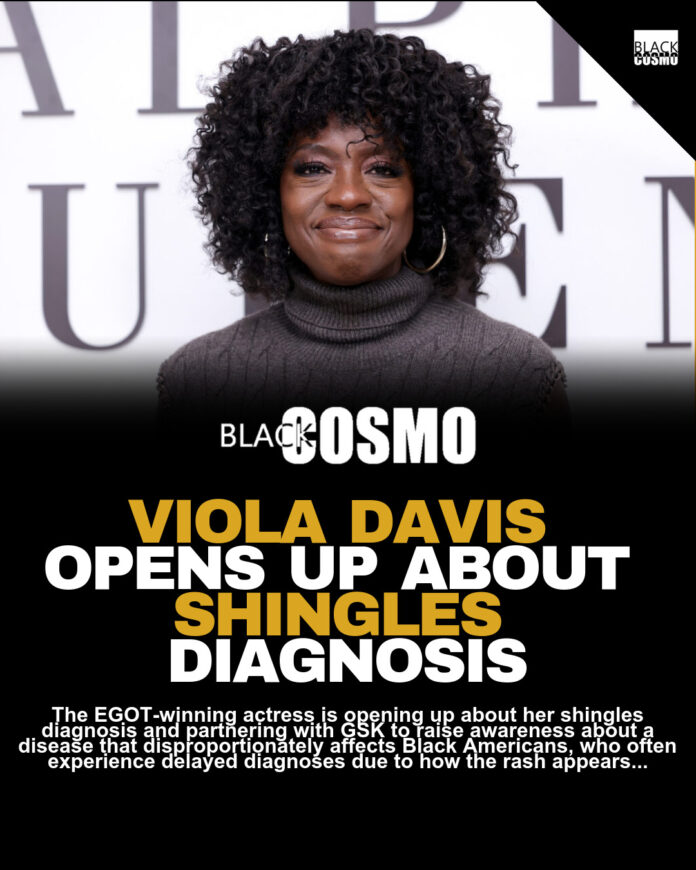
Viola Davis recently opened up about a health scare that’s become an important conversation starter: her shingles diagnosis. The EGOT-winning actress shared the news during a candid interview with PEOPLE, discussing her partnership with GSK’s “Shingles, Actually” campaign, an initiative designed to encourage honest conversations about aging and help adults 50 and older understand their shingles risk.
The diagnosis hit Davis harder than she expected, arriving during one of the busiest periods of her life. It happened not long after she adopted her daughter, Genesis, and just after her Oscar nomination for “The Help.” Viola Davis recalled waking up with flu-like symptoms and what she described as an extraordinarily painful rash—a solid nine out of ten on the pain scale. “It started on my stomach, and it wrapped around to my back. It went away, and then it came back with three blisters on my upper back,” she explained. “I was surprised how much pain it was. Hard to lay down, hard to get up, hard to walk. Nerve pain, all of that.”
She initially suspected a spider bite, but medical care revealed the truth: shingles. What shocked Davis most was realizing how much her relentless schedule had worn her down. Between caring for her daughter, supporting her husband, managing employees, and pushing through work commitments, she’d essentially abandoned self-care. “I was there for my daughter. I was there for my husband, there for my employees, and I sort of put all of them on a level of importance higher than myself,” Davis reflected. “And I felt that that’s what defined me as a powerful modern-day woman, that I could sort of sacrifice my life for others. And that’s not the case for me anymore.”
Her diagnosis touches on a larger health disparity that rarely gets discussed in Black communities. According to the CDC, roughly one in three Americans will develop shingles at some point, triggered when the chickenpox virus reactivates in the body. The condition typically brings burning, tingling, itching, or shooting pain before a blistering rash appears.
But here’s the problem: shingles looks different on Black skin. Instead of the bright red rash most people expect, it often appears purple, dark brown, or grayish—making it harder to recognize and diagnose. Research published in 2025 found that Black adults had lower diagnosed rates of shingles compared to white adults, yet faced higher odds of serious complications including postherpetic neuralgia and shingles-related hospitalization.
The takeaway matters. If you experience unusual burning, tingling, or nerve pain, especially on one side of your body, don’t assume it’s something minor. Talk to your doctor about whether your symptoms could be shingles, what treatment options exist, and whether you’re eligible for the shingles vaccine. Catching it early can make all the difference.
★TR★