History rarely announces itself in the moment. But when it does, a single photograph can hold an entire generation accountable.
Iconic Black photographs have become the visual language of American struggle and resilience. From the scarred back of a man who survived slavery to a quarterback taking a knee in protest of police brutality, these images expose the brutality of racism, capture extraordinary acts of courage, and transform moments of pain, protest, and perseverance into enduring symbols. They ensure the injustices behind them are never forgotten.
In the spirit of honoring that struggle, celebrating resilience, and preserving the legacy of those who came before us, here are 13 of the most powerful photographs spanning generations that tell the unapologetic story of Black resistance and triumph.
Iconic and Unbothered: Louise Jenkins
Writer and activist Louise Jenkins Meriwether sits calmly smoking a cigarette during a 1957 police interrogation. Unshaken and seemingly unfazed by the confrontation, her quiet composure became a powerful symbol of dignity and defiance in the face of intimidation.
Trigger Warning: Emmett Till’s Open Casket (1955)
After her 14-year-old son Emmett Till was lynched, Mamie Till-Mobley insisted on an open-casket funeral so the world could see what racism had done to her boy. The photographs shocked the nation and helped ignite the modern Civil Rights Movement.
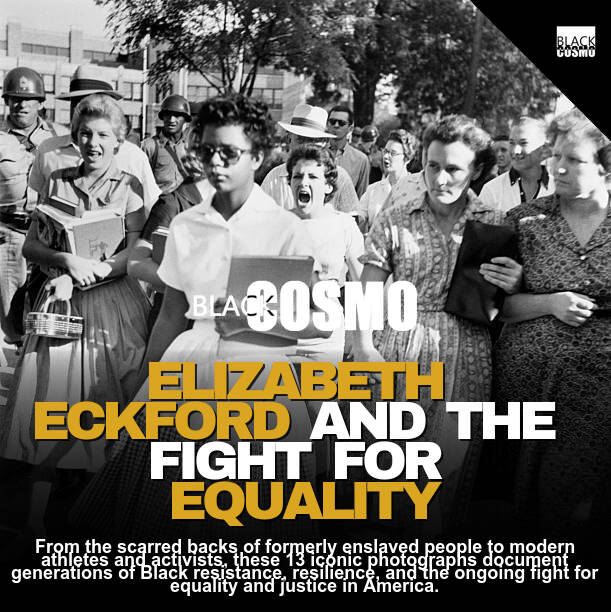
Elizabeth Eckford Faces a Mob for Education (1957)
Walking alone into Little Rock Central High School, Elizabeth Eckford remained composed as an angry white mob screamed insults behind her. The photograph became one of the defining images of school desegregation, a portrait of a child enduring what no child should have to endure.
Ruby Bridges Integrates an All-White School (1960)
In 1960, six-year-old Ruby Bridges was escorted by federal marshals into school as crowds threatened and jeered. Her quiet courage came to symbolize the fight for desegregation in American education.
The “Greensboro Four” Sit-In (1960)
Black college students peacefully occupied a segregated lunch counter while hostile white patrons surrounded them. The image demonstrated the power of nonviolent protest and inspired similar demonstrations nationwide. David Richmond, Franklin McCain, Ezell A. Blair Jr., and Joseph McNeil sat down and changed the course of American history.
“The Scourged Back” (1863)

One of the earliest photographs to expose the brutality of slavery, this image showed the severe scars left by years of whippings on the back of a formerly enslaved man. This photograph became a mark of struggle and endurance, proof that slavery was not only horrific but left lasting scars both physically and socially in America.
The Black Power Salute (1968)

Standing on the Olympic podium with black-gloved fists raised, Tommie Smith and John Carlos transformed a medal ceremony into one of the most iconic acts of protest in sports history. The moment still resonates today as a symbol of resistance.
The Black Panther Party Protest at the California State Capitol

When members of the Black Panther Party for Self-Defense arrived at the California State Capitol in 1967, armed with guns to protest the proposed Mulford Act, the striking image became a symbol of resistance and self-determination. The striking contrast between their disciplined posture and the authority they challenged made this one of the most unforgettable moments in protest history.
Colin Kaepernick Takes a Knee (2016)

Iconic Black photographs capture moments that spark national debate. Colin Kaepernick’s silent kneel during the national anthem protested police brutality and racial injustice, but the image came with a cost. The following year, every NFL team refused to sign him. The image sparked a national conversation over patriotism, protest, and free expression that continues today.
Taking a Stand in Baton Rouge
Photographer Jonathan Bachman captured Ieshia Evans standing calmly in a flowing dress as heavily armored officers rushed toward her to make an arrest. Evans was participating in a Black Lives Matter demonstration following the fatal police shooting of Alton Sterling in July 2016. The striking contrast between her peaceful presence as an unarmed citizen and the militarized response became a defining symbol of modern protest.
Devin Allen’s TIME Magazine Cover: America, 2015
After nearly 2,000 protesters gathered in downtown Baltimore following the police killing of 25-year-old Freddie Gray, photographer Devin Allen captured an image that would become one of TIME magazine’s most iconic covers. The photograph of this young Black man became a powerful reflection of the tension, fear, and unrest that defined the protests against police brutality.
Surrounded by White Supremacists: America, 2023
Captured by Reuters photographer Cheney Orr, the image shows a Black woman sitting quietly on a Washington, D.C., Metro train surrounded by masked white supremacist members of Patriot Front. The image was shocking, serving as a haunting reminder of America’s ongoing struggle with race and identity.
Love Against the Law: Richard and Mildred Loving
Richard and Mildred Loving challenged America’s segregation laws when they fought for the right to marry across racial lines. Their 1967 landmark Supreme Court victory in Loving v. Virginia ended bans on interracial marriage nationwide and became a defining moment in the fight for equality. The couple’s story remains a testament to the power of love and resistance.
★TR★