
Black people thrive in community, building bonds and creating safe spaces both within and beyond bloodlines. For Black women living with breast cancer, turning that community into a circle they can count on can make all the difference, especially as research suggests social connections impact cancer outcomes. A recently published study in Frontiers in Oncology found that participants who maintained frequent contact with family and friends had a lower risk of death.
So how can Black women with breast cancer turn organic connections into a support system they can trust? As Breast Cancer Awareness Month draws to a close, The Root asked clinical social worker Dr. Stephanie Broadnax Broussard and breast cancer survivor Angela K. Waller for advice. The answers reveal something simple but often overlooked: asking for help isn’t weakness, and your support network doesn’t need to be perfect to be powerful.
Don’t Try to Be Superwoman
Before you look to others for help, Broussard suggested that the first step is deciding not to go it alone. But accepting help from others may require Black women to relinquish the Superwoman title. Waller, diagnosed with triple-negative breast cancer at 34, said building a support network started with vulnerability. Women accustomed to caring for others may struggle to accept help, especially when balancing work, childcare or relationships.
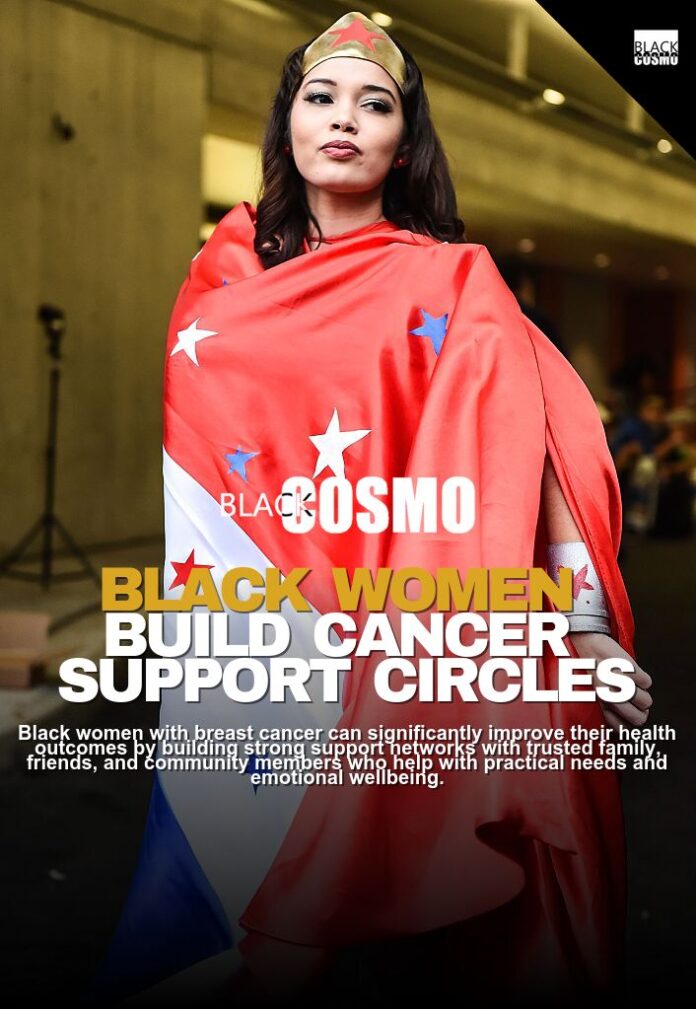
“Take the cape off, because the cape can choke you,” Waller said.
Start With The People You Trust

When building your circle, Broussard recommends starting with family, then widening the net to include neighbors, church members and colleagues. Consider what each person has the capacity to do and be open to accepting help from unlikely sources.
Following her diagnosis, Waller found unexpected support in the hotel kitchen where she had recently started working. Despite being on the job for less than three months, coworkers rallied around her during chemotherapy. Her sister, friends and church community also offered support. They didn’t need to know one another to be part of her circle.
Match People With Specific Needs

Meal trains can be helpful, but Broussard encourages finding support for other daily responsibilities as well. Try identifying people who can do laundry, handle lawn care, provide rides to and from treatment, or help with expenses. If your circle can’t cover the needs, Broussard suggests asking your medical care team about available services. Organizations like the American Cancer Society also offer resources.
Waller shared that having someone attend appointments and take notes helped during her cancer journey. She emphasized the importance of communication, suggesting that supporters skip the assumptions and ask, “How can I best support you?”
Choose Someone For Honest Discussions

Practical help is important, but so is having a safe place to share feelings. A 2023 review found that social isolation among breast cancer patients was associated with a 51 percent higher risk of death. Broussard noted that patients may hide their feelings from loved ones who focus on hope and prayer. “I think having a safe emotional space is really the most important thing,” she said.
For some, that space may be with a therapist or social worker. Waller cautioned that emotional needs can go unnoticed after treatment, when survivors are expected to return to their usual routines. Support shouldn’t end when treatment ends.
Set Boundaries Around Updates

You don’t have to share every detail with everyone. Decide what you’re comfortable sharing and whether you want to give updates yourself or designate someone else as the point person. Broussard suggests sharing updates through a platform such as CaringBridge to avoid repeated calls, texts and questions.
Stay Open to Unexpected Support

Waller advised women to expect the unexpected. Some people they count on may pull back, while others may step forward in surprising ways. It’s also important to recognize when your existing network can’t meet all your needs. “You have to be willing to acknowledge that maybe the community that you belong to cannot support you,” Broussard said.
That’s where additional resources come in. Black women with breast cancer navigating treatment shouldn’t feel alone in seeking help beyond their immediate circle. Support groups, nonprofit organizations, and medical social workers exist specifically for this reason.
Waller’s circle was a constant source of strength. “Just knowing that those people were there for me, pushing me…that helped me get through,” she said. Building that kind of support takes intentionality and honesty about what you need. It also takes permission to let people in.
★TR★