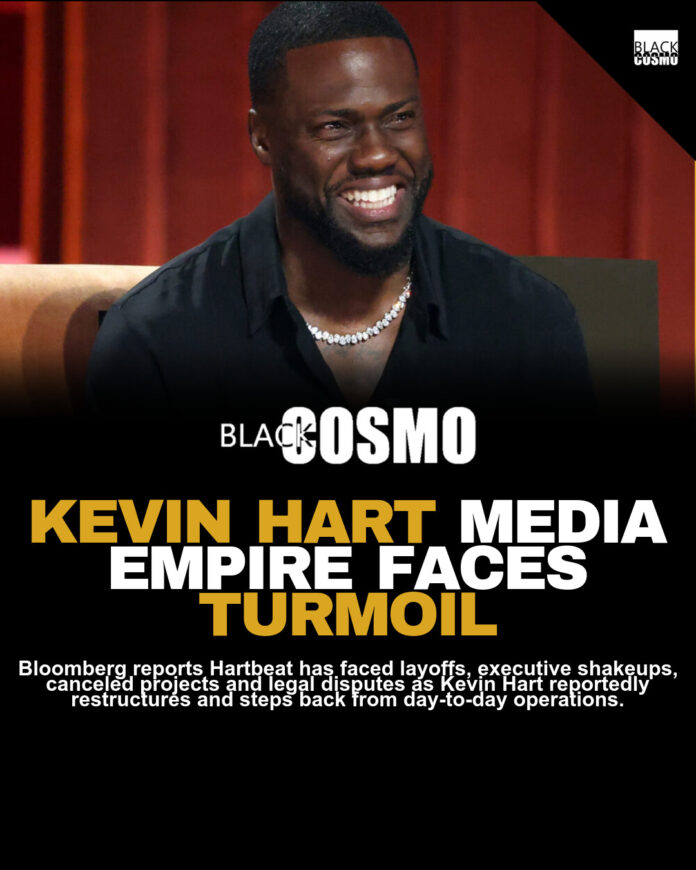
Kevin Hart spent years turning his name into a brand. Hartbeat, the media company built from the merger of his production business and Laugh Out Loud, once carried a massive valuation and big expectations after major private equity backing. At its peak the company was valued at around $650 million, and for a while it looked like proof that celebrity-led media ventures could genuinely compete in Hollywood. Now that image is taking a serious hit.
Reports describe layoffs, leadership shakeups, stalled productions, and growing uncertainty around the company’s future. The troubles have been building for some time, driven in part by a colder entertainment market where studios and streamers are spending less, ad dollars are tighter, and buyers are far more cautious about what gets greenlit.
Employees reportedly felt that shift in a very real way. Multiple rounds of layoffs cut deep into staff across scripted television, marketing, partnerships, social media, and podcasting. For a company that had expanded with the confidence of a rising empire, the cuts signaled that the business was no longer operating from a position of momentum. The mood inside reportedly turned tense as ambitious growth plans gave way to fear and confusion, with meetings reportedly becoming less frequent or disappearing entirely.
The executive side has been just as unstable. After key leaders departed over a relatively short stretch, Hart stepped back into the CEO role. Reports suggest internal disagreements about direction slowed decision-making across the company, while several projects stalled out or were shelved completely. There are also allegations that senior executive Jeff Clanagan encouraged staff to support outside ventures tied to his own businesses and AI-related projects, adding another layer of friction to an already strained leadership environment.
Hart’s separate business moves have raised additional questions about long-term direction. His licensing deal with Authentic Brands Group — a company tied to celebrity brands for names like Shaquille O’Neal and David Beckham — was publicly framed as a strategic move. Internally, some reportedly saw it as a sign that the focus was shifting toward monetizing his personal brand rather than doubling down on the broader media company. In an environment where celebrity-backed ventures are already under pressure, that kind of shift can feel like a warning sign.
Legal issues have added another layer of strain. Two former podcast executives sued Hartbeat following their termination, with allegations tied to contracts and trade secrets. A judge later criticized parts of Hartbeat’s legal claims as vague and overly broad. Even without a final resolution, that kind of conflict costs time, money, and attention — and combined with broader cash flow concerns, it paints a picture of a business fighting battles on multiple fronts.
What none of this touches is Hart himself, who remains booked and busy with films, stand-up, endorsements, and major entertainment deals. His public momentum is still strong. The harder question is whether the reported instability behind the scenes will eventually shape the future of Hartbeat and the wider media empire he has worked to build.
That question matters beyond one company’s growing pains. Hollywood’s old promise — that visibility and investor hype could automatically translate into sustainable media power — is looking shakier by the day. For many Black audiences, there is real pride in watching a creator scale up and own more of the machine. That is why the struggles around Hartbeat feel bigger than industry gossip. They are a reminder that ownership, access, and longevity are still very different battles, especially when the market stops being generous.