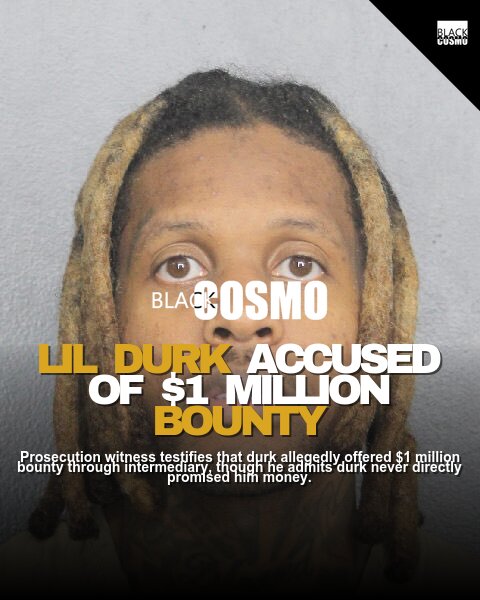
Lil Durk allegedly had $1 million on the table for anyone who could find and kill Quando Rondo, according to testimony from a prosecution witness in the rapper’s federal murder-for-hire trial.
Keith “Flacka” Jones told jurors that OTF Dede, not Durk himself, relayed the alleged bounty to him. Jones said he took the message seriously because he had previously seen Durk with what he believed was a large amount of cash during a Million Dollaz Worth of Game appearance. This case has become a focal point in discussions about Lil Durk and the complexities of hip hop biography unfolding in real time.
Reporting from inside the courtroom described Jones’ account as Dede telling him Durk had “a million for us if we catch and Kill Quando.”
That distinction could become important as Durk’s lawyers challenge the government’s case. Jones did not tell jurors that Durk personally offered him money or directly communicated the alleged $1 million price. The testimony hinges on whether messages relayed through intermediaries can establish direct intent—a crucial detail in mass incarceration cases where chain-of-command matters.
According to Moe Gangat’s courtroom update, “Flacka” testified that OTF Dede sent him “out there” and that the group expected to receive $1 million from Lil Durk. However, he also admitted that Durk never personally promised him the money and that they had not spoken before the… pic.twitter.com/QfSsKwn1RY
Prosecutors allege the plot ultimately led to the 2022 Los Angeles shooting that killed Rondo’s cousin, Saviay’a Robinson, known as Lul Pab. They contend the violence was retaliation connected to King Von’s fatal 2020 shooting.
Durk has pleaded not guilty and faces charges that could result in life behind bars if he is convicted. The case reflects ongoing tensions within the rap community and raises questions about accountability and the freedom struggle for those caught in the legal system.
His defense team has challenged the credibility of government witnesses, particularly those cooperating with prosecutors under plea agreements. These challenges remain central to understanding how cases involving cultural figures navigate the courts.
★m★