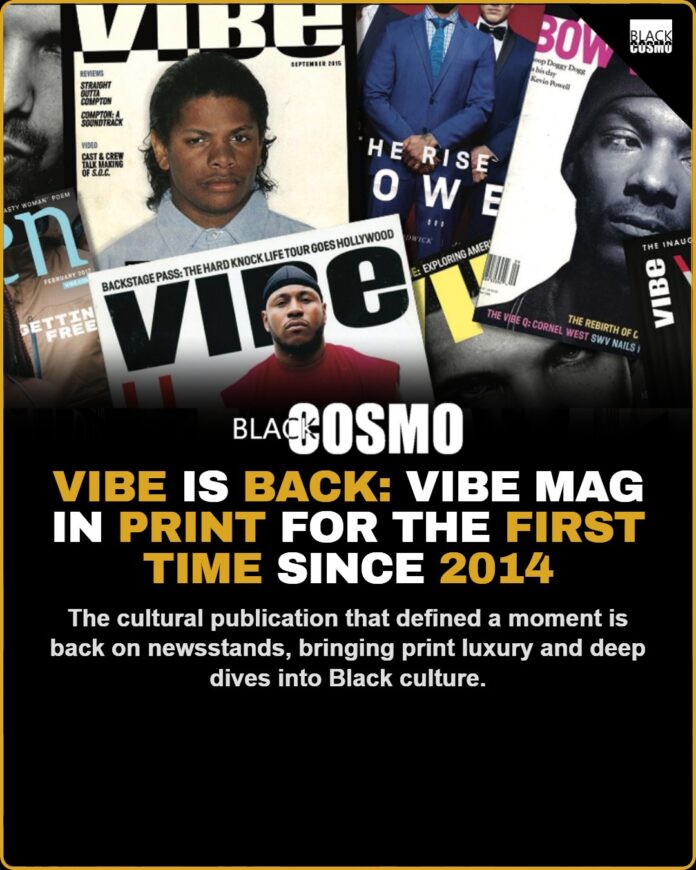
Black Cosmopolitans, can we just talk for a minute? If you’ve been following the cultural conversation for the last decade, you know what a void it felt like when a certain kind of print media went quiet. The magazine that didn’t just report on Black culture—it *defined* it—has returned. Yes, we’re talking about VIBE. They’re back, and they’re bringing that luxurious, curated feel back to newsstands, fresh off the press. It’s a moment that feels less like a comeback and more like a cultural homecoming.
When you think about the evolution of Black media, there are moments that stick out. This one is it. VIBE’s print return isn’t just a logistical update; it’s a statement. It signals a shift back to the tactile, the intentional, and the deeply aesthetic. This publication understood that Black culture isn’t just for the internet scroll—it has weight, it has texture, and it deserves to be held in your hands.
The Art of the Physical Print
In a world saturated by fleeting Reels and algorithm-driven content, the physical magazine feels like a luxury counter-punch. There’s something inherently special about the weight of the paper, the scent of the ink, the way the photography demands that you slow down and truly look. VIBE always mastered this. They treated the magazine like an artifact, not just a periodical. They understood that print allows for a sustained gaze, a meditative experience that makes you feel seen.
This isn’t the quick-hit summary you scroll past while waiting for your coffee to brew. This is the deep dive. This is the feature spread on the artist you’ve been talking about in your best friend group for months. This is the fashion editorial that shows you how to take what’s trending and make it unmistakably *yours*. They aren’t just documenting the scene; they’re helping you curate your own identity within it.
More Than Just Pretty Pictures
If you’re looking at the early issues, you’ll notice the intention behind every single spread. The writing isn’t just flowery; it’s sharp. It’s critical. It gives perspective. It holds up a mirror to Black life—the joy, the struggle, the undeniable, gorgeous complexity of it all. You won’t find surface-level praise here. You’ll find the kind of critical analysis that makes you nod your head and say, “Yes. *Exactly*.”
They’ve always understood the importance of the Black woman’s perspective. The narrative isn’t centered on just one thing; it’s centered on the collective experience. It honors the matriarchs, the innovators, the boundary-pushers, and the everyday queens who keep the cultural engine running. This is the kind of chronicling that feels like a community effort, a giant group hug printed on glossy stock.
What to Look For When You Pick Up a Copy
When you grab your first issue, don’t just flip through. Treat it like a treasure map. Pay attention to the interviews—who are they giving space to? Are they giving space to the architects of the culture, or just the temporary stars? The real value lies in the depth of the conversation. The pieces that make you pull out your notebook and start brainstorming your next move. The ones that feel like homework, but the best kind of homework.
It’s a reminder that the culture we live in is complex, sprawling, and deserves to be documented with reverence. VIBE isn’t just selling glossy pages; they’re selling a collective memory, a cultural touchstone, and a conversation starter for your next dinner party. Go get a copy, Black Cosmopolitans. And let’s talk about what it means when our cultural voice gets to be this beautifully, intentionally printed again.