Home Blog Page 149

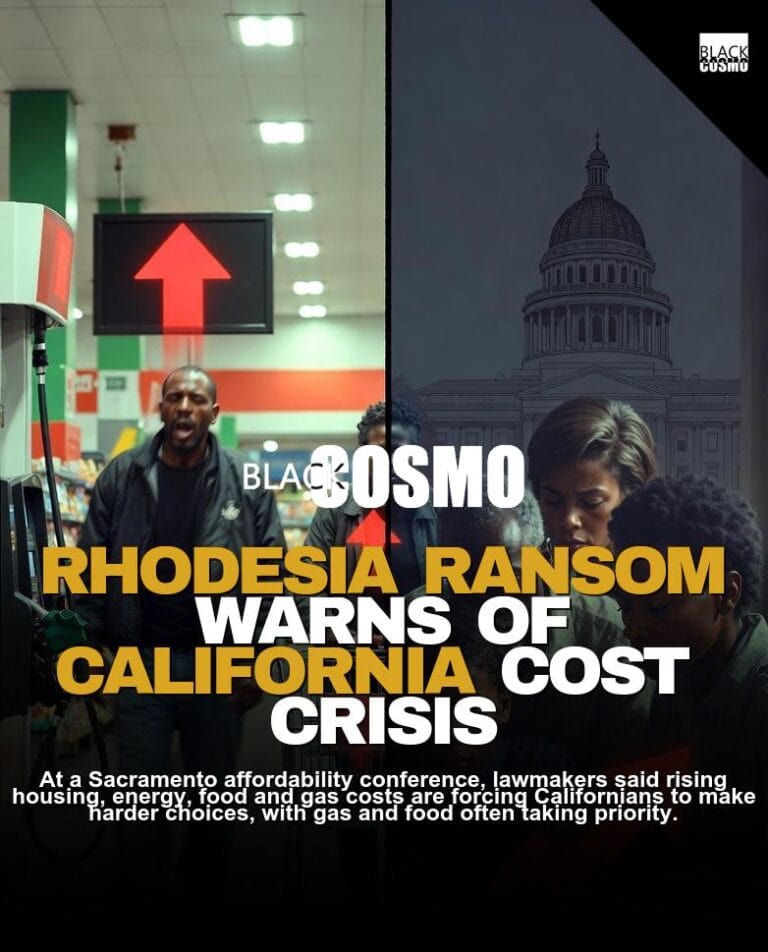
California’s Gas-or-Food Crisis

Rhodesia Ransom is putting plain language to what a lot of California families are already living through: the cost of surviving is forcing people to rank basic needs against each other. At a recent Sacramento conference focused on affordability, the Stockton lawmaker said constituents are no longer choosing between wants and needs. They’re deciding which essentials can’t wait, and right now gas and food are rising to the top.

That shift says a lot about the pressure households are under. Housing, energy, groceries, and transportation have all become heavier burdens, especially for working-class families and lower-income residents. Ransom’s comments landed in a broader conversation about what affordability really looks like in California, where even everyday routines like getting to work, keeping the lights on, and stocking the fridge can feel financially punishing.

The strain is especially sharp for Black Californians. Research from the Greenlining Institute has pointed to long-standing structural barriers that continue to shape who gets hit hardest. Black renters face some of the highest rent burdens in the state, and older, less efficient housing often means higher utility bills too. Food insecurity remains another major issue, particularly in neighborhoods that have dealt with years of disinvestment and limited access to affordable, healthy groceries.

Political leaders across party lines have been sounding the alarm, but the urgency is growing as state and federal decisions collide. Proposed cuts to nutrition support are adding another layer of instability, leaving California officials to figure out how much they can realistically backfill while balancing their own budget priorities. At the same time, gas prices in some areas have remained painfully high, making it even harder for families who rely on their cars for work, school, and caregiving.

State leaders have pointed to relief efforts like climate credit rebates on utility bills, but for many residents, a one-time credit doesn’t erase the day-to-day squeeze. That’s part of why Rhodesia Ransom’s remarks resonate beyond policy circles. For Black communities and other families already used to stretching every dollar, this isn’t just an economics story. It’s about dignity, stability, and what it means when even the basics start to feel out of reach.

5 Democracy Stories the Media Won’t Tell You

Edmond W. Davis is making a forceful case that America’s real media problem is not a shortage of information, but a pattern of selective attention that keeps some of the most consequential stories out of the center of public debate. In his commentary, he argues that while audiences are flooded with headlines every day, too many stories tied to democracy, race, and power get softened, sidelined, or buried altogether.

His piece points to several examples that he believes deserve far more national scrutiny. Among them are Louisiana Gov. Jeff Landry’s dismissal of racism as a “failed narrative,” efforts by Rep. Andy Ogles to introduce a constitutional amendment that could open the door to a Trump third term, and the broader political architecture connecting the 1971 Powell Memo to today’s Project 2025. Taken together, the argument is that these are not isolated news items. They are connected signs of how power organizes itself, shapes public conversation, and tests what the public will tolerate.

He also spends time on the long tail of institutional strategy. By tying the Powell Memo to decades of conservative policy planning, donor coordination, judicial influence, and media ecosystem building, the essay suggests that Americans are often encouraged to react to single moments instead of seeing the infrastructure behind them. That framing matters, especially for readers trying to understand why certain policy agendas seem to arrive fully formed, backed by money, messaging, and legal strategy long before election day.

Another major thread in the piece is the impact of Trump-aligned politics on Black communities. The focus is not just on rhetoric, but on policy outcomes involving voting rights, civil service changes, attacks on diversity efforts, education, and the weakening of civil-rights protections. The point is that these developments are often covered as separate issues, when in reality they can hit the same communities again and again in ways that are deeply structural.

What makes the commentary resonate is that it speaks to a feeling many Black and brown audiences already know well: not every silence is accidental, and not every buried story is unimportant. Edmond W. Davis is essentially asking readers to think harder about who decides what becomes urgent, what gets normalized, and what disappears before it ever becomes a real national reckoning. For a BlkCosmo audience, that question lands close to home, because media visibility has always been tied to whose lives, history, and political reality are treated like they matter.

Kevin Hart’s Hartbeat Faces Layoffs, Lawsuits Drama

Kevin Hart spent years turning his name into a brand. Hartbeat, the media company built from the merger of his production business and Laugh Out Loud, once carried a massive valuation and big expectations after major private equity backing. At its peak the company was valued at around $650 million, and for a while it looked like proof that celebrity-led media ventures could genuinely compete in Hollywood. Now that image is taking a serious hit.

Reports describe layoffs, leadership shakeups, stalled productions, and growing uncertainty around the company’s future. The troubles have been building for some time, driven in part by a colder entertainment market where studios and streamers are spending less, ad dollars are tighter, and buyers are far more cautious about what gets greenlit.

Employees reportedly felt that shift in a very real way. Multiple rounds of layoffs cut deep into staff across scripted television, marketing, partnerships, social media, and podcasting. For a company that had expanded with the confidence of a rising empire, the cuts signaled that the business was no longer operating from a position of momentum. The mood inside reportedly turned tense as ambitious growth plans gave way to fear and confusion, with meetings reportedly becoming less frequent or disappearing entirely.

The executive side has been just as unstable. After key leaders departed over a relatively short stretch, Hart stepped back into the CEO role. Reports suggest internal disagreements about direction slowed decision-making across the company, while several projects stalled out or were shelved completely. There are also allegations that senior executive Jeff Clanagan encouraged staff to support outside ventures tied to his own businesses and AI-related projects, adding another layer of friction to an already strained leadership environment.

Hart’s separate business moves have raised additional questions about long-term direction. His licensing deal with Authentic Brands Group — a company tied to celebrity brands for names like Shaquille O’Neal and David Beckham — was publicly framed as a strategic move. Internally, some reportedly saw it as a sign that the focus was shifting toward monetizing his personal brand rather than doubling down on the broader media company. In an environment where celebrity-backed ventures are already under pressure, that kind of shift can feel like a warning sign.

Legal issues have added another layer of strain. Two former podcast executives sued Hartbeat following their termination, with allegations tied to contracts and trade secrets. A judge later criticized parts of Hartbeat’s legal claims as vague and overly broad. Even without a final resolution, that kind of conflict costs time, money, and attention — and combined with broader cash flow concerns, it paints a picture of a business fighting battles on multiple fronts.

What none of this touches is Hart himself, who remains booked and busy with films, stand-up, endorsements, and major entertainment deals. His public momentum is still strong. The harder question is whether the reported instability behind the scenes will eventually shape the future of Hartbeat and the wider media empire he has worked to build.

That question matters beyond one company’s growing pains. Hollywood’s old promise — that visibility and investor hype could automatically translate into sustainable media power — is looking shakier by the day. For many Black audiences, there is real pride in watching a creator scale up and own more of the machine. That is why the struggles around Hartbeat feel bigger than industry gossip. They are a reminder that ownership, access, and longevity are still very different battles, especially when the market stops being generous.

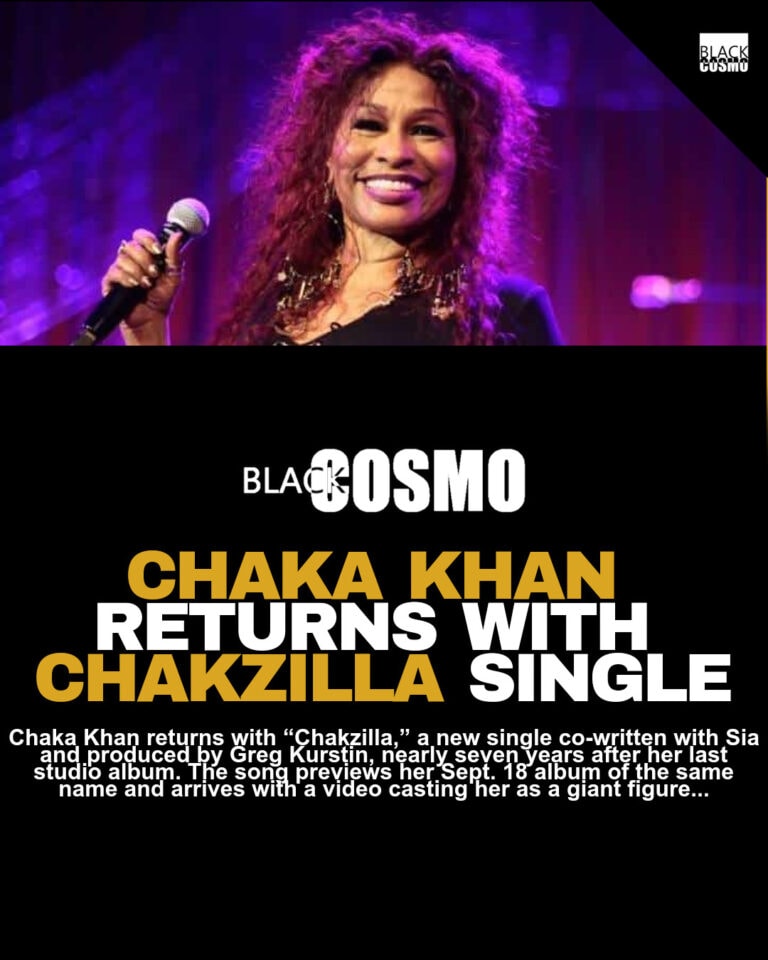
Chaka Khan Drops ‘Chakzilla’ with Sia

Chaka Khan is stepping into a bold new era with “Chakzilla,” a fresh single that signals her return after years away from the studio album cycle. The track, created with Sia and producer Greg Kurstin, sets the tone for an upcoming project of the same name and reminds listeners why her voice and vision still carry real weight across generations.

The idea behind the song reaches back to her childhood love of classic monster movies, especially Godzilla. That inspiration gave the record a playful but powerful concept, one that turns a giant-screen image into something more personal and uplifting. Rather than leaning into chaos, the song and its visuals flip the script and imagine a larger-than-life presence focused on rebuilding, healing, and bringing some order to a world that feels off balance.

In the video, she appears as a towering figure moving through a damaged city, but instead of destruction, she uses that presence to restore what has been broken. That creative choice lines up with what she has said about wanting the character to reflect who she really is. The message is less about spectacle and more about purpose: showing strength in a way that helps people instead of frightening them.

Sia not only contributed backing vocals but also helped spark the title, and the collaboration feels like a meeting of fearless musical minds. With a new album on the way in September, this rollout feels intentional, theatrical, and rooted in the kind of self-definition that legends earn over time. Chaka Khan tapping into fantasy, memory, and restoration all at once feels especially timely for audiences craving art that is imaginative but still grounded in care.

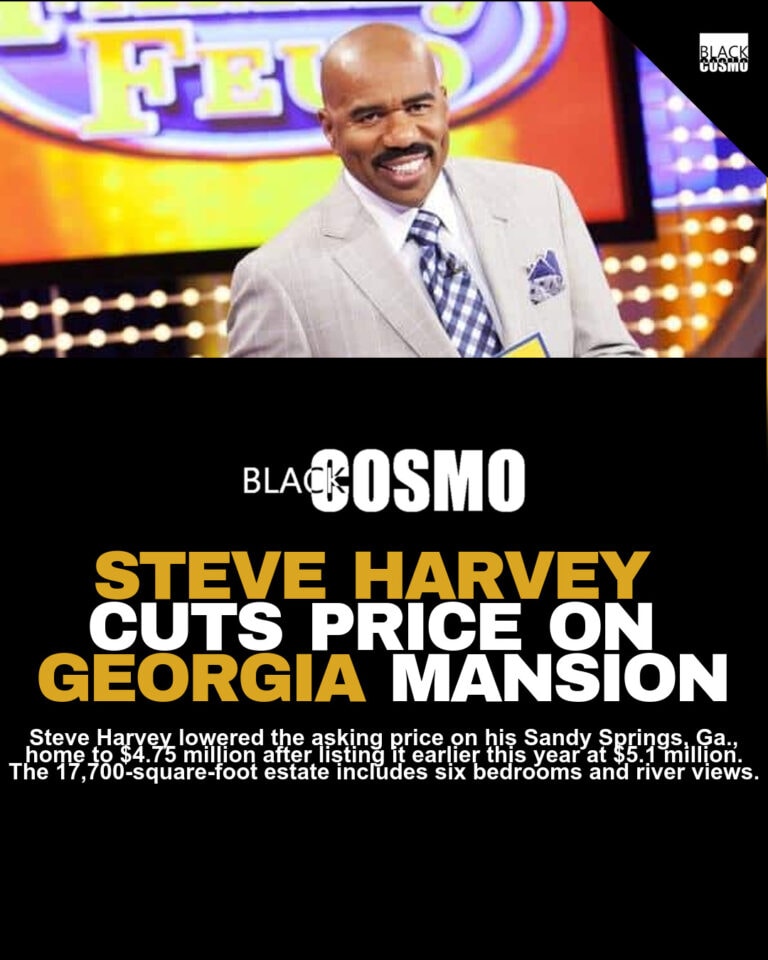
Steve Harvey Slashes Price on Georgia Estate

Steve Harvey is making a notable move in the luxury real estate market, cutting the asking price on his longtime Georgia home after listing it just months ago. The Sandy Springs estate, which had been on the market for $5.1 million, is now being offered at $4.75 million, putting fresh attention on one of the more recognizable celebrity properties in the Atlanta area.

The home itself is anything but modest. Set above the Chattahoochee River, the European-inspired estate spans roughly 17,700 square feet and sits on nearly two acres of landscaped land. With six bedrooms, dramatic architecture, and a gated entrance, the property delivers the kind of grandeur that feels designed for both privacy and spectacle.

Inside, the residence leans fully into luxury living. There’s a soaring great room with sweeping views, formal and casual dining areas, and a chef’s kitchen equipped with premium appliances, a large island, and its own cozy fireplace seating area. The lower level adds even more lifestyle appeal, featuring a private theater, wine cellar, fitness studio, steam room, and elevator access across all three floors.

The listing also highlights the craftsmanship throughout the estate, from custom wood detailing to stone finishes and carefully selected lighting. Outdoors, the infinity-edge pool and multiple entertaining spaces give the home the feel of a private retreat rather than a traditional suburban mansion. It’s the kind of property that reflects a certain era of aspirational Black celebrity success, where homeownership becomes part of a larger legacy story.

For many fans, seeing Steve Harvey make this kind of transition feels bigger than a simple real estate update. It’s also a reminder of how public figures evolve, upgrade, and redefine what luxury can look like while still keeping a connection to the spaces that helped shape their journey.

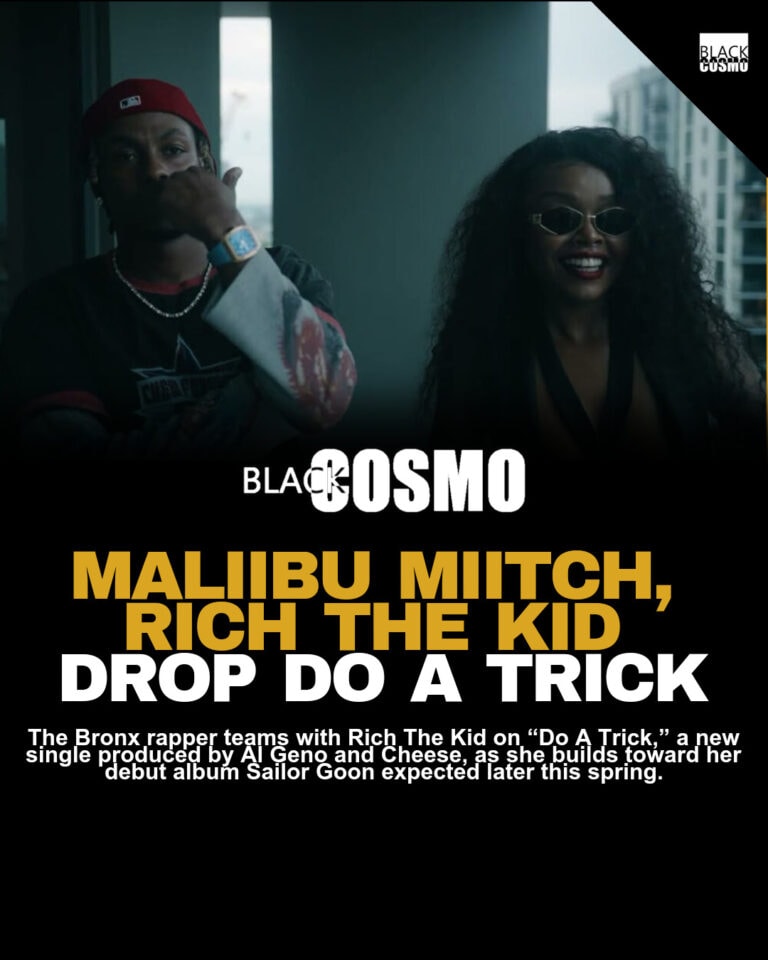
Maliibu Miitch & Rich The Kid Drop “Do A Trick” Video

Maliibu Miitch is back outside and applying pressure with her latest single “Do A Trick,” featuring Rich The Kid. The Bronx rapper sounds locked in, bringing that bold energy fans have come to expect while still keeping the record fun and easy to run back.

On “Do A Trick,” Maliibu Miitch glides over a bouncy, high-energy trap beat with confidence, slick flows, and a catchy hook that sticks. Produced by Al Geno and Cheese, the track is built for speakers, parties, and late-night city motion.

Rich The Kid pulls up with his signature flashy style and familiar cadence, adding even more momentum to the song. Their chemistry feels natural, giving the record an extra boost without taking away from Maliibu’s presence.

The official visual, directed by AM Filmakers, keeps things glossy and celebratory as the duo turns up inside a Miami high-rise. Between balcony shots overlooking the city and champagne-filled scenes with friends, the video matches the song’s confident, carefree vibe.

“Do A Trick” marks another strong step toward Maliibu Miitch’s highly anticipated debut album Sailor Goon, which is expected later this spring.

Over the years, the Bronx native has built a loyal fanbase through viral freestyles, unapologetic personality, and records that blend New York grit with feminine swagger. Each release keeps showing how she’s carving out her own lane on her own terms.

With Rich The Kid joining the wave and the record already making noise online, “Do A Trick” feels like one of her biggest moves yet. It’s a reminder that Maliibu knows how to deliver energy, attitude, and replay value all at once.

★

BET Launches Next Gen Leadership Program

BET Next Gen is BET’s latest move to open real doors for the next wave of media talent, with a new leadership program built to help rising professionals learn the business from the inside. The initiative is focused on giving participants hands-on experience across key parts of the industry, from communications and public relations to marketing, production, talent relations, ad sales, social media, and brand creative.

According to BET, the program is meant to do more than just offer entry-level exposure. Participants will work alongside executives across the company’s communications, creative, and media teams while getting mentorship and practical guidance on how major entertainment brands actually operate. The goal is to help emerging professionals understand the strategy, storytelling, and cultural awareness that have kept BET at the center of Black media for more than 40 years.

One standout part of the program is its Brand Creative track, which will be reserved exclusively for students attending historically Black colleges and universities. That detail matters, especially at a time when conversations around access, representation, and investment in Black talent continue to shape the future of media. BET says the HBCU focus reflects an ongoing commitment to creative communities that have long influenced culture without always getting full industry support.

Louis Carr framed the effort as part of a bigger mission to build leadership pathways in the spaces where culture is made and distributed. He also highlighted the lasting importance of HBCUs as places that continue to produce innovation, creative vision, and Black excellence. Participants selected for the program will also get the chance to contribute to major company events, including the 2026 BET Awards, while supporting broader brand and business initiatives.

Applications for the 2026 cohort are open through May 22, and for young creatives, strategists, and future executives looking for a serious entry point into entertainment, BET Next Gen feels like the kind of opportunity that speaks directly to the moment. For Black and brown talent trying to move from the margins to the decision-making table, programs like this can mean the difference between being inspired by the culture and actually helping shape where it goes next.

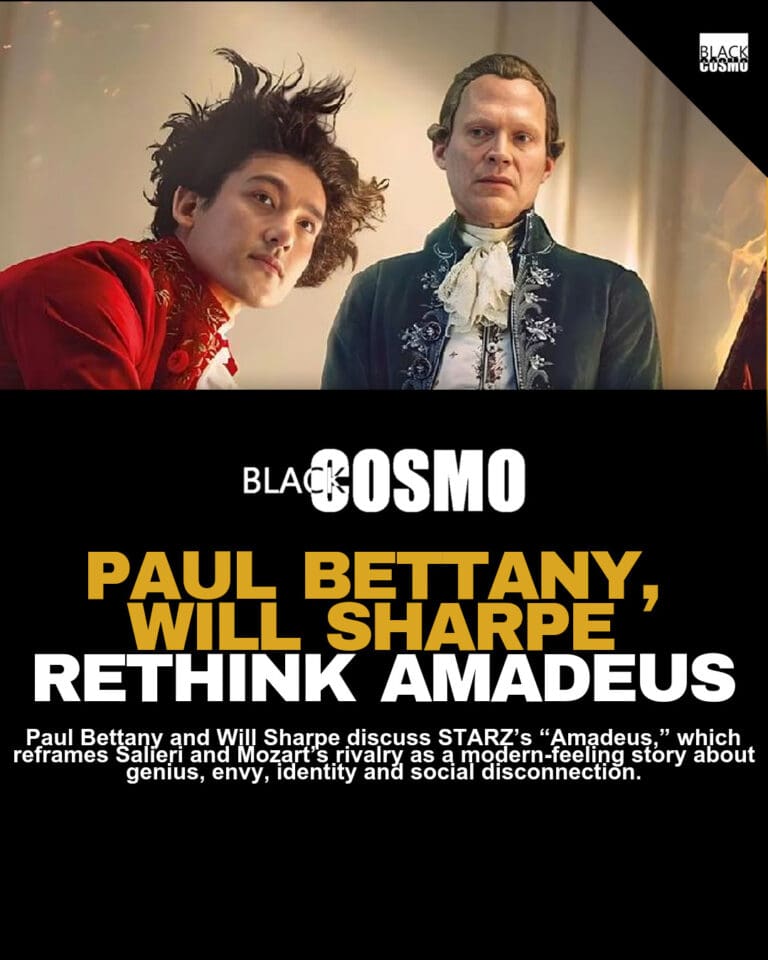
Amadeus Stars Reveal Mozart-Salieri Feud

Amadeus may be set in 18th-century Vienna, but the new STARZ adaptation is leaning into something far more immediate than powdered wigs and classical prestige. In recent press interviews, stars Paul Bettany and Will Sharpe made it clear that this version is less about stiff historical drama and more about the emotional messiness behind brilliance, insecurity, and rivalry.

Bettany, who plays Antonio Salieri, described his character as deeply flawed but still painfully recognizable. That idea helps frame the series as a story about envy and self-worth, not just genius from a distance. Sharpe’s take on Mozart adds another layer, presenting him as someone astonishingly gifted in music while struggling with the basic rhythms of everyday human connection. That contrast gives the story a more intimate, modern edge.

What stands out about this adaptation is how it widens the lens. Earlier versions often centered Salieri’s point of view, but this one reportedly gives more room to Mozart’s inner life and the burden that comes with being extraordinary. The actors also spoke about trying to find emotional honesty inside a stylized version of history, using Peter Shaffer’s original work as a grounding point while stretching the story into a longer series format.

The cast even imagined what Mozart might be like in today’s musical landscape, suggesting he would be endlessly curious about everything from prog rock to hip-hop and jazz. That idea fits the spirit of the show: talent doesn’t live in a vacuum, and genius often comes tangled up with alienation, obsession, and misunderstanding. Amadeus lands at an interesting moment because audiences are still drawn to stories about being gifted, being overlooked, and wondering whether excellence is ever enough on its own.

For BlkCosmo readers, that emotional core is probably what makes this story resonate most. Beyond the costumes and the classical score, it’s really about pressure, identity, and the cost of being seen only for what you produce instead of who you are.

Halibut Burger Fish Lovers Are Obsessed With

THE TRICK TO a legendary fish burger is starting with a thicker fillet. Brooke Price, chef and owner of the Side Door Cafe in Gleneden Beach, Oregon, says to shop for portions that are about 1½ to 2 inches thick.

That kind of cut gives your fish burger real presence on the plate. Six ounces of cooked halibut brings a hefty 30 grams of protein, so honestly, don’t even call it a sandwich.

★★

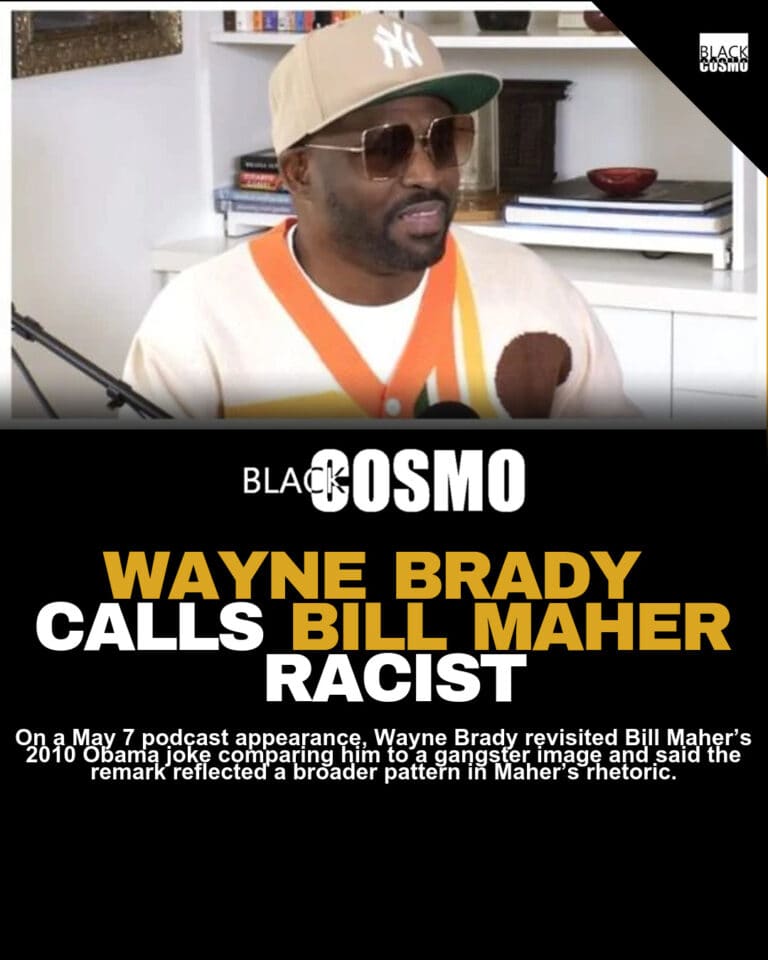
Wayne Brady Slams Bill Maher as Racist Again

Wayne Brady is making it clear that he has not forgotten Bill Maher’s old comments about him, and now he’s speaking on them with zero hesitation. During a recent podcast appearance, the entertainer revisited a long-running issue with Maher and bluntly said he views the late-night host as racist.

The tension goes back to a 2010 CNN interview, when Maher made a joke about President Barack Obama by comparing him to Brady and suggesting he expected a more stereotypically “gangsta” version of Black leadership. For Brady, that was never just a bad joke. He sees it as a white public figure trying to define what Blackness should look like, sound like, and represent in the public eye.

On the podcast, he explained that the comment stayed with him because it reflected something bigger than one punchline. He said there is a difference between comedy that challenges power and commentary that leans on tired racial assumptions. Brady also pointed to recent criticism from Dave Chappelle, who called out Maher in his latest Netflix special, suggesting that more people are now saying out loud what others have been thinking for years.

What makes this moment hit differently is that Brady is not speaking from a place of shock. He admitted that he once found Maher funny, but over time came to see a pattern in his language and worldview. That shift feels familiar for a lot of people who have had to reconsider entertainers they once enjoyed after hearing how they talk about race when they think they are being clever.

For Black audiences especially, this is about more than an old celebrity feud. It is about who gets to frame Black identity in mainstream culture and who gets called sensitive for pushing back. Wayne Brady speaking this plainly is a reminder that respectability, performance, and public perception have always been loaded conversations when Black people are discussed through somebody else’s lens.